UV curing is changing the way manufacturers and packaging companies work every single day. Some production lines now hit speeds of up to 800 feet per minute, all thanks to this rapid process. Most people think the magic is just about speed or energy savings. But the real surprise is how UV curing slashes harmful emissions and brings cleaner results, making it one of the greenest advances in modern manufacturing. Ready to see how this twist on tradition is making factories faster and the planet safer?
Table of Contents
- How Uv Curing Works In Industry
- Advantages Of Uv Curing For Manufacturing
- Key Applications In Printing And Packaging
- Emerging Trends In Uv Curing Technology 2025
Quick Summary
| Takeaway | Explanation |
|---|---|
| UV curing uses ultraviolet light for rapid polymerization | This process transforms liquid materials into solid polymers quickly, enhancing manufacturing efficiency across industries. |
| Significant environmental benefits due to low VOC emissions | UV curing minimizes harmful emissions, aligning with strict global environmental regulations and promoting sustainable manufacturing. |
| Enhanced durability and quality of final products | Coatings produced via UV curing exhibit superior chemical resistance and adhesion, ensuring longevity and reduced maintenance. |
| Innovative trends include LED technology and AI integration | New advancements, such as LED-UV systems and intelligent monitoring, optimize curing efficiency and reduce energy consumption. |
| UV curing is versatile across various substrates | The technology can be applied to metals, plastics, glass, and composites, making it suitable for diverse manufacturing processes. |
 |
How UV Curing Works in Industry
UV curing represents a groundbreaking industrial process that transforms material processing across multiple manufacturing sectors. Discover the science behind advanced manufacturing techniques reveals a sophisticated method of rapid material transformation using ultraviolet light.
The Photochemical Reaction Mechanism
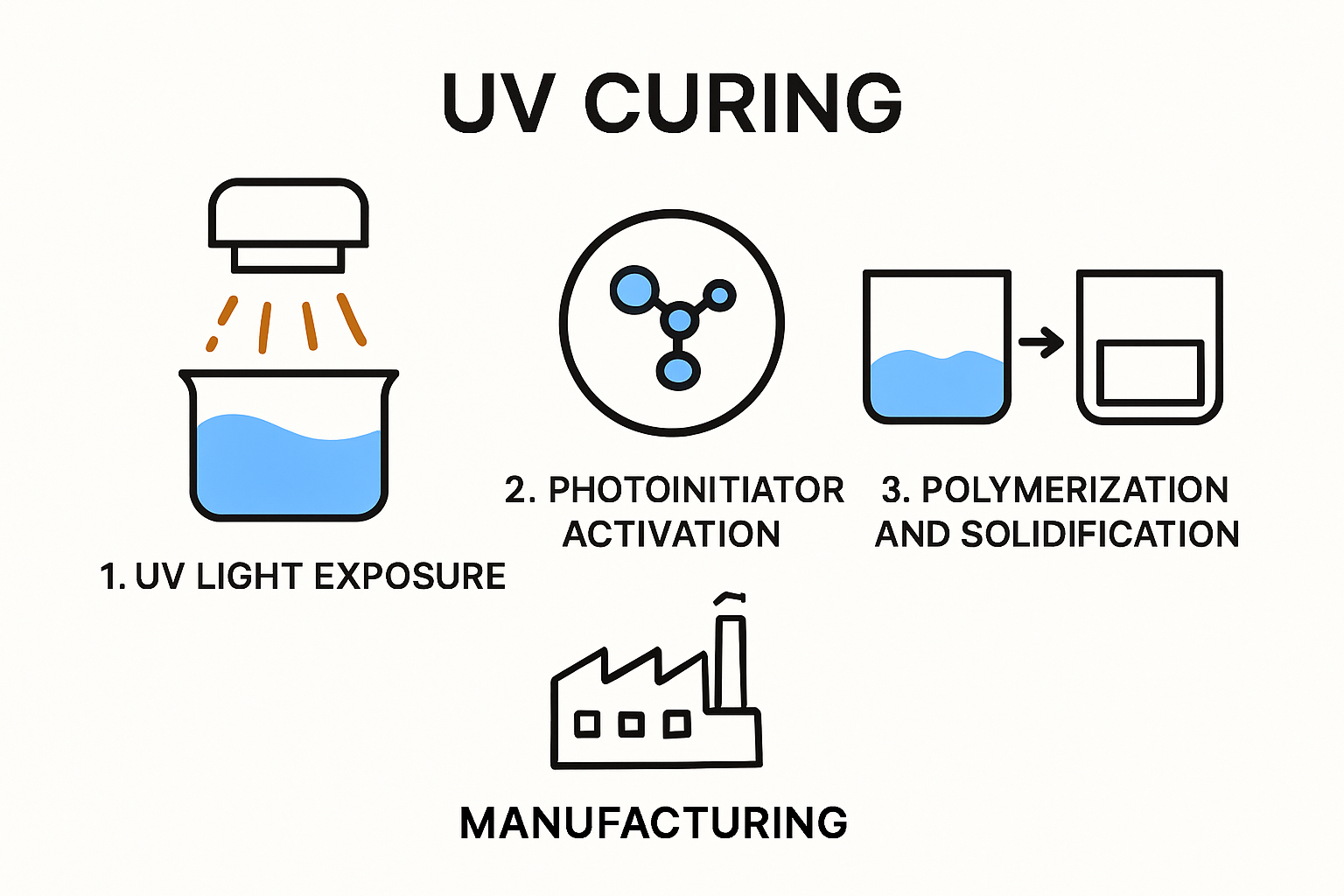
At its core, UV curing involves a precise photochemical reaction that converts liquid materials into solid polymers through exposure to ultraviolet radiation. According to the U.S. Environmental Protection Agency, this process initiates an instantaneous crosslinking of polymers and monomers, creating a durable and uniform adhesive layer. The mechanism fundamentally operates through radical or cationic polymerization, where UV light triggers molecular changes that transform wet coatings into solid, resilient surfaces.
The industrial UV curing system typically comprises several critical components: a UV lamp positioned above the substrate, a precision light reflector, a radiation shield, and an advanced cooling mechanism. Mercury lamps are predominantly used to generate the necessary UV wavelengths, enabling rapid material transformation. Production line speeds for UV curing equipment can range dramatically from 100 to 800 feet per minute, showcasing the technology’s remarkable efficiency.
Industrial Applications and Technological Versatility
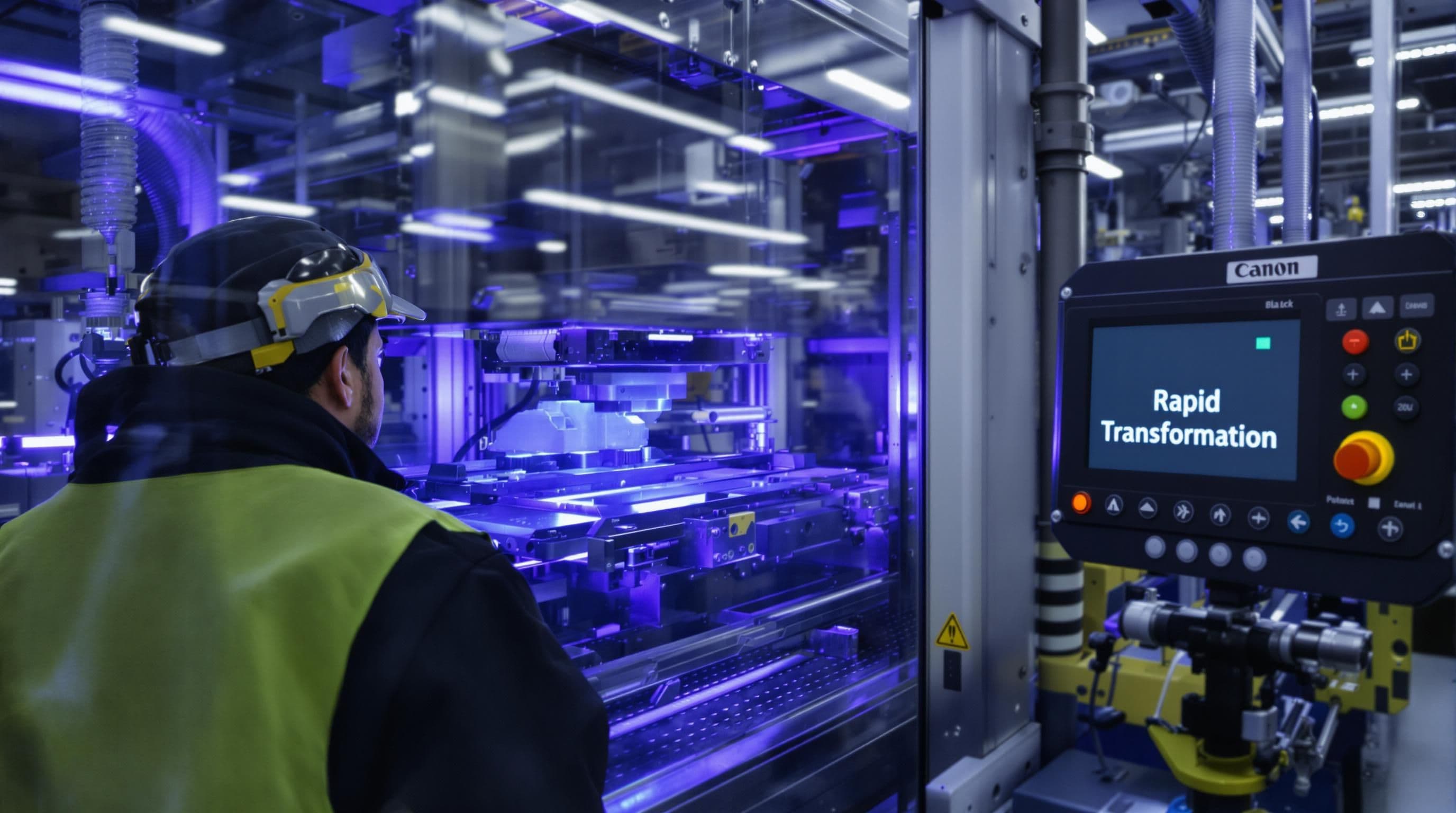
UV curing has revolutionized manufacturing processes across diverse industries. Its applications span printing, coating, decorative treatments, stereolithography, and product assembly. The technology offers unprecedented advantages: low-temperature processing, high-speed conversion, and solventless operation. Originally introduced in the 1960s, UV curing has consistently evolved to become a cornerstone of modern industrial manufacturing.
Specific industrial sectors leveraging UV curing include wood finishing, metal decorative coatings, automotive manufacturing, wire coating production, packaging industries, and specialized floor finishing. Each sector benefits from the technology’s ability to create rapid, durable, and precise material transformations. The process eliminates traditional time-consuming curing methods, replacing them with an instantaneous photochemical reaction that significantly reduces production timelines and enhances overall manufacturing efficiency.
The remarkable versatility of UV curing stems from its fundamental ability to crosslink polymers quickly and uniformly. By exposing UV-curable materials to specific ultraviolet wavelengths, manufacturers can achieve complex material transformations in mere seconds, dramatically improving production speed and product quality. This technological innovation continues to push the boundaries of what’s possible in modern manufacturing, offering unprecedented precision and efficiency across multiple industrial domains.
Advantages of UV Curing for Manufacturing
UV curing has emerged as a transformative technology in modern manufacturing, offering unprecedented advantages that significantly enhance production processes across multiple industries. Explore advanced manufacturing technologies reveals the remarkable potential of this innovative technique.
Economic and Production Efficiency Benefits
Manufacturers are increasingly adopting UV curing due to its remarkable economic advantages. According to research on industrial processing, this technology dramatically reduces production cycle times, enabling faster manufacturing with minimal equipment overhead. The process eliminates traditional thermal curing methods, which require extensive energy consumption and lengthy processing times.
The economic benefits extend beyond production speed. UV curing significantly reduces material waste, as the instantaneous curing process ensures precise and uniform coating application. Companies can achieve faster turnaround times, lower energy costs, and improved product consistency. The technology allows manufacturers to optimize production lines, reducing downtime and increasing overall operational efficiency.
Environmental and Quality Advantages
Environmental sustainability represents another critical advantage of UV curing technologies. Unlike traditional coating methods that rely on solvent-based systems, UV curing produces minimal volatile organic compounds (VOCs) and hazardous air pollutants. This characteristic makes it an environmentally responsible manufacturing solution that aligns with increasingly stringent global environmental regulations.
The quality improvements offered by UV curing are equally impressive. The technology enables manufacturers to create exceptionally durable, chemically resistant surfaces with superior adhesion properties. Coatings produced through UV curing demonstrate remarkable resilience, withstanding harsh environmental conditions and providing extended product longevity. This enhanced durability translates to reduced maintenance costs and improved product performance across various industrial applications.
Moreover, UV curing provides unprecedented precision in material processing. The instantaneous crosslinking of polymers allows for intricate and complex surface treatments that were previously impossible or prohibitively expensive. Manufacturers can achieve ultra-thin, uniform coatings with exceptional control over thickness and surface characteristics. This precision opens new possibilities in industries ranging from electronics and automotive manufacturing to medical device production and packaging.
The versatility of UV curing extends across multiple substrate materials, including metals, plastics, glass, and composites. This adaptability makes it a revolutionary technology that can be seamlessly integrated into diverse manufacturing processes. By offering a combination of speed, quality, environmental responsibility, and economic efficiency, UV curing represents a critical innovation that continues to reshape modern industrial manufacturing strategies.
To help you quickly compare traditional curing methods and UV curing in terms of efficiency, energy use, and environmental impact, the following table summarizes key differences discussed in this section:
| Feature | Traditional Curing | UV Curing |
|---|---|---|
| Curing Speed | Hours to days | Seconds |
| Energy Consumption | High | Low |
| Emissions (VOCs) | High | Minimal |
| Material Waste | Often significant | Dramatically reduced |
| Surface Quality & Durability | Varies, often lower | Superior, highly durable |
| Substrate Compatibility | Limited (heat-sensitive issues) | Broad (metals, plastics, more) |
| Environmental Compliance | Challenging | Easily achieved |
Key Applications in Printing and Packaging
UV curing technology has become a transformative force in printing and packaging industries, revolutionizing how materials are processed and transformed. The technology offers unprecedented precision and efficiency in creating high-quality printed and packaged products across multiple sectors.
Advanced Printing Technologies
In the printing sector, UV curing has emerged as a critical technology for achieving superior print quality and production efficiency. Research published in the Journal of Network Polymer highlights the widespread adoption of UV curable inks in various printing applications, particularly in paper packaging and label production. These specialized inks enable instantaneous drying and curing, dramatically reducing production times and improving overall print resolution.
The inkjet printing segment has particularly benefited from UV curing technologies. According to a groundbreaking study in RSC Advances, UV-LED curing has expanded the potential for functional printing on diverse substrates, including textiles, ceramics, and advanced packaging materials. This innovation allows manufacturers to create intricate designs with exceptional color vibrancy and durability, pushing the boundaries of traditional printing methodologies.
Packaging Industry Transformations
Packaging represents another critical domain where UV curing technology has made substantial impacts. The ability to instantly cure coatings and inks provides manufacturers with unprecedented control over material properties. UV curing enables the creation of protective barriers, enhanced aesthetic finishes, and specialized functional coatings that extend the performance and longevity of packaging materials.
Manufacturers can now produce packaging with enhanced resistance to moisture, chemicals, and mechanical stress. The rapid curing process allows for multilayer coating applications that were previously challenging or impossible. Food packaging, pharmaceutical containers, and consumer product packaging have all benefited from these technological advancements, ensuring higher quality, more durable, and more sustainable packaging solutions.
The environmental advantages of UV curing in packaging are particularly significant. By eliminating solvent-based processes and reducing material waste, the technology supports more sustainable manufacturing practices. The instantaneous curing process consumes less energy compared to traditional thermal curing methods, contributing to reduced carbon footprints and more environmentally responsible production strategies.
Beyond traditional printing and packaging, UV curing technologies are expanding into specialized areas such as 3D printing, electronic circuit board manufacturing, and medical device packaging. The precision and versatility of UV curing continue to unlock new possibilities across industries, demonstrating its potential as a transformative manufacturing technology that goes far beyond conventional printing and packaging applications.
For a quick overview, the table below summarizes key applications and substrate compatibility for UV curing in printing and packaging discussed in this section:
| Application Area | UV Curing Use Case | Substrate Examples |
|---|---|---|
| Commercial Printing | Instant ink curing for high-quality prints | Paper, cardboard, labels |
| Industrial Inkjet | Printing on complex shapes | Textiles, ceramics, plastics |
| Packaging Coatings | Protective and functional layers | Food packaging, pharmaceuticals |
| 3D Printing & Prototyping | Layer-by-layer cure of photopolymers | Plastics, composites |
| Electronics Manufacturing | Circuit board coatings, encapsulation | Printed circuit boards (PCBs) |
| Medical Device Packaging | Precision coating and sealing | Plastics, glass, composites |
Emerging Trends in UV Curing Technology 2025
UV curing technology continues to evolve rapidly, with groundbreaking innovations poised to transform manufacturing and printing industries in 2025 and beyond. These emerging trends represent a significant leap forward in precision, efficiency, and sustainability.
Advanced Light Source Technologies
The transition from traditional mercury lamps to LED-UV light sources marks a pivotal advancement in UV curing technology. According to research from Japanese photonics experts, these new light sources offer remarkable benefits. LED-UV systems provide specific wavelength emissions ranging from 365 to 405 nanometers, delivering up to 70% reduction in power consumption and significantly lower heat generation compared to traditional curing methods.
These precise LED technologies enable manufacturers to achieve unprecedented control over the curing process. The narrow wavelength range necessitates advanced photoinitiator development, driving innovation in resin compositions and material science. This technological evolution allows for more targeted and efficient curing across diverse substrates, from delicate electronic components to robust industrial packaging materials.
Intelligent Curing Systems
The emergence of AI-supported curing technologies represents another transformative trend in UV curing. Innovative systems like SMARTcure are revolutionizing manufacturing processes by integrating intelligent monitoring and optimization capabilities. These advanced systems analyze critical parameters such as dryer output, ink and coating characteristics, and production speed to create more sustainable and efficient curing processes.
Intelligent curing technologies can identify potential energy savings, optimize processing parameters in real-time, and extend the service life of UV curing equipment. This approach not only improves manufacturing efficiency but also supports broader sustainability goals by reducing energy consumption and minimizing material waste.
Alternative Curing Technologies
Beyond traditional UV methods, electron beam (EB) curing is emerging as a powerful alternative technology. Research in printing technology indicates that EB curing provides exceptional through-curing capabilities, particularly in wide web press applications. Manufacturers are actively developing more cost-effective and compact EB curing units to expand their applicability across different manufacturing processes.
The diversity of emerging curing technologies reflects the industry’s commitment to innovation. From LED-UV systems with precise wavelength control to AI-enhanced process optimization and electron beam technologies, manufacturers are exploring multiple pathways to improve curing efficiency, reduce environmental impact, and enhance product quality.
As we move into 2025, these technological trends will continue to reshape manufacturing landscapes. The convergence of advanced light sources, artificial intelligence, and alternative curing methodologies promises to unlock new possibilities in printing, packaging, electronics, and numerous other industries. Manufacturers who embrace these innovations will be well-positioned to achieve unprecedented levels of precision, sustainability, and operational efficiency.
Frequently Asked Questions
What is UV curing?
UV curing is a process that uses ultraviolet light to rapidly polymerize liquid materials into solid polymers, enhancing manufacturing efficiency across various industries.
What are the main benefits of UV curing in manufacturing?
The main benefits of UV curing include reduced production cycle times, low energy consumption, minimal volatile organic compound (VOC) emissions, and enhanced durability and quality of final products.
How does UV curing differ from traditional curing methods?
Unlike traditional curing methods that often take hours or days, UV curing processes can achieve solid results in seconds while using significantly less energy and producing fewer emissions.
What applications are most commonly associated with UV curing technology?
UV curing technology is used in a variety of applications, including printing, packaging, automotive manufacturing, electronics, and medical device production, enabling rapid and durable material transformations.
Ready to Unlock Faster, Cleaner, and More Precise Printing?
If you are grappling with bottlenecks in your factory or print shop, struggling to keep up with faster turnaround demands, or searching for ways to cut waste and meet strict environmental regulations, you are not alone. As covered in our complete guide on UV curing, manufacturers crave rapid processing, impeccable durability, and sustainability. But getting there requires equipment and solutions built for next-generation printing, packaging, and graphic arts production. At Kolorguide, we provide the specialized products you need to harness the full potential of UV curing, whether your goal is speed, eco-friendly results, or flawless finishes.
Reimagine what your production line can achieve. Visit Kolorguide now to see how our printing and design solutions can help you achieve instant results without sacrificing quality. Take the first step toward higher productivity, lower emissions, and superior finished products. Don’t let outdated processes hold you back—explore our solutions and see real progress today. Find out more about our offerings for the printing industry and get ahead of your competition with technology built for the future.
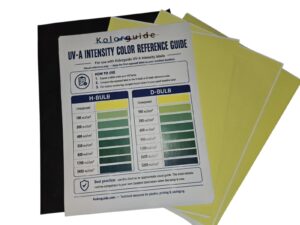
UV-A Intensity Labels – 110 Color-Changing Exposure Indicators with H-Bulb & D-Bulb Reference Guide
Original price was: $99.99.$70.00Current price is: $70.00.