Color psychology shapes the way we react to everything from brand logos to the food packages we pick up at the store. Think colors are just about looks? Think again. A recent study analyzed 644 companies and over 30,000 customer reviews just to map out how color impacts emotion and buying behavior. That means picking the right shade can be the difference between a forgettable product and one that flies off shelves.
Table of Contents
- Understanding Color Psychology In Design
- Industry Applications Of Color Psychology
- Choosing The Right Colors For Your Products
- Future Trends In Color Psychology For 2025
Quick Summary
| Takeaway | Explanation |
|---|---|
| Color influences emotional responses. | Different colors evoke specific emotions, impacting perceptions and decisions across design fields. |
| Choose colors based on cultural context. | Psychological effects of colors vary by culture, necessitating tailored approaches in color selection. |
| Implement color strategies for branding. | Effective color choices convey brand identity, enhance user experience, and influence consumer behavior. |
| Use color psychology in product design. | Strategic color selection can improve product perception, user interaction, and overall success in the market. |
| Embrace evolving color technology. | Emerging technologies and quantum theories are reshaping color application in design, enhancing personalization and adaptability. |
Understanding Color Psychology in Design
Color psychology in design represents a sophisticated intersection between visual perception and human emotional response. The strategic application of color can profoundly influence perception, behavior, and decision making across multiple industries and design contexts.
The Science Behind Color Perception
At its core, color psychology explores how different hues trigger specific psychological and physiological reactions. Research published in the Annual Review of Psychology reveals that colors carry deep psychological significance, impacting human affect, cognition, and behavioral responses. Designers and industries leverage this understanding to create targeted visual experiences that communicate messages beyond mere aesthetic appeal.
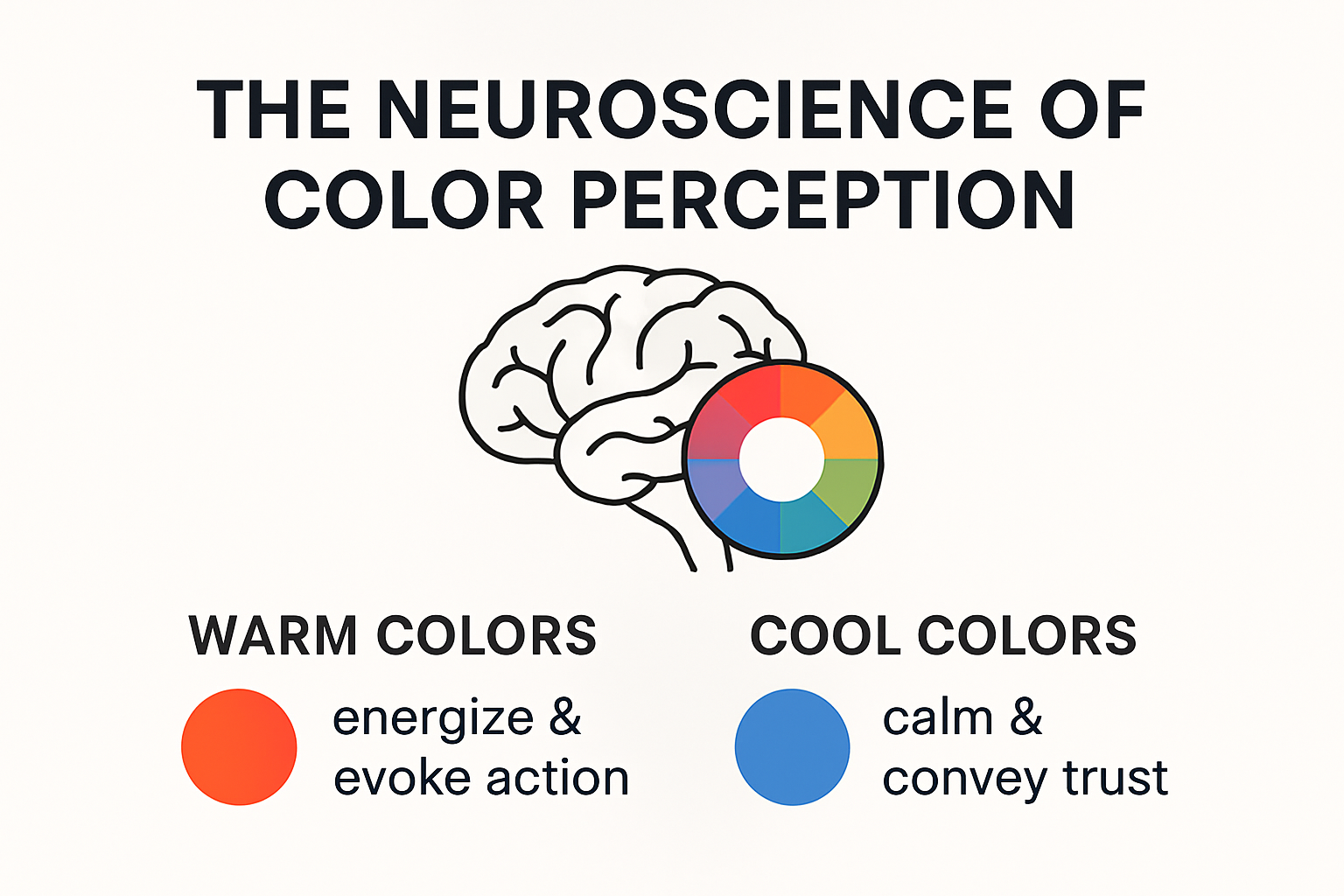
The human brain processes color through complex neurological pathways, where visual information gets translated into emotional and cognitive interpretations. Wavelength variations trigger specific neurochemical responses, explaining why certain colors evoke distinct emotional states. For instance, warm colors like red and orange tend to stimulate excitement and energy, while cooler tones such as blue and green promote calmness and reflection.
Psychological Impact Across Design Disciplines
A comprehensive study in SAGE Open investigated color’s effects on mood, demonstrating that different color schemes can significantly influence emotional states. This research underscores the critical role of color psychology in design disciplines ranging from graphic design and branding to architectural and product design.
Industrial designers, graphic artists, and marketing professionals utilize color psychology principles to:
- Communicate Brand Identity: Select color palettes that reflect organizational values and emotional positioning
- Enhance User Experience: Design interfaces and environments that trigger desired psychological responses
- Influence Consumer Behavior: Create visual narratives that subtly guide perception and decision making
Moreover, research in BMC Psychology highlights the nuanced cultural considerations in color selection, emphasizing that psychological responses to color are not universal but deeply influenced by cultural contexts and individual experiences.
Understanding these intricate relationships between color, emotion, and perception empowers designers to craft compelling visual experiences that transcend traditional aesthetic boundaries. By integrating scientific insights with creative strategies, professionals can develop design solutions that communicate effectively and resonate deeply with target audiences. Learn more about effective color communication strategies.
Industry Applications of Color Psychology
Color psychology extends far beyond aesthetic considerations, serving as a powerful strategic tool across diverse industries. By understanding how colors influence perception, emotions, and behavior, professionals can create more effective and engaging design solutions.
Food and Beverage Industry Design Strategies

In the food and beverage sector, color plays a critical role in consumer perception and purchasing decisions. A groundbreaking 2024 study analyzing emotion-based color palettes revealed intricate relationships between logo colors and consumer emotional responses. By examining 644 companies and over 30,000 customer reviews, researchers discovered specific color-emotion associations that significantly impact brand perception.
For instance, warm colors like red and orange stimulate appetite and create a sense of excitement, while cooler tones such as blue and green can communicate freshness and health. Food packaging designers strategically leverage these psychological insights to influence consumer choices, creating visual experiences that trigger specific emotional and physiological responses.
Technology and Branding Color Applications
Research from Liberty University’s graphic design thesis demonstrates how color psychology profoundly impacts advertising, packaging, and branding across technology industries. Technology companies carefully select color palettes to communicate brand values, evoke trust, and differentiate themselves in competitive markets.
Blue, often associated with reliability and professionalism, dominates corporate technology branding. Green signals innovation and sustainability, while black communicates sophistication and cutting-edge design. These color choices are not arbitrary but deliberate strategies to establish emotional connections with target audiences.
Manufacturing and Product Design Considerations
The Annual Review of Psychology research highlights how color influences cognitive processing and emotional responses in manufacturing and product design. Industrial designers use color psychology principles to:
- Enhance User Experience: Create intuitive interfaces and product interactions
- Communicate Product Functionality: Use color to indicate purpose and operation
- Improve Safety: Design warning systems and visual alerts that capture immediate attention
Manufacturing sectors like automotive, electronics, and machinery employ color psychology to guide user behavior, improve product usability, and create memorable brand experiences. Discover more about leveraging color for productivity.
By integrating scientific insights with creative design strategies, industries can develop more effective visual communication tools that resonate deeply with their target audiences, transforming color from a mere aesthetic element to a powerful psychological instrument.
To clarify how key industries leverage color psychology, the following table summarizes the primary color applications and psychological impacts for food & beverage, technology, and manufacturing/product design.
| Industry | Key Color Uses | Common Colors & Effects | Psychological Impact |
|---|---|---|---|
| Food & Beverage | Stimulate appetite; highlight freshness | Red, orange (excite, appetite), | Drives appetite, excitement, sense of freshness |
| blue, green (fresh, healthy) | or health depending on hue | ||
| Technology & Branding | Communicate trust, innovation, sophistication | Blue (trust), green (innovation), | Builds credibility, sets brand personality |
| black (sophistication) | and emotional connection to audience | ||
| Manufacturing & Product | Enhance usability, safety alerts, indicate | Red (alerts), yellow (caution), | Improves safety, clarifies function, guides |
| Design | function | varied per function | interaction & strengthens brand experience |
Choosing the Right Colors for Your Products
Selecting the perfect color palette for products requires a strategic approach that goes beyond aesthetic preferences. Color selection is a critical decision that directly impacts consumer perception, brand identity, and product success across various industries.
Understanding Consumer Color Preferences
Research from the National Institutes of Health reveals that color choice profoundly influences consumer perception of product quality, trustworthiness, and purchasing intention. This scientific insight underscores the importance of methodical color selection in product design.
Product designers must consider multiple factors when choosing colors:
- Target Audience Demographics: Age, gender, cultural background, and psychological preferences
- Brand Identity: Alignment with existing brand color schemes and emotional positioning
- Product Functionality: Colors that enhance or communicate product purpose
For instance, technology products often utilize cool blues and grays to communicate professionalism and reliability, while wellness products might incorporate calming greens and soft neutrals to evoke a sense of natural healing and tranquility.
Color Selection Strategies for Different Industries
Each industry requires a nuanced approach to color selection. Automotive manufacturers might choose colors that suggest power and sophistication, while food packaging designers select hues that stimulate appetite and communicate freshness. The key is understanding the psychological triggers associated with specific color palettes.
Professional designers employ several strategic methods to select optimal colors:
- Conduct comprehensive color psychology research
- Perform target audience color preference studies
- Develop multiple color prototypes for testing
- Analyze competitor color strategies
These systematic approaches help create color schemes that not only look appealing but also communicate subtle psychological messages that resonate with consumers.
Technical Considerations in Color Selection
Beyond aesthetic and psychological factors, technical considerations play a crucial role in color selection. Factors such as material properties, production costs, and color reproduction capabilities significantly impact final product design.
Advanced color matching technologies and spectrophotometric tools enable designers to:
- Ensure color consistency across different production runs
- Match colors precisely across various materials and surfaces
- Create color palettes that remain stable under different lighting conditions
By integrating scientific research, psychological insights, and technical precision, product designers can create color strategies that not only attract consumers but also communicate brand values effectively. Learn more about effective color communication techniques.
Ultimately, successful color selection is a delicate balance between art and science, requiring deep understanding of human perception, technological capabilities, and brand storytelling.
To help designers choose the most effective colors, the following table summarizes key strategies and considerations for optimal color selection in product design.
| Strategy/Consideration | Description/Action |
|---|---|
| Audience Demographics | Analyze age, gender, culture, and preferences of target consumer |
| Brand Alignment | Ensure color choices reflect current brand identity and emotional positioning |
| Product Functionality | Use colors that support the product’s intended use and functionality |
| Research & Prototyping | Conduct studies, test with multiple prototypes, analyze competitor color schemes |
| Technical Feasibility | Evaluate material compatibility, cost, and reproducibility of chosen colors |
| Quality & Consistency | Utilize color matching tools to ensure production consistency across channels |
Future Trends in Color Psychology for 2025
The landscape of color psychology is rapidly evolving, driven by technological advancements, scientific research, and changing global perspectives. As we approach 2025, emerging trends promise to revolutionize how designers, industries, and researchers understand and apply color principles.
Quantum Perspectives on Color Perception
A groundbreaking study exploring the quantum nature of color perception introduces a transformative approach to understanding how humans interpret color. This quantum theory suggests that color perception is far more complex than traditional models, potentially reshaping design strategies across multiple industries.
Researchers are discovering that color perception involves intricate quantum interactions, challenging existing paradigms. This emerging understanding suggests that colors are not just visual stimuli but dynamic information systems that interact with human cognitive processes in ways previously unimaginated. Design professionals will need to integrate these sophisticated insights into their color selection and application strategies.
Universal Color Harmony Models
Research investigating color harmony through a fuzzy-based approach reveals promising developments in creating more universal color selection principles. The study suggests that color harmony is influenced by fundamental factors such as saturation and intensity, potentially creating more standardized approaches to color design across different cultural contexts.
Key implications for future color psychology include:
- Cross-Cultural Design: More nuanced understanding of color perception across different cultural backgrounds
- Adaptive Color Systems: Development of intelligent color selection tools that adjust based on contextual and individual preferences
- Personalized Color Experiences: Enhanced ability to create color palettes that resonate with specific user demographics
Technological Integration and Adaptive Color Systems
Emerging technologies are set to transform color psychology applications. Artificial intelligence and machine learning algorithms are being developed to:
- Predict emotional responses to specific color combinations
- Create dynamic color environments that adapt to user mood and context
- Generate personalized color recommendations based on individual psychological profiles
The integration of advanced technologies will enable more sophisticated and responsive color design strategies. Discover innovative approaches to color productivity that leverage these cutting-edge insights.
As we move towards 2025, color psychology is transitioning from a primarily intuitive discipline to a rigorously scientific field. Designers, researchers, and industries will increasingly rely on data-driven approaches, quantum insights, and advanced technological tools to understand and leverage the profound psychological impact of color.
Frequently Asked Questions
What is color psychology in design?
Color psychology in design explores how colors influence human emotions, perceptions, and behaviors, affecting how audiences respond to visual elements across different industries.
How does color impact consumer behavior?
Color can significantly affect consumer decisions by evoking specific emotions. For example, warm colors like red can stimulate appetite, while blue is often associated with trust and reliability in branding.
Why is understanding cultural context important in color selection?
Colors can have different meanings and emotional impacts across cultures. Tailoring color choices to the cultural context of a target audience enhances communication and effectiveness in design.
What are some future trends in color psychology for 2025?
Future trends include quantum perspectives on color perception, the development of universal color harmony models, and the integration of adaptive color systems that personalize designs based on user preferences.
Ready to Harness the Power of Color in Your Industry?
Does your team struggle to choose colors that actually drive sales or boost brand engagement? The article revealed how color psychology is not just about looking good, but about triggering real emotion and influencing decisions in fields like printing, design, and graphic arts. If you want your printed materials or product packaging to truly connect with buyers and stand out from the rest, you need more than intuition. You need tools and solutions that translate modern color research into real business results. Discover how you can bridge the gap between insight and implementation and turn theory into profit with the right resources for designers and print professionals.
Stop letting challenging color choices hold back your impact. Visit Kolor Guide now to access the expert tools, communication guides, and color productivity resources designed for your industry. Make the move before your next project and see how the correct color strategy can change everything. Get started with our practical advice, including proven tips for communicating color with clients or explore how colored lights can maximize productivity.
Recommended
- How Entrepreneurs Can Use Colored Lights to Stay Productive – kolorguide
- Cómo lograr el color PANTONE® del año 2020 en bienes duraderos y electrónica de consumo – kolorguide
- Azul Clasico: uN COLOR CON TEXTURA, SABOR, OLOR Y SONIDO – kolorguide
- La importancia de la economía circular y omnicanal – kolorguide
- The Role of Color Psychology in Designing Product Packaging
- Choosing Blinds Colors: A Simple Guide for 2025 – Urban Studio Designs
Pantone Color Bridge Set | Coated & Uncoated GP6102B
Original price was: $436.00.$428.00Current price is: $428.00.
Pantone CMYK Guide Coated & Uncoated GP5101C
$216.00
Pantone Color Guide Essentials GPG301B Lastest Edition
$795.00
Pantone Portable Guide Studio GPG304B By Kolorguide
Original price was: $1,079.00.$944.99Current price is: $944.99.
Pantone Coated Combo GP6205B
$337.00
Pantone Solid Chips Coated & Uncoated GP1606B
$561.00
Pantone Solid Color Set GP1608B
$681.00

Pantone Solid Guide Set GP1605B Latest Edition
$485.00