Screen printing is known for making sharp, colorful designs pop on everything from t-shirts to circuit boards. But here is something you probably have not heard. Screen printing can deposit ink layers over ten times thicker than many digital methods. That is why industries like electronics and even medical manufacturing depend on this classic technique for jobs where regular printing just cannot keep up.
Table of Contents
- What Is Screen Printing And How Does It Work?
- Importance Of Screen Printing In Various Industries
- Key Advantages Of Screen Printing
- Real-World Applications And Innovations In Screen Printing
- Comparing Screen Printing To Other Printing Techniques
Quick Summary
| Takeaway | Explanation |
|---|---|
| Screen printing enables high-quality designs. | This technique allows for vibrant and durable graphics on a variety of surfaces, making it highly effective for professional use. |
| Versatile application across industries. | Screen printing is used in electronics, textiles, and automotive sectors, showcasing its adaptability for complex manufacturing needs. |
| Cost-effective for large-scale production. | The method minimizes material waste and offers fast reproduction, making it economically strategic for manufacturers preparing bulk runs. |
| Exceptional color vibrancy and durability. | Screen printing achieves superior color penetration, creating long-lasting graphics that resist wear and maintain visual appeal. |
| Facilitates intricate multi-layered designs. | This technique supports precise color registration, allowing for sophisticated artwork that meets exacting specifications in various applications. |
What is Screen Printing and How Does It Work?
Screen printing represents a sophisticated printing technique that transforms creative visions into vibrant, high-quality visual designs across multiple surfaces. This specialized method allows professionals to transfer intricate graphics and images onto diverse materials with remarkable precision and durability.
Understanding the Screen Printing Process
At its core, screen printing involves pushing ink through a fine mesh screen onto a substrate, creating sharp and detailed graphics. Professional printers utilize specialized screens featuring a tightly woven mesh material stretched across a rigid frame. Each screen is prepared with a unique stencil design that precisely determines which areas of the screen will allow ink to pass through.
The basic screen printing workflow involves several critical steps:
- Designing the graphic or image to be printed
- Creating a stencil on the screen using light-sensitive emulsion
- Positioning the screen over the target printing surface
- Pushing ink through the screen’s open areas using a squeegee
- Allowing the printed design to dry and cure
Technical Advantages of Screen Printing
Screen printing offers significant advantages for professionals seeking high-quality, versatile printing solutions. Unlike digital printing techniques, screen printing enables:
- Exceptional color vibrancy and opacity
- Ability to print on multiple surfaces including textiles, plastics, and metals
According to Printing Industry Exchange, screen printing remains a preferred method for producing durable, long-lasting graphics with superior color penetration and resistance to wear.
The technique allows for extraordinary customization, enabling designers to create complex multi-layered designs with precise color registration. Professional screen printers can reproduce intricate artwork with remarkable accuracy, making this method ideal for everything from commercial apparel production to specialized industrial marking applications.
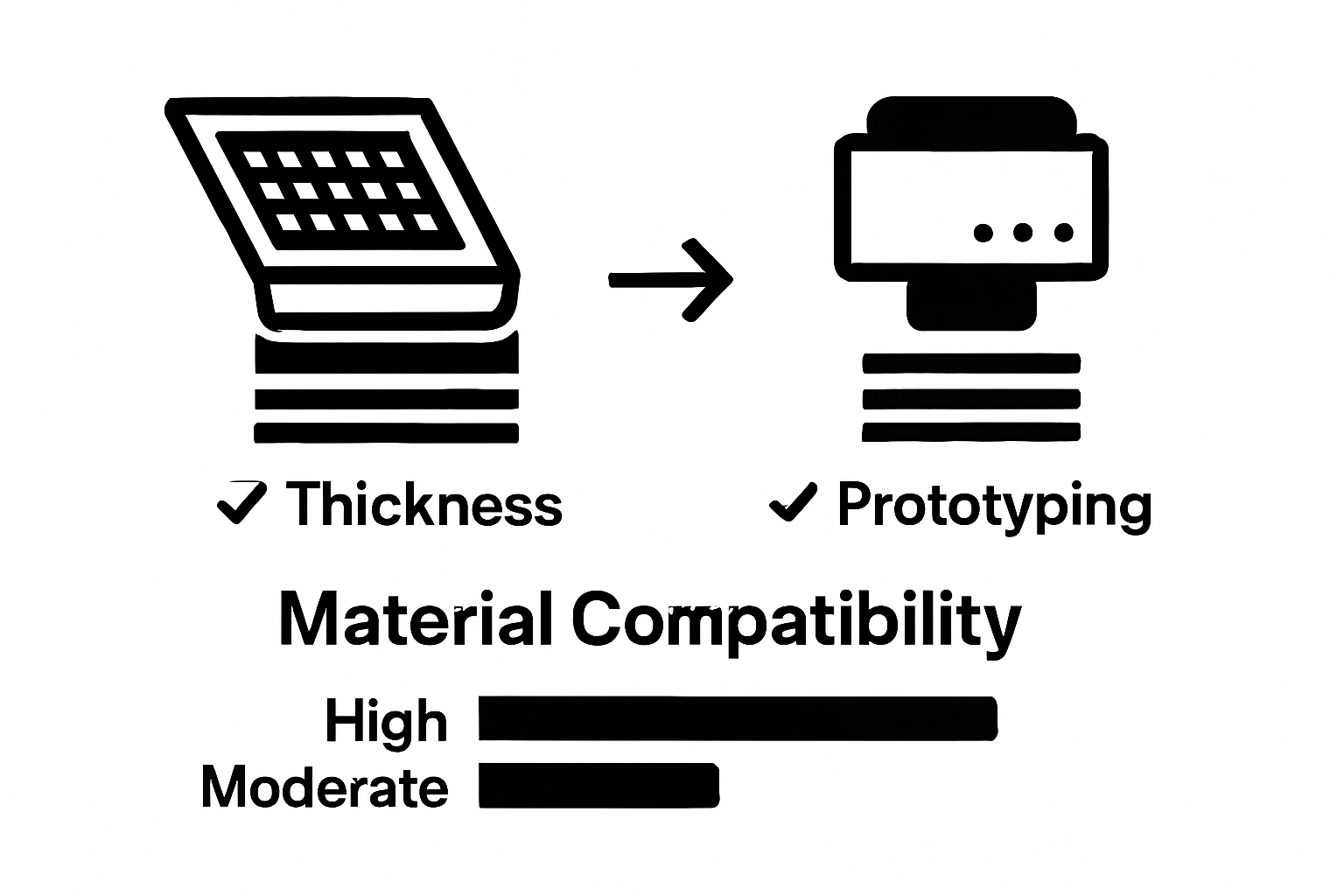
To clarify how screen printing differs from other printing techniques, the following table compares key characteristics and advantages based on information from the article.
| Feature | Screen Printing | Digital Printing | Inkjet Printing |
|---|---|---|---|
| Ink Thickness/Coverage | Very thick, can be 10x thicker than digital | Thin to moderate | Thin |
| Material Compatibility | Textiles, plastics, metals, glass, more | Mostly paper, some textiles and plastics | Mostly paper, some textiles |
| Best Production Use | Large scale, high volume, specialty jobs | Small batch, rapid prototyping | Small batch, rapid prototyping |
| Color Vibrancy/Durability | Exceptional vibrancy and resistance to wear | Good vibrancy, less durable | Good vibrancy, less durable |
| Suitable for Intricate Layering | Yes, precise color registration | Limited | Limited |
Importance of Screen Printing in Various Industries
Screen printing transcends traditional graphic design boundaries, serving as a critical manufacturing technique across diverse industrial sectors. Its versatility and precision make it an indispensable process for producing high-quality, customized products with exceptional durability and visual appeal.
Industrial Applications and Technological Innovations
The reach of screen printing extends far beyond simple graphic reproduction. Modern industries leverage this technique for complex manufacturing processes that demand intricate detail and consistent performance. Sectors ranging from electronics to automotive manufacturing rely on screen printing for creating specialized components and functional designs.
Key industrial applications include:
- Producing printed circuit boards for electronic devices
- Manufacturing solar panel components
- Creating specialized textile designs for performance wear
- Developing advanced medical diagnostic equipment
- Producing automotive instrument panels and specialized decals
Economic and Manufacturing Significance
Screen printing represents more than just a printing method it is a critical manufacturing strategy that enables cost-effective production of complex designs. Manufacturers appreciate its ability to reproduce graphics on multiple substrates with remarkable consistency and precision.
This table organizes the main industrial applications where screen printing provides significant value as highlighted in the article.
| Industry/Sector | Application Area | Example Products/Components |
|---|---|---|
| Electronics | Printed circuit boards, sensors | Flexible PCBs, biosensors |
| Renewable Energy | Photovoltaic and solar panel production | Solar cells |
| Medical | Diagnostic and wearable medical equipment | Biosensors, diagnostic panels |
| Automotive | Instrument panels, decals | Dashboard graphics, decals |
| Textiles | Performance and specialized apparel | Athletic wear, branded textiles |
According to National Association of Manufacturers, screen printing technologies contribute significantly to advanced manufacturing capabilities, allowing companies to reduce production costs while maintaining high-quality output.
The technique’s adaptability makes it particularly valuable in industries requiring specialized, customized components. Photovoltaic manufacturers, medical device producers, and electronic component engineers consistently rely on screen printing for creating intricate, functional designs that traditional manufacturing methods cannot achieve.
By enabling precise material deposition and supporting multi-layered production processes, screen printing continues to drive technological innovation across global manufacturing landscapes. Learn more about advanced printing technologies that are transforming industrial production methods.
Key Advantages of Screen Printing
Screen printing distinguishes itself as a premier printing technique through its remarkable versatility and superior production capabilities. Professionals across multiple industries recognize this method as a powerful tool for creating high-quality, durable, and visually stunning graphics that meet diverse manufacturing requirements.
Versatility and Material Compatibility
One of the most significant advantages of screen printing lies in its extraordinary ability to print on virtually any surface. Unlike digital printing methods constrained by material limitations, screen printing enables professionals to transfer designs onto an expansive range of substrates with consistent precision.
Materials compatible with screen printing include:
- Textiles and fabrics
- Metals and metal alloys
- Plastics and polymers
- Ceramics and glass
- Wood and composite materials
- Electronic circuit boards
Cost-Effectiveness and Production Efficiency
Screen printing emerges as an economically strategic printing method, particularly for large-scale production runs. The technique offers substantial cost advantages by minimizing material waste and enabling rapid, consistent reproduction of complex designs.
According to Rochester Institute of Technology, screen printing provides significant economic benefits through its ability to create specialized effects and maintain high-quality standards across extensive manufacturing processes.
Professional designers and manufacturers appreciate screen printing’s unique capabilities to produce thick ink layers, create textured finishes, and achieve exceptional color vibrancy that traditional printing methods cannot replicate. Explore advanced color management techniques that complement screen printing technologies.
The technique’s adaptability extends beyond mere graphic reproduction. Screen printing enables intricate, multi-layered designs with precise color registration, making it an indispensable technology for industries requiring sophisticated, functional components with exacting specifications.
Real-World Applications and Innovations in Screen Printing
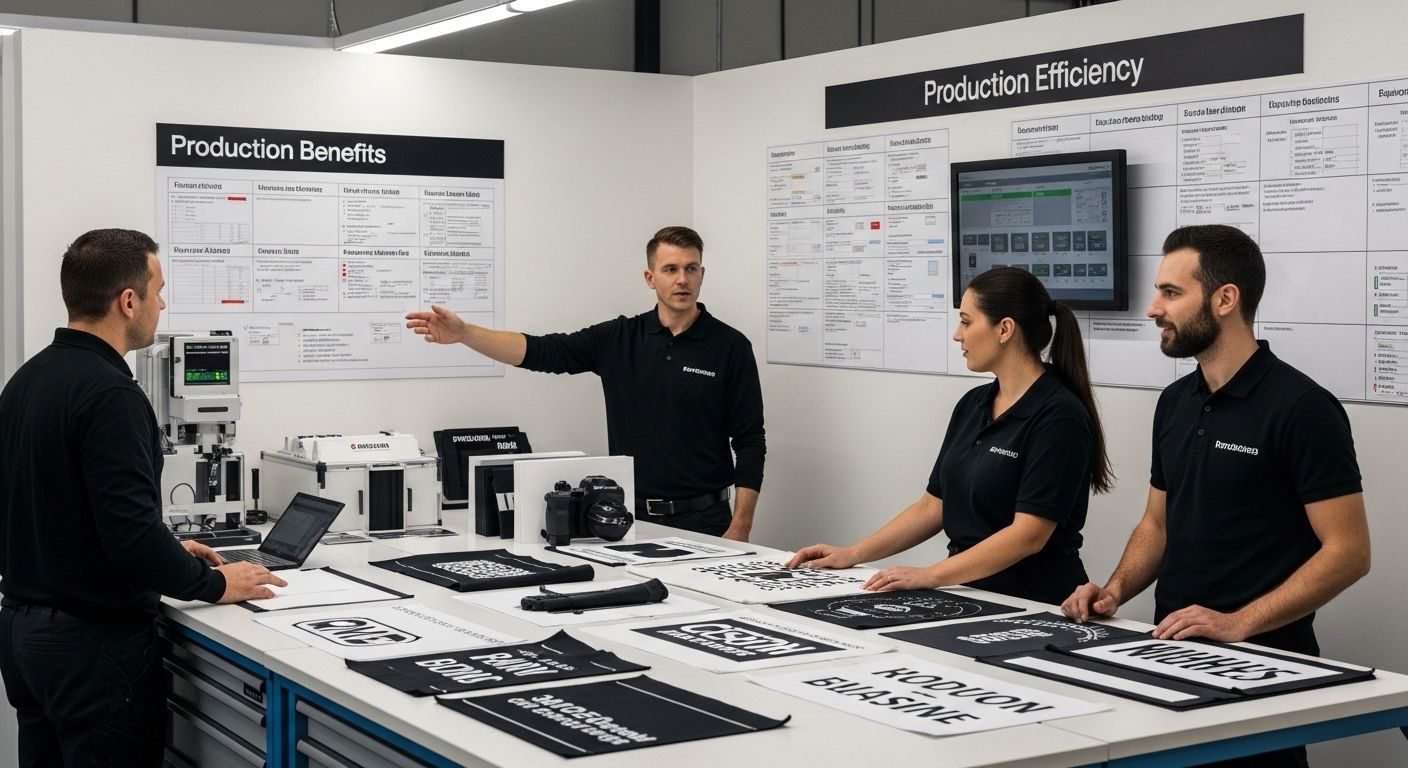
Screen printing has evolved from a traditional graphic reproduction technique into a sophisticated manufacturing process driving technological innovation across multiple advanced industries. Its precision, adaptability, and versatility enable professionals to push the boundaries of design and functional production.
Advanced Technology and Electronic Applications
In the realm of technological innovation, screen printing plays a critical role in developing cutting-edge electronic components and specialized devices. Engineers and researchers leverage this technique to create complex, multilayered circuits, sensors, and functional interfaces that traditional manufacturing methods cannot replicate.
Significant technological applications include:
- Producing flexible printed circuit boards
- Manufacturing solar panel photovoltaic cells
- Creating advanced biosensors for medical diagnostics
- Developing wearable electronic interfaces
- Generating specialized electromagnetic shielding components
Emerging Industries and Specialized Manufacturing
Screen printing continues to transform manufacturing processes across diverse sectors, enabling unprecedented levels of customization and precision. The technique provides solutions for industries requiring intricate, high-performance components with exacting specifications.
According to the National Association of Printing Ink Manufacturers, screen printing has become instrumental in developing advanced technologies like printed electronics, biosensors, and photovoltaic systems.
Professionals recognize screen printing as more than a printing method it is a sophisticated manufacturing strategy capable of producing complex, functional designs with remarkable consistency. Discover emerging trends in digital textile printing that complement these innovative manufacturing techniques.
The continuous evolution of screen printing technologies demonstrates its critical role in driving industrial innovation, offering professionals an adaptable, precise, and cost-effective solution for creating sophisticated, high-performance components across multiple sectors.
Comparing Screen Printing to Other Printing Techniques
Printing technologies represent diverse approaches to transferring graphics and designs, each with unique strengths and limitations. Screen printing distinguishes itself through exceptional versatility and performance characteristics that set it apart from alternative printing methods.
Comparative Performance Analysis
When evaluating printing techniques, professionals must consider multiple factors including material compatibility, production scale, cost efficiency, and graphic reproduction quality. Screen printing offers distinctive advantages that make it superior in many professional contexts, particularly for large-volume and specialized production requirements.
Key comparative differences include:
- Ink thickness and coverage capabilities
- Material substrate versatility
- Production scalability
- Color vibrancy and durability
- Cost-effectiveness for bulk manufacturing
Technical Limitations and Strategic Advantages
Each printing technique presents specific technical constraints. While digital printing excels in rapid prototyping and small-batch production, screen printing dominates in scenarios requiring high-volume, consistent output with specialized material requirements.
According to National Institutes of Health research, screen printing demonstrates significant advantages in large-scale production environments, offering superior material deposition and flexibility compared to inkjet technologies.
Professionals recognize screen printing as a robust technique capable of producing intricate multilayered designs with exceptional precision. Unlike digital printing methods constrained by material and resolution limitations, screen printing enables complex graphic reproduction across diverse substrate types. Explore advanced color management strategies that complement screen printing technologies.
The technique’s ability to create thick, consistent ink layers and maintain graphic integrity under challenging manufacturing conditions makes it an indispensable tool for industries requiring high-performance, specialized printing solutions.
Unlock Professional Screen Printing Results with Reliable Color Tools
Do you ever struggle to achieve flawless color matching and consistent results in your screen printing projects? The article “Understanding Screen Printing Advantages for Professionals” highlights the need for superior color vibrancy, precise registration, and accurate material compatibility. At Kolorguide.com, we understand how vital it is to get your colors right every single time. If you want to transform complex designs into high-impact prints and set yourself apart in the printing or design industry, you need trusted color management solutions that do not let you down.
Stop wasting time on unreliable color references or inconsistent outcomes. Visit Kolorguide.com to browse our curated collection of Pantone color guides and swatches designed specifically for professionals like you. Our tools help you ensure color fidelity, whether you work with textiles, plastics, or advanced industrial applications. Enjoy fast shipping, multiple payment choices including Bitcoin, and top-rated customer support. Put your projects in the best possible light—explore your essential color management solutions today and experience the confidence of perfect color in every screen print.
Frequently Asked Questions
What are the advantages of screen printing over digital printing?
Screen printing offers superior color vibrancy, opacity, and the ability to print on a wide range of materials, making it ideal for large-volume production runs and specialized applications.
How does the screen printing process work?
The screen printing process involves creating a stencil on a mesh screen, positioning it over the substrate, and pushing ink through the open areas using a squeegee, resulting in high-quality, detailed graphics.
Can screen printing be used on different materials?
Yes, screen printing is highly versatile and can be applied to various materials including textiles, metals, plastics, ceramics, glass, and more, facilitating creative designs across multiple industries.
What types of industries benefit from screen printing?
Screen printing is utilized in various industries such as electronics, fashion apparel, automotive, and medical manufacturing, providing durable, customized components and designs that meet specific requirements.