
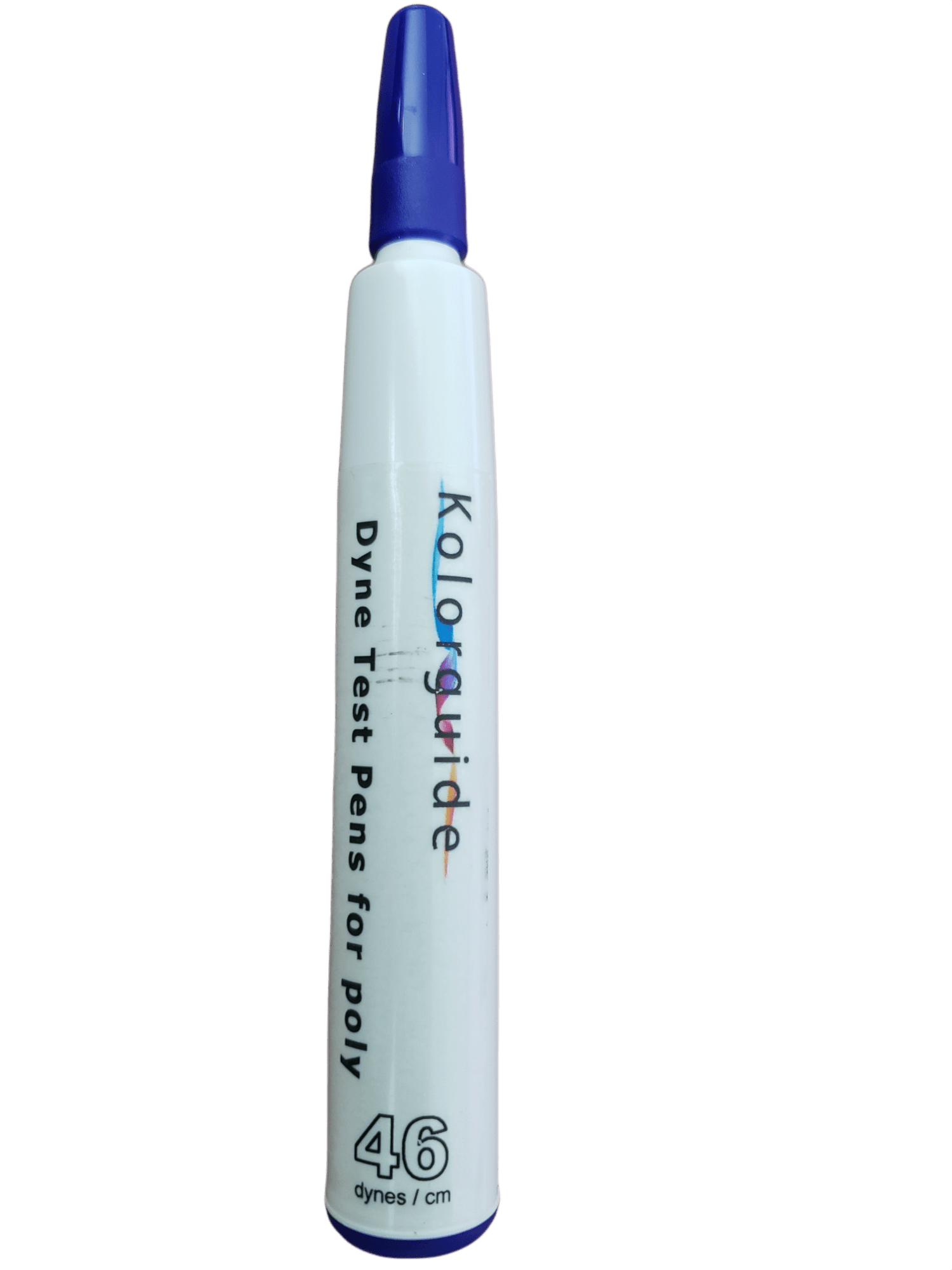

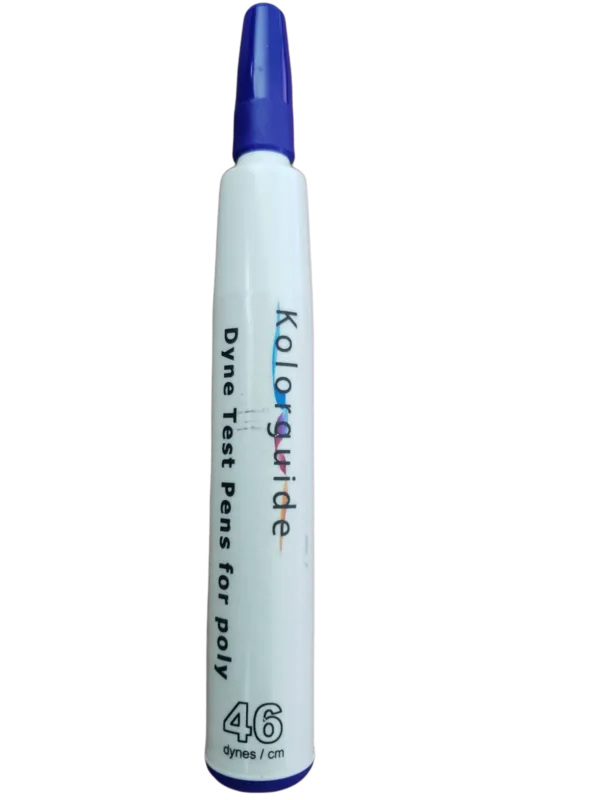

Dyne Test Pens – Professional Surface Energy Testing Tool for Production Environments
$9.00
Professional Surface Energy Testing Tool for Production Environments
✔ Free 1-4 day U.S. Delivery
✔ Same-Day Shipping (Orders before 2 PM EST)
✔ Sold individually – No minimun order required
Ideal for quick production replacements or testing specific dyne levels without bulk purchasing
For full surface energy coverage from 30–52 dynes/cm, explore the Kolorguide Dyne Test Pens Kit.
[View Full 30–52 Kit]
MSDs Dyne test pens Kolorguide
Individual Dyne Test Pens for Surface Energy Testing
Kolorguide professional dyne pens designed for routine plant verification of plastic films, corona-treated substrates, and coated materials.
✔ Accurate dyne level verification
✔ Designed for routine plant testing
✔ Compact and easy-to-handle design
✔ Cost-effective alternative for process control
When to Use Kolorguide Dyne Test Pens
- Routine verification in production lines
- Quick checks after corona treatment
- Training and troubleshooting
- Non-critical surface energy confirmation
Why Choose Kolorguide Dyne Pens?
Compact reservoir design
Easy flow control
Practical for field use
Cost-efficient for frequent testing
Handling & Best Practices
Always cap after use
Avoid surface contamination
Do not touch test area before application
Replace pen if fluid performance changes
Kolorguide Individual Dyne Test Pens are precision surface energy testing markers designed for targeted verification of specific dyne levels on plastic films and treated substrates.
Each pen is calibrated to a single dyne value, allowing operators to verify exact surface energy requirements for printing, coating, and laminating applications. This format is ideal when only one or two dyne levels are required for routine production checks.
Surface energy, measured in dynes/cm, directly affects ink adhesion and coating performance. By selecting the appropriate dyne test pen, users can quickly confirm whether a material meets required adhesion thresholds before production begins.
Ideal For:
Replacing expired pens
Verifying a specific dyne requirement
Spot checks on production lines
Targeted surface energy confirmation
Available Individual Dyne Levels
30 dynes/cm
32 dynes/cm
34 dynes/cm
36 dynes/cm
38 dynes/cm
40 dynes/cm
42 dynes/cm
44 dynes/cm
46 dynes/cm
48 dynes/cm
50 dynes/cm
52 dynes/cm
Why Surface Energy Matters
Surface energy, measured in dynes per centimeter (dynes/cm), directly affects ink adhesion, coating performance, and lamination quality. Insufficient surface energy can lead to adhesion failure, print defects, and costly production issues.
Dyne pens provide a simple and effective method for routine verification of:
Corona-treated films
Extruded plastic substrates
Coated materials
Web converting applications
Designed for Routine Production Use
While laboratory-grade liquid solutions are available, dyne test pens offer a practical and efficient solution for production environments. They are widely used by operators to verify treatment levels directly on the production line.
The Kolorguide Kit includes 12 standard dyne levels ranging from 30 to 52 dynes/cm, providing flexibility across common industrial applications.
Storage & Shelf Life
For optimal performance, pens should be tightly capped after use and stored in a cool environment. Shelf life is approximately six months under proper storage conditions.
Kolorguide provides professional surface energy testing tools for the film, extrusion, and web converting industries, supporting consistent adhesion performance and process stability.
FAQ Section
Frequently Asked Questions About Dyne Test Pens
What are dyne test pens used for?
Dyne test pens are used to measure the surface energy of materials such as plastic films, coated substrates, and treated surfaces. They help determine whether a substrate has sufficient surface energy (measured in dynes/cm) to allow proper adhesion of inks, coatings, or laminates. They are commonly used in printing, converting, and packaging operations for quick surface verification.
How do dyne markers measure surface energy?
Dyne markers contain a calibrated test fluid formulated to a specific surface tension value. When applied to a substrate, the fluid either forms a continuous film (indicating adequate surface energy) or beads up (indicating insufficient surface energy). The highest dyne level that remains evenly spread for approximately two seconds represents the material’s surface energy.
Can dyne pens be used on corona-treated films?
Yes. Dyne test pens are commonly used to verify the effectiveness of corona treatment on plastic films. After treatment, the pen corresponding to the target dyne level is applied to confirm whether the surface has reached the required energy level for printing or coating adhesion.
How long does dyne test fluid remain stable?
The stability of dyne test fluid depends on storage conditions and frequency of use. Pens should always be capped tightly after use and stored at room temperature. Exposure to air or contamination of the tip may alter performance over time. For best results, periodic replacement is recommended in high-use environments.
What dyne level is required for proper ink adhesion?
Required dyne levels vary depending on the ink system and substrate type. In general, most printing and coating processes require surface energy levels between 38–42 dynes/cm for reliable adhesion. However, specific applications may require higher levels depending on ink chemistry and performance standards.
| Weight | .25 lbs |
|---|---|
| Dimensions | 6 × 4 × 3 in |
| Standard dyne levels | Standard dyne level 42 dyne/cm, Standard dyne level 44 dyne/cm, Standard dyne level 46 dyne/cm, Standard dyne level 48 dyne/cm, Standard dyne level 50 dyne/cm, Standard dyne level 30 dyne/cm, Standard dyne level 52 dyne/cm, Standard dyne level 32 dyne/cm, Standard dyne level 34 dyne/cm, Standard dyne level 36 dyne/cm, Standard dyne level 38 dyne/cm, Standard dyne level 40 dyne/cm |
Only logged in customers who have purchased this product may leave a review.


Related products
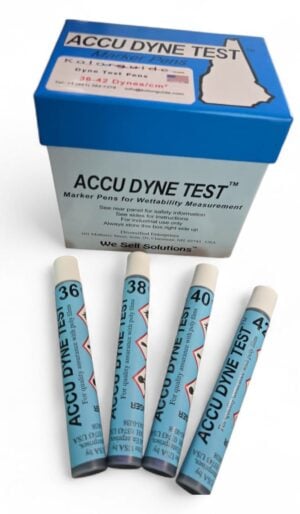
ACCU DYNE TEST™ Pens & Sets | Same-Day Shipping & Support
Original price was: $98.40.$91.51Current price is: $91.51. Add to cart
99 in stock
990 in stock
Accu Dyne Test Pens 30–60 Dynes | Full Range Surface Energy Testing
Original price was: $108.80.$99.90Current price is: $99.90. Add to cart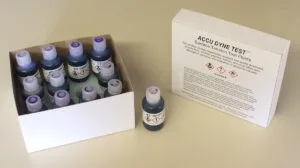

988 in stock
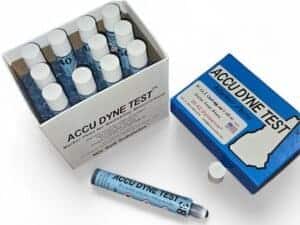

Buy Accu Dyne Test Pens – Selectable Range 30 to 72 Dynes
$19.00 Select options This product has multiple variants. The options may be chosen on the product page
Kolorguide Dyne Test Pens Kit (30-52)
Original price was: $99.00.$74.25Current price is: $74.25. Add to cart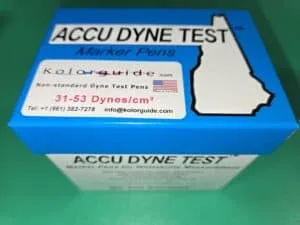

Reviews
There are no reviews yet.