
No products in the cart.
Return To Shop
Building a Design Portfolio: Showcase Your Skills Effectively
Building the perfect design portfolio can feel like a puzzle with too many pieces. Some designers think showing off every single project is the best way to impress. But research shows focused curation wins every time—a portfolio with just 6 to 10 carefully selected projects is far more likely to land interviews than overloaded portfolios. Your best work should speak louder than everything else combined.
Table of Contents
- Step 1: Define Your Target Audience And Goals
- Step 2: Curate And Organize Your Best Work
- Step 3: Create A Cohesive Visual Theme
- Step 4: Write Engaging Project Descriptions
- Step 5: Optimize Your Portfolio For Online Sharing
- Step 6: Seek Feedback And Refine Your Portfolio
Quick Summary
| Key Point | Explanation |
|---|---|
| 1. Define audience and goals clearly | Understand who will view your portfolio and what you aim to achieve, tailoring your content accordingly. |
| 2. Curate impactful project selections | Choose and organize pieces that effectively showcase your skills and aligned with your target audience’s expectations. |
| 3. Establish a cohesive visual theme | Use consistent color palettes and typography to reflect your design identity and enhance visual storytelling. |
| 4. Write engaging project narratives | Transform your work into compelling stories that highlight your problem-solving and creative processes clearly. |
| 5. Seek and integrate constructive feedback | Involve trusted reviewers for insights, using their feedback to refine and enhance your portfolio over time. |
Step 1: Define Your Target Audience and Goals
Building a design portfolio starts with crystal clear strategic planning. Understanding exactly who will view your portfolio and what professional objectives you want to achieve becomes the foundational blueprint for your entire presentation. Your portfolio is not just a collection of work but a targeted communication tool designed to showcase your specific design skills and attract the right opportunities.
Begin by meticulously analyzing the design sectors and industries most aligned with your career aspirations. Are you targeting graphic design roles in advertising agencies, seeking freelance branding opportunities, or aiming for positions in digital product design? Each professional path requires a nuanced approach to portfolio curation. Graphic designers targeting corporate communication roles will need a different portfolio strategy compared to those pursuing creative agency positions.
Carefully map out your professional goals by creating a detailed profile of your ideal audience. This means understanding the preferences, visual expectations, and specific requirements of potential employers or clients. Consider researching job descriptions, industry portfolio trends, and professional networking platforms to gain insights into what design decision makers are seeking. For instance, a UX designer will want to emphasize user research and interaction design artifacts, while a brand identity designer should highlight comprehensive brand system development and strategic thinking.
Your portfolio goals should be specific and measurable. Rather than a vague objective like “get design work,” articulate precise targets such as “secure senior graphic design positions in technology startups” or “attract freelance branding clients in the wellness industry.” These focused goals will directly influence how you select, organize, and present your design work.
Verify your portfolio strategy by asking yourself critical questions:
- Does each project selected align with my professional objectives?
- Would my current portfolio attract the type of design work I want?
- Have I demonstrated the specific skills required in my target design sector?
Successful portfolio development is about strategic intentionality. Every design piece you include should serve a deliberate purpose in communicating your unique professional narrative and potential value to prospective employers or clients.
Step 2: Curate and Organize Your Best Work
Curating your design portfolio represents a critical moment of professional storytelling where you transform individual projects into a compelling narrative of your creative capabilities. This step goes far beyond simply collecting your best work—it requires strategic selection, thoughtful presentation, and a keen understanding of how each piece communicates your unique design perspective.
Begin by conducting a comprehensive review of your entire design archive. Pull together every project you have completed, from academic assignments to professional work, personal passion projects to client commissions. This initial collection serves as your raw material, from which you will carefully select the most impactful and representative pieces. Digital designers might include website mockups, user interface designs, and interaction prototypes, while graphic designers could showcase branding projects, marketing collateral, and visual identity systems.
Approach your curation process with a critical eye, evaluating each project through multiple lenses. Consider not just the aesthetic quality of your work, but the underlying problem solving, creative strategy, and technical execution. Prioritize projects that demonstrate range, highlight your specialized skills, and align closely with your target audience’s expectations. A well curated portfolio tells a story about your design philosophy, professional growth, and potential future contributions.
Organize your selected works in a manner that creates a logical and engaging visual journey. Arrange projects to create a narrative flow that guides viewers through your design capabilities. This might mean starting with your most technically impressive work, grouping projects by design discipline, or creating a chronological progression that shows your professional evolution. Consider using high quality images, including process sketches and final deliverables, to provide context and depth to each portfolio piece.
Verify your portfolio curation by asking these critical questions:
- Does each project genuinely represent my best work?
- Have I demonstrated diversity in design approaches and skills?
- Would a potential employer or client understand my design capabilities from this selection?
Remember that portfolio curation is an ongoing process.
Below is a checklist you can use to verify your design portfolio is strategically selected and effectively curated.
| Portfolio Curation Checklist | Yes/No | Notes |
|---|---|---|
| Does each project genuinely represent my best work? | ||
| Have I showcased diversity in design approaches and skills? | ||
| Are projects organized to create a logical visual flow? | ||
| Have I included both process and final deliverables? | ||
| Does my selected work align with my target audience’s expectations? | ||
| Would a potential employer or client understand my capabilities? | ||
| Is my portfolio updated to reflect current expertise? |
 Regularly update your collection, remove outdated work, and continuously refine your presentation to reflect your most current design expertise and professional aspirations.
Step 3: Create a Cohesive Visual Theme
Your portfolio’s visual theme serves as the silent storyteller that communicates your design sensibility before a single project is even examined. Creating a cohesive visual narrative transforms a collection of works into a professional, intentional presentation that reflects your unique design identity and artistic sophistication.
Establishing a consistent visual language begins with selecting a deliberate color palette that complements your design style. Consider colors that not only showcase your work but also represent your professional persona. Graphic designers might choose neutral tones with strategic accent colors, while digital artists could opt for more dynamic and expressive color schemes. Your chosen palette should appear subtly across page backgrounds, typography, dividers, and transitional elements, creating a seamless visual experience that guides viewers through your portfolio.
Typography plays an equally critical role in crafting your portfolio’s visual theme. Select fonts that communicate professionalism and align with your design discipline. A sans serif font might convey modern digital design sensibilities, while a carefully chosen serif font could indicate a more traditional graphic design approach. Maintain strict consistency in font sizes, weights, and styles across headings, project descriptions, and navigation elements. This typographic discipline signals attention to detail and design precision.
Design your portfolio layout with intentional white space and grid structures that provide visual breathing room while maintaining a structured, organized feel. The goal is to create a presentation that feels both purposeful and elegant. Each page should feel connected yet allow individual projects to shine. Consider how transitions between sections occur, how project images are framed, and how negative space can draw attention to your most impactful work.
Verify your visual theme’s effectiveness by asking these critical questions:
- Does my color palette feel intentional and professional?
- Are typography and layout consistent across all portfolio pages?
- Would a design professional immediately recognize a cohesive visual approach?
Remember that your portfolio’s visual theme is an extension of your design identity.
Below is a reference table to help verify that your portfolio’s visual theme is consistent and professional across all aspects.
| Visual Theme Consistency Checklist | Yes/No | Notes |
|---|---|---|
| Is my color palette intentional and consistently applied? | ||
| Are typography choices uniform in size, weight, and style? | ||
| Does each page use consistent layout/grid structures? | ||
| Is there ample white space to enhance focus on projects? | ||
| Do transitions and framing feel cohesive throughout? | ||
| Would a design professional recognize a cohesive visual approach? |
Step 4: Write Engaging Project Descriptions
Project descriptions transform visual work from passive displays into dynamic narratives that reveal your design thinking, problem solving skills, and professional expertise. These written components are not mere captions but strategic storytelling opportunities that provide context, depth, and insight into your creative process.
Craft each project description as a compelling mini narrative that walks viewers through your design journey. Begin by clearly articulating the initial challenge or problem you were tasked with solving. Explain the context of the project, whether it was a client commission, academic assignment, or personal exploration. Describe the specific objectives and constraints that shaped your creative approach. For example, a branding project might highlight the client’s need to modernize their visual identity while maintaining their core brand essence.
Delve into your design process with precision and transparency. Outline the strategic decisions, research methods, and creative explorations that led to your final solution. Share insights about your conceptual thinking, such as how you conducted user research, developed initial sketches, or iterated through multiple design concepts. Potential employers and clients want to understand not just the final product, but the thoughtful methodology behind your creative work. Include specific details about design tools used, collaboration processes, and any unique challenges you overcame during the project.
Highlight the outcomes and impact of your design work. Move beyond describing visual elements to demonstrating tangible results. Did your branding redesign increase client engagement? Did your user interface improve website conversion rates? Quantifiable achievements and client testimonials add credibility and demonstrate the real world value of your design expertise.
Verify your project descriptions by asking these critical questions:
- Does my description tell a clear, engaging story?
- Have I explained my role and specific contributions?
- Am I demonstrating problem solving and strategic thinking?
Remember that great project descriptions are concise, specific, and reveal the professional designer behind the visual work. They transform your portfolio from a static gallery into a dynamic representation of your creative capabilities.
Step 5: Optimize Your Portfolio for Online Sharing
Optimizing your design portfolio for online sharing transforms your carefully curated work into a digital experience that can be seamlessly accessed and appreciated by potential employers and clients worldwide. The digital presentation of your portfolio is often your first professional interaction with future opportunities, making technical precision and user experience paramount.
Begin by selecting a robust digital platform that offers responsive design and professional customization options. Website builders like Behance, Squarespace, or WordPress provide templated solutions that can showcase design work with minimal technical overhead. Ensure your chosen platform allows for high resolution image displays, clean navigation, and mobile responsiveness. Your portfolio must look equally impressive whether viewed on a desktop computer, tablet, or smartphone.
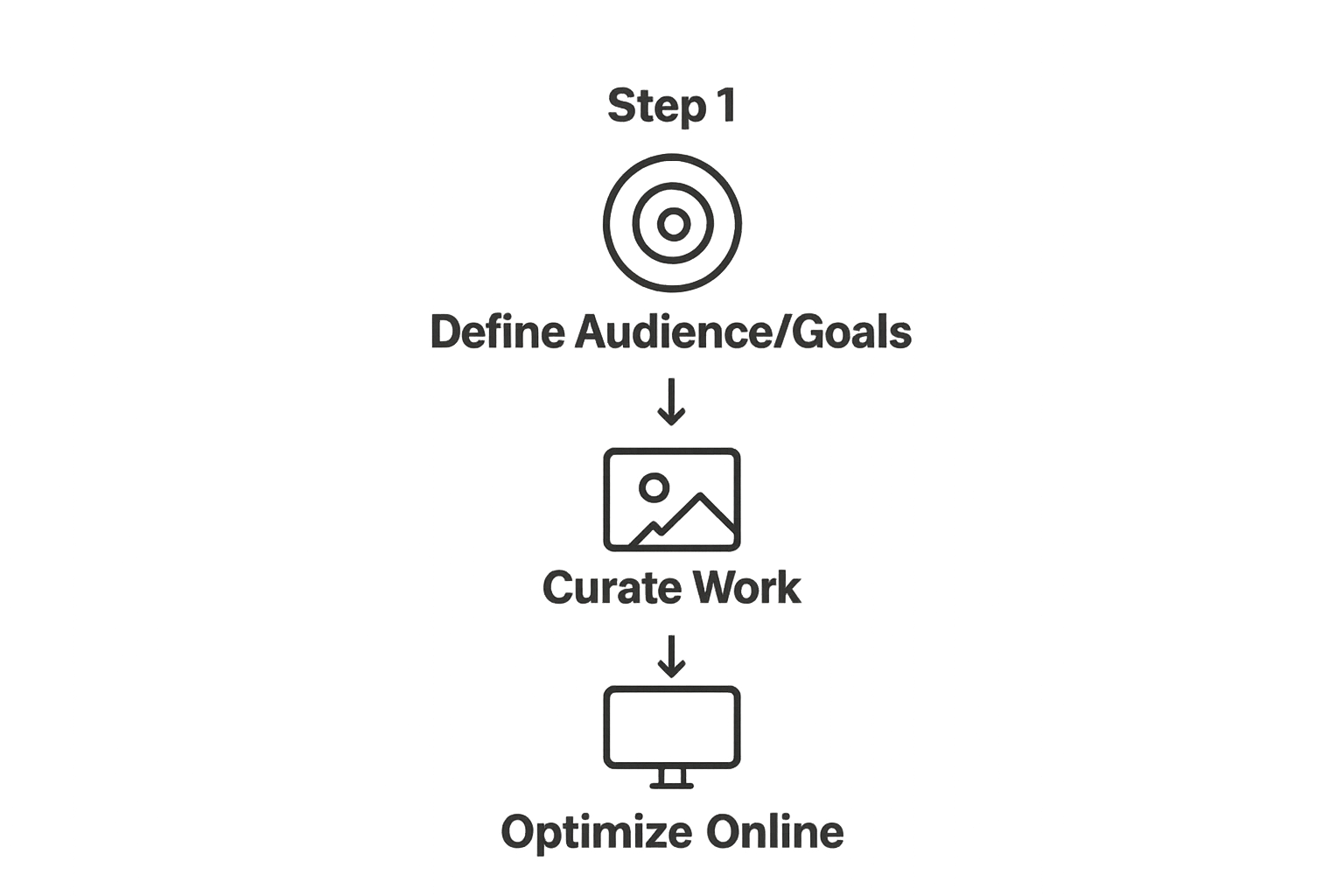
Image optimization becomes critical in creating a smooth online viewing experience. Compress your project images to reduce file sizes without sacrificing visual quality. Use tools like Adobe Photoshop’s export functions or online compression services that maintain image clarity while dramatically reducing loading times. Strategic image preparation ensures that potential employers can quickly scroll through your work without experiencing frustrating loading delays. Consider creating multiple image sizes that load progressively, providing viewers with a smooth, professional browsing experience.
Implement clear, intuitive navigation that allows viewers to explore your work effortlessly. Create a logical menu structure that categorizes projects by design discipline, chronology, or client type. Include a brief professional biography, contact information, and potentially links to professional social media profiles like LinkedIn. Your online portfolio should feel like a curated digital exhibition that guides viewers through your design narrative with elegance and purpose.
Verify your online portfolio’s effectiveness by checking these critical aspects:
- Do images load quickly across different devices?
- Is the navigation intuitive and user friendly?
- Can viewers easily understand my design capabilities?
Remember that your online portfolio is a living document. Regularly update your work, refine your presentation, and ensure that your digital presence remains as dynamic and innovative as your design practice.
Step 6: Seek Feedback and Refine Your Portfolio
Seeking constructive feedback represents a critical inflection point in portfolio development, transforming your personal creative work into a professionally refined presentation. Feedback is not about criticism but about strategic improvement, providing external perspectives that can elevate your portfolio from good to exceptional.
Initiate your feedback process by strategically selecting reviewers who understand design nuances and can provide substantive, actionable insights. Reach out to design mentors, respected professors, professional colleagues, and experienced practitioners in your specific design discipline. Each perspective offers unique value—academic reviewers might focus on conceptual depth, while industry professionals will assess market relevance and commercial potential. Online design communities like Behance, Dribbble, and professional design forums can also provide valuable peer review opportunities.
Approach feedback collection with a structured and open mindset. Prepare specific questions that guide reviewers toward constructive commentary. Instead of asking generic questions like “What do you think?”, pose targeted inquiries such as “Does my portfolio effectively communicate my design problem solving approach?” or “Which projects best demonstrate my technical skills?” This approach encourages detailed, meaningful responses that can directly inform portfolio refinement. Be prepared to listen without defensiveness, recognizing that each piece of feedback is an opportunity for professional growth.
Implement a systematic approach to integrating feedback. Create a feedback tracking document where you log each suggestion, assess its merit, and decide whether to incorporate the recommendation. Not all feedback will be equally valuable—learn to distinguish between subjective preferences and substantive improvement opportunities. Consider creating multiple portfolio iterations, each reflecting progressively refined insights from your review process.
Verify the effectiveness of your feedback integration by asking these critical questions:
- Have I incorporated suggestions that genuinely improve my portfolio?
- Does my revised portfolio feel more cohesive and professional?
- Am I maintaining my unique design voice while implementing external insights?
Remember that portfolio refinement is an ongoing journey. Treat feedback as a collaborative dialogue that helps you continuously evolve your professional presentation, always staying true to your creative vision.
Take Your Design Portfolio From Good to Unforgettable
Transforming your portfolio into a persuasive tool means getting every detail right. As you saw in the article, clarity, organization, and a true sense of your unique design voice are all crucial. Yet one persistent pain point stands out — how do you guarantee your colors remain true and impactful across every project you present? Inconsistent color can turn even your strongest work into missed opportunities. Professional color fidelity is what separates a polished, confident presentation from an average one.
Give yourself the professional edge by choosing color guides and swatches trusted by top designers. With Kolorguide.com, you can access a full range of Pantone color guides and premium graphic arts tools that ensure every design in your portfolio reflects your true vision. Reliable color references allow you to present your projects with certainty and attract opportunities with confidence. Visit Kolorguide.com today to discover trusted products that support your creative goals. Elevate your portfolio this week — because your next client or employer is paying close attention.
Frequently Asked Questions
How do I determine my target audience for my design portfolio?
Understanding your target audience begins with analyzing the design sectors and industries aligned with your career aspirations. Consider the types of roles you want, such as graphic design, branding, or UX design, and research the preferences and expectations of potential employers or clients in those fields.
What types of projects should I include in my design portfolio?
Select projects that best showcase your skills and align with your professional goals. Include a variety of works that demonstrate your design philosophy, problem-solving capabilities, and technical skills. Prioritize high-quality pieces that resonate with your target audience’s expectations.
How should I structure the layout of my design portfolio?
Organize your portfolio to create a logical visual flow that guides viewers through your work. You may group projects by design discipline, arrange them chronologically to show your professional growth, or start with your most impressive pieces. Ensure you use high-quality images and thoughtful white space for a clean presentation.
Why are project descriptions important in my portfolio?
Project descriptions provide context and detail about your design journey, revealing your problem-solving approach and strategic thinking. They turn static displays into engaging narratives that showcase not just the final visual, but also the process and outcomes of your work.
Recommended
- 21 herramientas de diseño gráfico sin las que no se puede vivir – kolorguide
- … so my correct Pantone color guide is … – kolorguide
- How Entrepreneurs Can Use Colored Lights to Stay Productive – kolorguide
- UPDATING YOUR PANTONE GUIDES CAN SAVE YOU VALUABLE PRODUCTION TIME AND MONEY! – kolorguide
- Effective Website Design: Key Principles and Proven Strategies 2025
- Mastering the Art of Managing Your Innovation Portfolio

