
No products in the cart.
Return To Shop
Cups Zahn: Essential Guide for Printing and Coating Pros
Quality control in printing and coating hinges on one invisible detail. Engineers rely on measuring liquid viscosity with remarkable precision, using a tool that most people have never heard of. And yet, Zahn cups can detect differences in viscosity down to a fraction of a second, ensuring consistency for everything from automobile paint to electronic coatings. Most would assume these cups simply scoop and measure, but the real surprise is how they transform a simple pour into data that keeps factories running flawlessly.
Table of Contents
- What Are Cups Zahn And How Do They Work?
- Choosing The Right Zahn Cup For Your Industry
- Step-By-Step Guide To Using Cups Zahn
- Maintenance Tips And Common Troubleshooting
Quick Summary
| Takeaway | Explanation |
|---|---|
| Zahn cups measure liquid viscosity accurately | Zahn cups provide a standardized method for assessing fluid flow characteristics essential in various industries. |
| Choose the right Zahn cup size | Selecting the appropriate cup based on viscosity range ensures effective measurement tailored to specific liquids. |
| Follow detailed measurement procedures | Accurate viscosity measurement requires a systematic approach, including preparation, filling, and timing methods. |
| Regular maintenance prevents measuring issues | Routine cleaning and inspection of Zahn cups are essential to avoid contamination and ensure longevity. |
| Document results meticulously | Precise documentation of efflux times and conditions enhances reliability and repeatability in viscosity testing. |
What Are Cups Zahn and How Do They Work?
Cups Zahn represent precision instruments critical for measuring liquid viscosity in various industrial applications. These specialized measuring devices provide engineers and technicians with a standardized method for assessing fluid flow characteristics across multiple industries including coatings, paints, and manufacturing.
The Basic Mechanism of Zahn Cups
A Zahn cup is a meticulously designed stainless steel instrument featuring a specific small orifice at its bottom. According to ASTM testing standards, the cup functions through a straightforward yet precise measurement technique. When dipped into a liquid, the cup captures a specific volume of fluid. Upon lifting, the time required for the liquid to completely drain through the calibrated opening provides a direct measurement of its viscosity.
The fundamental principle behind Zahn cups involves efflux time measurement. As liquid flows through the precisely engineered orifice, professionals can determine viscosity by timing how long it takes for the fluid stream to break. Research from industrial testing protocols indicates that this method offers remarkable consistency and repeatability across different liquid compositions.
Industrial Applications and Significance
Zahn cups serve critical roles in multiple professional contexts. Paint manufacturers rely on these instruments to ensure consistent product quality, verifying that coating materials meet exact specification requirements. Automotive, aerospace, and electronics industries depend on precise viscosity measurements to guarantee optimal material performance.
The standardization provided by Zahn cups allows engineers to communicate viscosity measurements universally. Different cup sizes and designs accommodate various liquid types, from thin solvents to thick industrial coatings. By providing a reliable, repeatable measurement technique, these cups enable quality control professionals to maintain rigorous production standards.
Typical industries utilizing Zahn cups include:
- Automotive Coatings: Ensuring paint consistency and application quality
- Electronic Manufacturing: Verifying soldering and circuit board coating viscosities
- Aerospace: Maintaining precise material specifications for complex components
Understanding the nuanced mechanics of Zahn cups empowers professionals to make informed decisions about liquid material properties. Whether monitoring paint viscosity, assessing industrial lubricants, or controlling coating applications, these precision instruments provide invaluable insights into fluid behavior and performance characteristics.
By offering a standardized, reproducible method for viscosity assessment, Zahn cups continue to be essential tools in quality control and material science across numerous technical disciplines.
Choosing the Right Zahn Cup for Your Industry
Selecting the appropriate Zahn cup is a critical decision that significantly impacts viscosity measurement accuracy across different industrial applications. Each Zahn cup is designed with specific characteristics to match unique liquid properties and measurement requirements.
Understanding Zahn Cup Specifications
According to industry standards, Zahn cups are categorized into five different specifications numbered from one through five. The cup number directly correlates with its ability to measure different viscosity ranges. Printing industry research reveals that different printing techniques require specific cup sizes for optimal measurement.
For instance, sheetfed printers typically utilize a #3 Zahn Cup, while flexo printers might alternate between #2 and #3 cups. Gravure printers predominantly use #2 Zahn Cups. This specialization ensures precise viscosity measurements tailored to specific industrial processes. The cup’s design features a tiny hole drilled in the center of its bottom, with varying orifice sizes corresponding to different viscosity measurement needs.
Industry-Specific Cup Selection Strategies
Choosing the right Zahn cup involves understanding the nuanced requirements of different industries. Automotive coating manufacturers, electronics production teams, and aerospace engineers must carefully select cup sizes that match their specific liquid properties. The general rule involves matching cup size to liquid viscosity
- Low Viscosity Liquids: Smaller numbered cups (#1 or #2) provide more accurate measurements
- Medium Viscosity Liquids: #3 Zahn Cups offer optimal performance
- High Viscosity Liquids: Larger numbered cups (#4 or #5) capture more comprehensive data
Professionals must also consider measurement precision. Technical experts warn that smaller diameter orifices can reduce measurement errors, particularly when working with very short viscosity ranges. When selecting a cup, practitioners should ensure a clean, consistent liquid flow with a precise cut-off at the end of measurement.
The Zahn cup’s volume capacity typically ranges from one to three ounces, accommodating various testing scenarios. By understanding these nuanced selection criteria, industrial professionals can achieve more reliable viscosity measurements, ultimately improving product quality and manufacturing consistency across multiple sectors.
To help professionals select the correct Zahn cup for their specific application, the following table summarizes each cup size and its typical industrial use based on viscosity range and sector.
| Zahn Cup Number | Viscosity Range (General) | Typical Use Case | Common Industry |
|---|---|---|---|
| #1 | Low | Thin solvents, light inks | Electronics, Printing |
| #2 | Low-Medium | Flexo & gravure inks, coatings | Printing, Packaging |
| #3 | Medium | Sheetfed printing, general paints | Printing, Automotive |
| #4 | Medium-High | Thick paints, coatings | Automotive, Industrial |
| #5 | High | Viscous coatings, adhesives | Aerospace, Industrial |
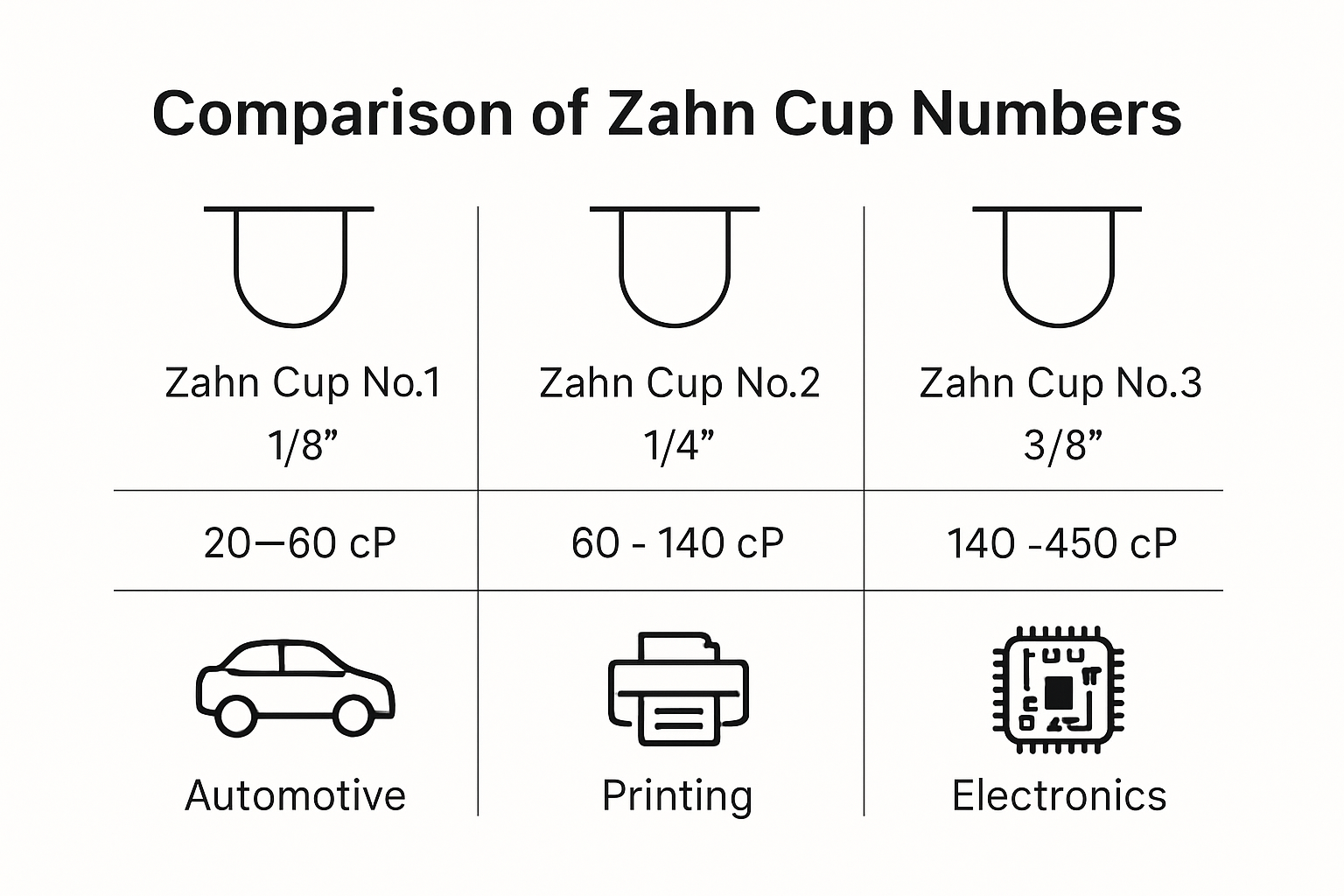
Mastering Zahn cup selection requires a combination of technical knowledge, industry experience, and careful consideration of specific liquid characteristics. The right cup transforms viscosity measurement from a simple test to a precise scientific instrument capable of driving quality control and innovation.
Step-by-Step Guide to Using Cups Zahn
Mastering the technique of using Zahn cups requires precision, attention to detail, and a systematic approach. This comprehensive guide will walk professionals through the essential steps for accurate viscosity measurement across various industrial applications.
The following table breaks down the key steps involved in the Zahn cup viscosity measurement process for easy reference and ensures each stage is systematically addressed.
| Step | Action | Key Considerations |
|---|---|---|
| 1 | Clean the Zahn cup | Use proper solvent to remove residue |
| 2 | Control the environment | Keep temperature between 20-25°C (68-77°F) |
| 3 | Calibrate timing device | Use precise stopwatch or timer |
| 4 | Fill cup with liquid (no air bubbles) | Ensure full, bubble-free fill |
| 5 | Hold vertically, start timing upon lift | Use standard 12-inch handle; lift smoothly |
| 6 | Observe flow and stop timer when stream breaks | Note the exact moment flow becomes discontinuous |
| 7 | Record efflux time, cup number, and temperature | Take 3-5 readings and calculate average if needed |
Preparation and Equipment Setup
According to professional instrumentation standards, proper preparation is crucial for obtaining reliable viscosity measurements. Begin by selecting the appropriate Zahn cup for your specific liquid type and ensuring a clean, temperature-controlled environment. Professional practitioners recommend the following initial setup steps:
- Clean the Cup: Thoroughly wash the Zahn cup with an appropriate solvent to remove any previous residue
- Temperature Control: Maintain a consistent ambient temperature typically between 20-25 degrees Celsius
- Calibrate Timing Device: Use a precise stopwatch or digital timer for accurate measurement
Viscosity Measurement Procedure
Industrial testing protocols outline a meticulous process for obtaining accurate viscosity measurements. The procedure involves several critical steps:
- Fill the Zahn cup completely with the liquid sample, ensuring no air bubbles are present
- Position the cup vertically, using the standard 12-inch loop handle with finger ring
- Lift the cup smoothly and simultaneously start the timer
- Observe the liquid stream as it flows through the calibrated orifice
- Stop the timer precisely when the liquid stream breaks or becomes discontinuous
Professionals must pay special attention to the flow characteristics. An ideal measurement will show a smooth, consistent stream that breaks cleanly at the end of the efflux time. Inconsistent or stuttering flow can indicate potential issues with the liquid composition or measurement technique.
Interpreting and Recording Results
Accurate documentation is as critical as the measurement itself. Record the exact efflux time in seconds, noting the specific Zahn cup number used and ambient temperature. Many industries require multiple measurements to ensure consistency, typically taking three to five readings and calculating the average.
Key considerations for result interpretation include:
- Repeatability: Variations between measurements should be minimal
- Temperature Impact: Note any temperature fluctuations during testing
- Cup Specification: Always indicate the specific Zahn cup number in your documentation
Industrial professionals across multiple sectors rely on these precise measurements. From automotive coatings to electronic manufacturing, the ability to accurately assess liquid viscosity determines product quality and performance. By following these systematic steps, technicians can transform a simple viscosity test into a reliable quality control mechanism.
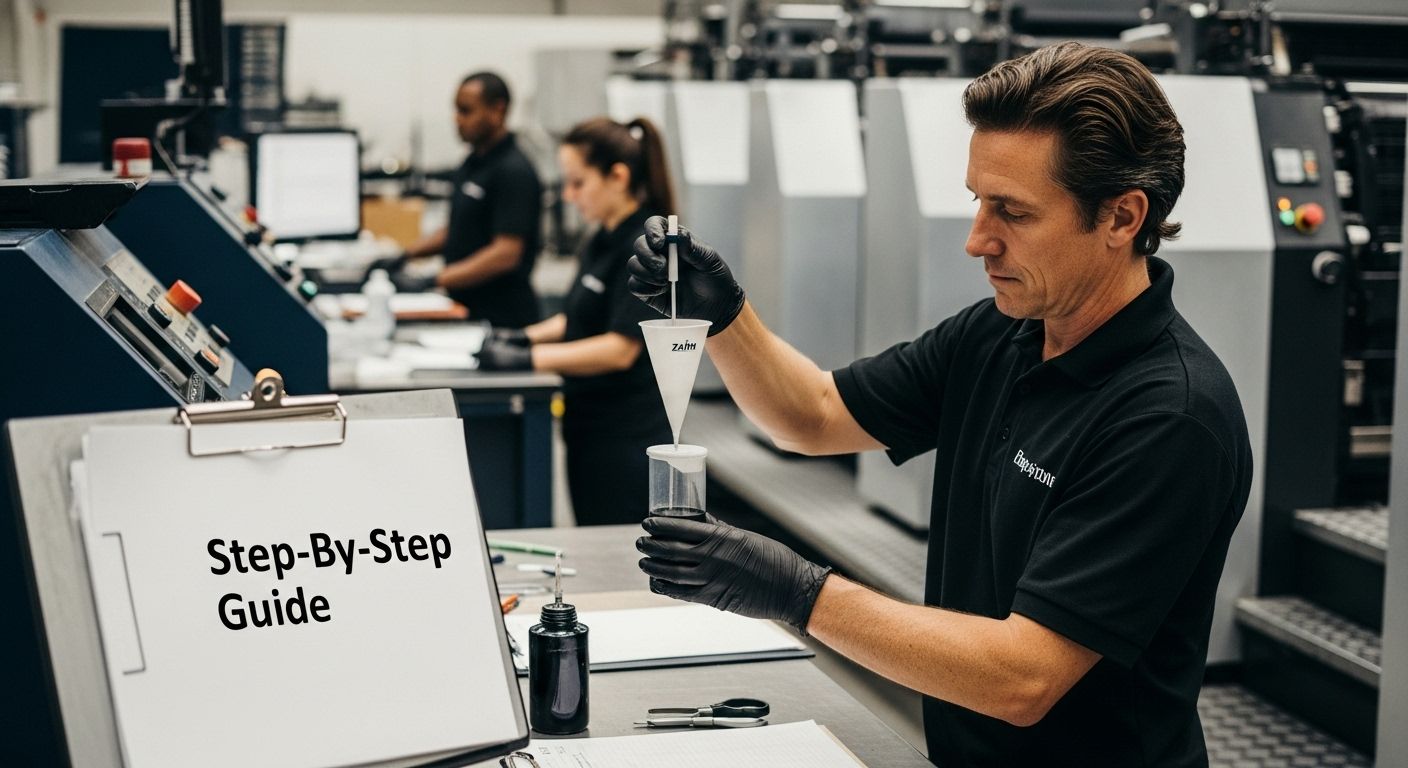
Remember that expertise comes with practice. While these guidelines provide a robust framework, true mastery of Zahn cup measurements develops through consistent application and attention to the subtle nuances of fluid dynamics.
Maintenance Tips and Common Troubleshooting
Maintaining Zahn cups in optimal condition is crucial for ensuring accurate viscosity measurements across industrial applications. Proper care and proactive troubleshooting can significantly extend the instrument’s lifespan and maintain measurement precision.
Routine Cleaning and Care Protocols
According to industrial maintenance guidelines, regular cleaning represents the foundation of Zahn cup maintenance. Professionals must develop a systematic approach to prevent contamination and preserve measurement accuracy. Recommended cleaning procedures include:
- Solvent Selection: Use appropriate solvents compatible with the specific liquid previously measured
- Thorough Rinsing: Completely flush the cup to remove all residual materials
- Drying Procedure: Allow the cup to air dry or use lint-free cloths to prevent moisture accumulation
Precision is paramount. Even minor residue can compromise viscosity measurements, leading to potentially costly errors in product development and quality control processes.
Identifying and Resolving Common Measurement Issues
Environmental protection research highlights several critical troubleshooting considerations for viscosity measurement professionals. Common challenges include:
Inconsistent Flow Patterns
- Potential Cause: Contaminated cup or irregular liquid composition
- Solution: Thoroughly clean the cup and retest with a fresh sample
Unexpected Viscosity Readings
- Potential Cause: Temperature variations or improper cup selection
- Solution: Ensure consistent ambient temperature and verify appropriate Zahn cup specification
Orifice Blockage
- Potential Cause: Accumulated residue or particulate matter
- Solution: Use specialized cleaning tools and inspect the orifice under magnification
Preventative Maintenance Strategies
Professional practitioners recommend implementing a comprehensive maintenance schedule. This approach involves:
- Regular Inspection: Monthly examination of cup integrity and orifice condition
- Calibration Verification: Periodic checks against standard reference liquids
- Storage Considerations: Store cups in protective cases, avoiding extreme temperatures and humidity
The goal extends beyond simple equipment preservation. Proper maintenance directly impacts measurement reliability, ensuring that each viscosity test provides accurate, reproducible results. Industrial professionals understand that a well-maintained Zahn cup is an investment in precision and quality control.
By adopting a proactive approach to maintenance and troubleshooting, technicians can maximize the performance of their Zahn cups. Understanding the subtle nuances of instrument care transforms these tools from simple measuring devices into reliable scientific instruments capable of delivering consistent, high-quality viscosity measurements across diverse industrial applications.
Frequently Asked Questions
What are Zahn cups and how do they work?
Zahn cups are precision instruments used for measuring liquid viscosity in various industrial applications. They function by capturing a specific volume of liquid and measuring the time it takes for the liquid to drain through a calibrated orifice, providing a direct measurement of viscosity based on efflux time.
How do I choose the right Zahn cup for my specific application?
Selecting the appropriate Zahn cup depends on the viscosity range of the liquid you are measuring. Smaller numbered cups are used for low viscosity liquids, while larger numbered cups are better for high viscosity liquids. It is essential to understand the unique liquid properties to ensure accurate measurements.
What is the correct procedure for using Zahn cups?
To use a Zahn cup, first clean it thoroughly, ensure the environment is temperature-controlled, and calibrate your timing device. Fill the cup with the liquid sample without air bubbles, lift it smoothly while starting the timer, and stop the timer when the liquid stream breaks. Record the efflux time and cup number for accurate documentation.
How can I maintain my Zahn cup to ensure accurate measurements?
Regular maintenance involves cleaning the cup with appropriate solvents, rinsing it thoroughly, and allowing it to dry completely. It’s also important to inspect the cup periodically for integrity and ensure that it’s stored properly to avoid damage. This ensures consistent and reliable measurements over time.
Tired of Inconsistent Colors and Unpredictable Results? Discover Professional Solutions
Your work depends on perfect viscosity measurements and exact color matching, yet even precise tools like Zahn cups cannot eliminate color errors due to inconsistent reference guides or unreliable materials. If you have ever wasted hours troubleshooting a mismatch between print output and approved proofs, you know how critical visual accuracy can be for customer satisfaction and brand reputation.
Let Kolorguide.com make color management seamless for you. Browse our curated selection of Pantone color guides, chips, and software designed to work hand-in-hand with your best testing practices, including those highlighted in our Essential Guide to Zahn Cups. Unlock fast USA delivery, Trusted Trustpilot ratings, and payment options tailored for professionals. Do not let a small detail undermine your quality control. Visit Kolorguide.com today and take the next step toward error-free, brilliantly accurate print production.


