No products in the cart.
Return To Shop
Top Design Trends in 2025 for Industrial and Graphic Sectors
Design in 2025 is moving faster than ever with industries like packaging, automotive, and graphic arts all chasing the next big innovation. Think designers tinkering with AI tools while packaging companies roll out edible cups and autonomous freshness sensors—over 80 percent of packaging innovations now focus on biodegradable or smart technologies. Most would expect brands to simply make things prettier or more efficient. The surprise is that creativity and tech are teaming up to turn old-school materials into futuristic solutions that shape how we live, work, and even eat.
Table of Contents
- Emerging Design Trends In Packaging And Plastics
- Innovations In Printing And Graphic Arts For 2025
- Design Advances In Coatings, Metals, And Glass
- Impact Of Technology On Automotive And Electronics Design
Quick Summary
| Takeaway | Explanation |
|---|---|
| Sustainability is paramount in packaging design. | Designers are prioritizing eco-friendly materials and smart solutions to reduce waste and enhance product integrity. |
| AI is transforming graphic design processes. | Artificial intelligence empowers designers to create complex visuals more efficiently, streamlining the design workflow and enhancing creativity. |
| Advancements in materials focus on performance and environment. | New materials and coatings are being developed to improve sustainability and functionality, influencing modern design practices. |
| Automotive design increasingly relies on software. | Vehicles are becoming software-defined, allowing for more customizable features and improved user experiences through advanced technology integration. |
| Interconnected energy systems redefine automotive capabilities. | Electrification is leading to vehicles designed as energy platforms, enhancing efficiency and sustainability in transportation. |
Emerging Design Trends in Packaging and Plastics
The packaging and plastics industry stands at a transformative crossroads in 2025, driven by sustainability, technological innovation, and advanced material science. Design trends are rapidly evolving to address critical environmental challenges while introducing groundbreaking solutions that redefine how we conceptualize packaging and plastic applications.
Sustainable Smart Packaging Technologies
Innovative packaging solutions are moving beyond traditional boundaries, integrating advanced technologies that enhance functionality and environmental responsibility. The Sustainable Packaging Coalition highlights that packaging design is no longer just about containment but about creating intelligent systems that actively interact with their contents.
A remarkable breakthrough comes from researchers who have developed battery-free, stretchable smart packaging systems capable of wirelessly monitoring food freshness. These autonomous systems can release active compounds to prevent spoilage, representing a significant leap in packaging technology. The integration of sensors, biodegradable electronics, and adaptive materials demonstrates how design trends are solving real-world challenges around food waste and product integrity.
Biodegradable and Edible Packaging Innovations
The push towards sustainable materials has dramatically transformed packaging design. Researchers are exploring unconventional solutions that challenge traditional plastic paradigms. For instance, scientists from the Indian Institute of Technology Roorkee developed Kodo millet-based edible cups, showcasing how natural polymers can create biodegradable packaging alternatives.
These innovations go beyond mere waste reduction. They represent a holistic approach to design that considers the entire product lifecycle. By utilizing renewable resources and creating packaging that can be consumed or naturally decompose, designers are reimagining the relationship between products, packaging, and environmental sustainability.
Advanced Material Science in Packaging Design
Material science is driving unprecedented transformations in packaging design. Designers are now working closely with chemists and engineers to develop materials that are not just functional but also environmentally responsive. Read our guide on color standards for innovative plastics to understand how precise color matching plays a crucial role in these advanced material applications.
Emergent trends include self-healing polymers, materials that can change properties in response to environmental conditions, and packaging solutions that actively contribute to product preservation. These developments represent a significant shift from passive containment to active interaction, where packaging becomes an integral part of the product experience.
The design trends of 2025 in packaging and plastics are not just about aesthetic innovation but about solving complex global challenges. By integrating sustainability, technology, and advanced material science, designers are creating solutions that are more intelligent, responsive, and environmentally conscious than ever before.
To help compare the major trends in packaging and plastics, the following table summarizes the characteristics and benefits of each major design trend discussed above.
| Design Trend | Key Characteristics | Main Benefits |
|---|---|---|
| Sustainable Smart Packaging | Integrated sensors, wireless monitoring, autonomous compound release | Reduces food waste, enhances product integrity |
| Biodegradable & Edible Packaging | Uses natural polymers, edible/compostable, renewable materials | Less waste, sustainable lifecycle |
| Advanced Material Science in Packaging | Self-healing, adaptive to environment, precise color matching | Prolongs shelf life, improved functionality |
Innovations in Printing and Graphic Arts for 2025
The printing and graphic arts landscape in 2025 is experiencing a profound transformation driven by technological advancements, artificial intelligence, and innovative design methodologies. These changes are reshaping how designers conceptualize, create, and deliver visual communication across various platforms.
AI-Powered Design Generation and Transformation
Artificial intelligence is revolutionizing graphic design processes with unprecedented capabilities. According to a comprehensive survey titled ‘From Fragment to One Piece: A Survey on AI-Driven Graphic Design’, AI technologies are now capable of understanding complex design elements and generating intricate visual compositions. Large language models and multimodal approaches are bridging the gap between visual features and design intent, enabling more sophisticated and nuanced creative outputs.
A groundbreaking framework called CreatiPoster demonstrates the potential of AI in graphic design by generating editable, multi-layer graphic compositions from natural language instructions. This technology can produce detailed specifications for each design layer, including layout, hierarchy, content, and style, effectively streamlining the design process and offering unprecedented flexibility.
Emerging Visual Design Trends and Aesthetic Approaches
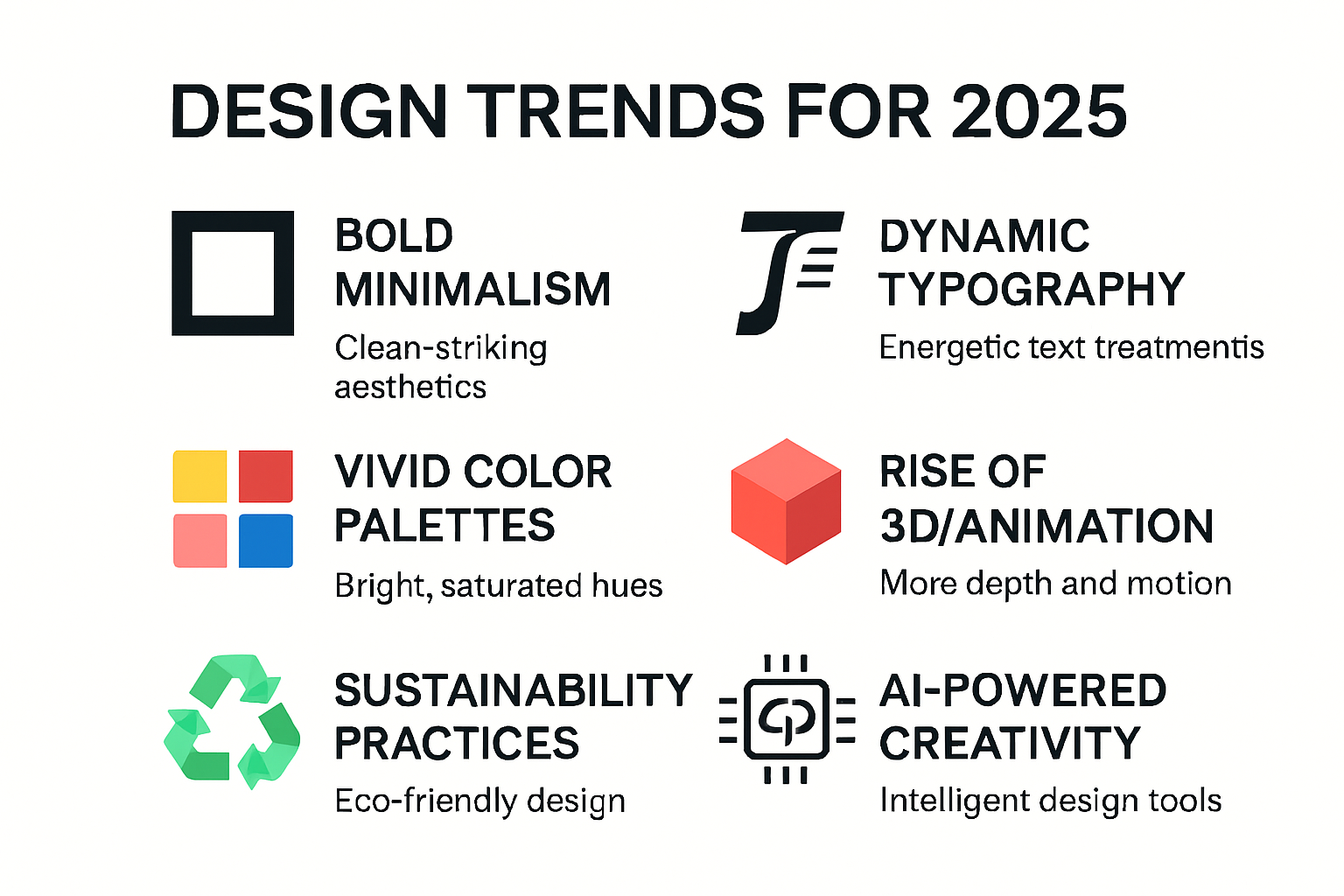
Digital textile printing technologies are expanding the boundaries of creative expression. According to Adobe’s forecast for graphic design trends, 2025 will witness a significant shift towards bold minimalism. This approach emphasizes simple designs enhanced with striking typography and dynamic color palettes, creating visually compelling narratives with fewer elements.
The rise of 3D design and animation is creating more immersive visual experiences. Designers are increasingly leveraging advanced rendering techniques and interactive technologies to develop graphics that transcend traditional two-dimensional constraints. These innovations allow for more engaging and responsive design solutions that can adapt to various digital and physical platforms.
Sustainability and Technological Integration
Sustainability has become a critical consideration in printing and graphic arts. Designers are actively incorporating eco-friendly practices and materials, recognizing the importance of environmental responsibility. This trend extends beyond material selection to include digital workflows that minimize waste and optimize resource utilization.
Technological integration is enabling more personalized and adaptive design processes. AI-powered tools are automating repetitive tasks, allowing designers to focus on creative strategy and conceptual development. The ability to generate personalized content rapidly is transforming how visual communication is developed and delivered across different industries.
The innovations in printing and graphic arts for 2025 represent a convergence of creativity, technology, and strategic thinking. By embracing artificial intelligence, sustainable practices, and advanced design methodologies, professionals in this field are not just creating visual content but crafting intelligent, responsive, and meaningful communication experiences.
To clarify the major drivers of innovation in graphic design for 2025, here’s a summary table aligning the core advancements with their impact on the design workflow.
| Innovation Driver | Description | Impact on Design Workflow |
|---|---|---|
| AI-Powered Generation | Uses language models and multimodal AI for design creation | Streamlines processes; enables flexibility |
| 3D/Immersive & Bold Minimalism | Focus on simplicity, 3D visuals, strong type/color | Enhances engagement; adaptable output |
| Sustainability & Eco-Integration | Eco-friendly materials, efficient digital workflows | Reduces waste; greener design practices |
Design Advances in Coatings, Metals, and Glass
The industrial design landscape of 2025 is experiencing unprecedented transformation in coatings, metals, and glass technologies, driven by sustainability, performance optimization, and aesthetic innovation. These material sciences are converging to create solutions that transcend traditional boundaries of functionality and design.
Metallic Design and Recycling Innovations
The metal industry is undergoing a radical reimagining, with a focus on circular economy principles and innovative aesthetic approaches. Trend Bible research highlights a new industrial paradigm where recycled metals are not just reused but celebrated. Aluminum, in particular, stands out as an infinitely recyclable material that enables mono-materiality design strategies.
Emergent design trends showcase metals with sophisticated surface treatments. Matte finishes, brushed surfaces, and subtle tints are replacing traditional glossy appearances, creating softer and more nuanced material expressions. These design approaches reflect a growing appreciation for materials that tell a story of sustainability and responsible manufacturing.
Advanced Coating and Glass Technologies
Sustainability is driving remarkable innovations in glass and coating technologies. Researchers exploring aluminum and glass facades are developing high-performance glazing systems that dramatically reduce energy consumption. Low-emissivity (Low-E) coatings are minimizing ultraviolet and infrared light transmission, while integrated photovoltaic cells transform glass surfaces into energy-generating systems.
Reflective glass technologies are experiencing significant advancements. Innovative coating techniques are enhancing material properties, creating surfaces that optimize natural illumination while reducing heat absorption. These developments are particularly crucial in architectural and electronic applications, where energy efficiency and material performance are paramount.
Integrated Design and Performance
The convergence of design and technological performance is most evident in how materials are now conceived. Explore our guide on metallic color standards to understand how precise color and finish specifications are integral to modern material design.
Industrial designers are no longer just selecting materials but actively collaborating with material scientists to develop solutions that are adaptive, sustainable, and aesthetically compelling. The boundaries between form, function, and environmental responsibility are becoming increasingly blurred.
The design advances in coatings, metals, and glass for 2025 represent more than technological progress. They embody a holistic approach to material science that prioritizes sustainability, performance, and aesthetic innovation. By reimagining how materials are sourced, processed, and applied, these developments are setting new standards for industrial design in the 21st century.
Impact of Technology on Automotive and Electronics Design
The automotive and electronics design landscape in 2025 is experiencing a profound technological revolution, characterized by unprecedented integration of software, artificial intelligence, and sustainable technologies. This transformation is reshaping how vehicles and electronic devices are conceived, designed, and experienced.
Software-Defined Vehicle Architectures
The automotive industry is undergoing a radical shift towards software-defined vehicles (SDVs), marking a fundamental change in design philosophy. According to PTC’s analysis, the traditional hardware-centric approach is being replaced by software-driven innovation that enables highly personalized and continuously upgradable vehicle experiences.
Edmunds reports remarkable technological demonstrations at CES 2025, including BMW’s Panoramic iDrive and Honda’s electric vehicles with Level 3 automated driving capabilities. These innovations represent a significant leap in integrating advanced software systems with automotive design, creating vehicles that are more intelligent, responsive, and adaptable than ever before.

Electrification and Energy Ecosystem Redesign
Electrification is driving a comprehensive redesign of automotive electrical architectures. Design Engineering research highlights the complex integration of electrical systems to improve efficiency and support advanced technological features.
The shift extends beyond traditional powertrain considerations. Designers are now creating holistic energy ecosystems that consider vehicle-to-grid interactions, battery management, and sustainable energy integration. This approach transforms vehicles from mere transportation devices into sophisticated, interconnected energy platforms.
Advanced Electronics and User Experience Design
Electronic design is evolving to create more immersive, intuitive, and personalized user experiences. The boundaries between physical interfaces and digital interactions are becoming increasingly blurred, with AI-driven systems providing adaptive and predictive interactions.
Toyota’s Woven City project, as highlighted by industry experts, represents a visionary approach to integrating technology, design, and urban living. By reimagining how technology interfaces with human environments, designers are creating more responsive and intelligent electronic systems.
The impact of technology on automotive and electronics design in 2025 represents more than incremental improvements. It signifies a fundamental reimagining of how technology integrates with human experiences, prioritizing sustainability, intelligence, and user-centric design. As software, artificial intelligence, and advanced materials converge, the lines between transportation, technology, and personal interaction continue to dissolve, creating unprecedented opportunities for innovation.
Frequently Asked Questions
What are the top design trends in packaging for 2025?
The top design trends in packaging for 2025 include sustainable smart packaging technologies, biodegradable and edible packaging innovations, and advanced material science that focuses on transparency and performance.
How is AI impacting graphic design in 2025?
AI is revolutionizing graphic design by enabling the generation of intricate visual compositions and streamlining workflows. Tools like AI-powered design generation allow for quick and flexible adjustments to design layers based on user input.
What role does sustainability play in 2025 design trends?
Sustainability is a core aspect of design trends in 2025, driving the use of eco-friendly materials, practices, and technologies across packaging, graphic arts, and industrial design.
What advancements are being made in automotive design by 2025?
In automotive design, advancements include the rise of software-defined vehicle architectures that enhance customization and user experience, as well as the integration of electrification into vehicle designs that focus on energy efficiency and innovative electrical systems.
Ready to Lead the Design Trends of 2025?
Are you feeling the pressure to keep up with innovations in sustainable packaging, AI-powered graphic workflows, and advanced materials? This article highlighted how today’s design and printing professionals face a fast-changing landscape where staying ahead means blending creativity with cutting-edge technology. Missing the right color or material standard can delay new launches or limit your sustainability initiatives. If you want to turn trends like biodegradable packaging and precise color matching into growth opportunities, the right tools make all the difference.
Act now and discover how Kolor Guide empowers you to meet 2025’s design and production demands. Explore our easy-to-use resources on Pantone plastics standards for next-gen packaging, understand metallic color options for unique finishes, and let us help you bring your creative vision to life. Don’t wait—visit https://kolorguide.com and stay out in front of the industry’s top design trends.
Recommended
- Cómo lograr el color PANTONE® del año 2020 en bienes duraderos y electrónica de consumo – kolorguide
- La importancia de la economía circular y omnicanal – kolorguide
- 21 herramientas de diseño gráfico sin las que no se puede vivir – kolorguide
- El crecimiento de la impresión digital para textiles – kolorguide


About author
Related posts

Explore the differences between CMYK vs RGB colors for accurate design and printing. Gain a comprehensive understanding of their applications. Continue reading

Discover the 7 best fonts for packaging that can elevate your brand image and attract customers effectively. Learn tips for each choice. Continue reading

Discover 7 key tips for enhancing sustainability in printing industry practices that professionals can implement for a greener future. Continue reading

Discover the key difference between CMYK and RGB for plastic, printing, and packaging industries. Learn how to choose the right color model for your needs. Continue reading