
No products in the cart.
Return To Shop
Dyne Surface Tension Guide for Packaging and Printing 2025
Packaging and printing processes are far more precise than most people imagine, and their success often hinges on a tiny but powerful detail: surface tension measured in dynes per centimeter. Some substrates simply refuse to accept ink or coatings, no matter how advanced the equipment or materials might be. But what surprises many is that just a few dynes/cm difference can make or break ink adhesion and print quality across millions of packages. Discovering how this single measurement commands such authority over industrial results turns everything you thought you knew about printing on its head.
Table of Contents
- Understanding Dyne Surface Tension And Its Role
- Key Testing Methods For Dyne Surface Tension
- Industry Applications And Benefits By Sector
- Best Practices To Improve Surface Performance
Quick Summary
| Takeaway | Explanation |
|---|---|
| Understanding Dyne Surface Tension is Crucial | Dyne surface tension measurement directly impacts adhesion, wetting, and coating processes across packaging and printing industries, influencing material interactions and product quality. |
| Advanced Measurement Techniques Enhance Accuracy | Employing methods like the Du Noy ring, pendant drop, and maximum bubble pressure provides precise insights into surface tension, enabling better material compatibility and printing outcomes. |
| Surface Modification Techniques Are Essential | Techniques such as corona treatment and plasma activation improve surface energy, ensuring better ink adhesion and overall print quality on various substrates. |
| Formulation Strategies Impact Performance | Incorporating surfactants and carefully balancing ink formulations can optimize surface tension characteristics, enhancing print quality and consistency across materials. |
| Wettability Plays a Key Role in Print Quality | Understanding substrate wettability can prevent issues like the ‘coffee ring’ phenomenon, leading to superior resolution and aesthetic performance in printed products. |
Understanding Dyne Surface Tension and Its Role
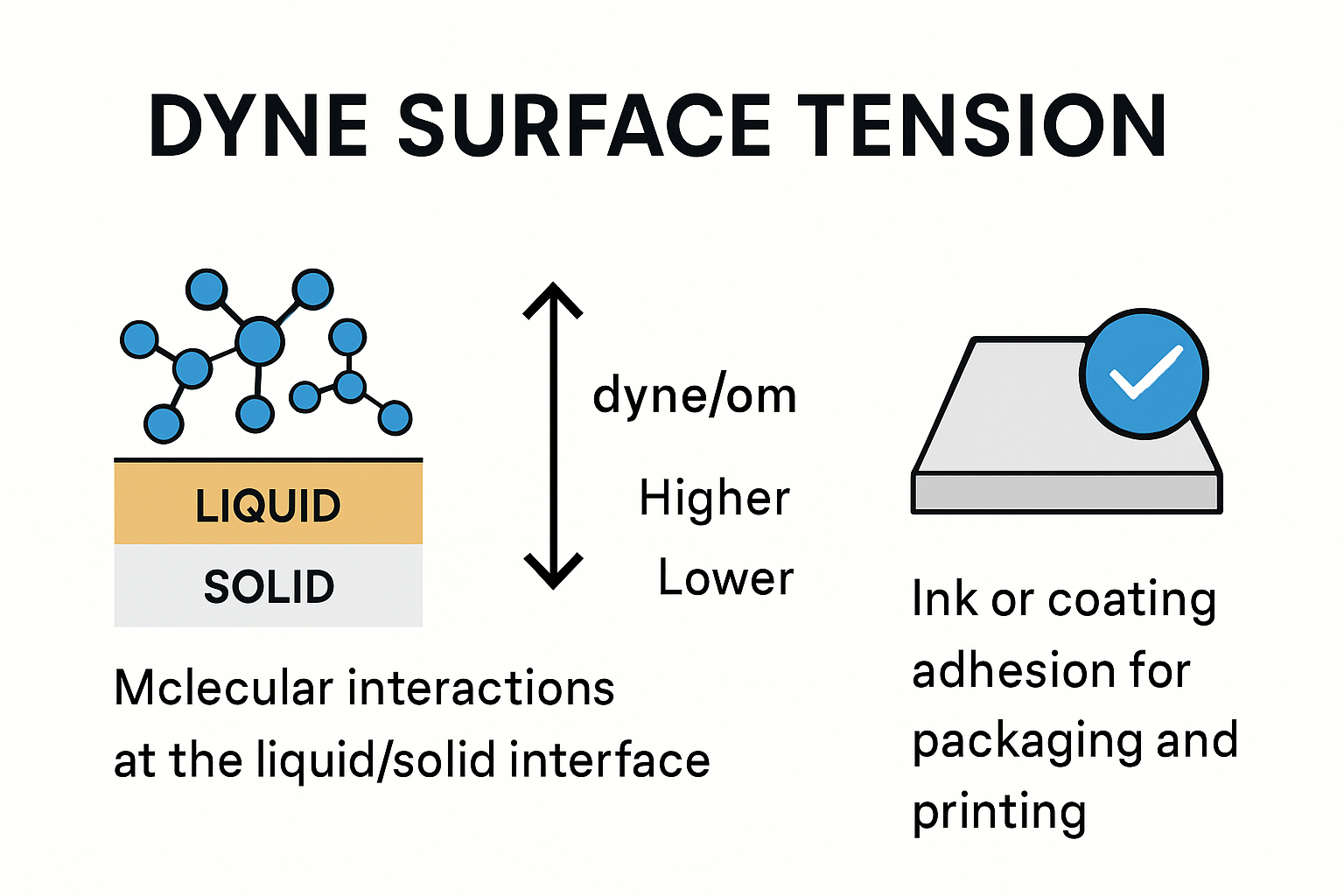
Dyne surface tension represents a critical measurement in packaging and printing technologies that determines how liquids interact with solid surfaces. At its core, surface tension measures the energy required to expand a liquid surface, which directly impacts adhesion, wetting, and coating processes across multiple industries.
The Scientific Foundations of Surface Energy
Surface tension is quantified in dynes per centimeter (dyne/cm), a measurement that reveals how molecules at a liquid’s surface behave differently from those within the liquid. According to the USDA Forest Service research, these molecular interactions play a crucial role in determining how inks, coatings, and adhesives interact with various substrate materials in packaging and printing applications.
In practical terms, surface energy determines whether a liquid will spread smoothly across a surface or bead up. Lower surface tension means less molecular cohesion, allowing better spreading and improved adhesion. For printing professionals, understanding this principle becomes essential when selecting materials and designing print processes that require precise ink or coating application.
Critical Applications in Manufacturing
Research from the National Academies Press highlights that surface tension influences multiple critical manufacturing processes. In packaging, it determines how well printing inks adhere to plastic, glass, metal, and other substrate materials. For instance, polymers with low surface energy can create significant challenges in printing, requiring specialized surface treatments to improve ink adhesion.
Manufacturers often use corona treatment, plasma activation, and chemical primers to modify surface energy, enabling better printing results. These techniques artificially increase surface tension, creating more receptive surfaces for ink and coating applications. By understanding and manipulating surface tension, printing professionals can dramatically improve product quality, reduce waste, and enhance overall manufacturing efficiency.
For those seeking deeper insights into surface tension measurement tools, check out our comprehensive guide on dyne test pens, which provides practical techniques for assessing surface energy across different materials.
Understanding dyne surface tension goes beyond mere technical measurement. It represents a critical intersection of chemistry, physics, and manufacturing technology that enables precise, high-quality printing and packaging solutions. Professionals who master these principles can optimize their processes, reduce material waste, and deliver superior products consistently.
Surface Energy Requirements for Plastic Films
Surface energy is a critical factor in the printing and converting of plastic films. Many common substrates such as polyethylene (PE) and polypropylene (PP) naturally have very low surface energy, which prevents inks, coatings, and adhesives from properly wetting the surface.
To ensure proper adhesion, these materials are often treated using corona discharge, plasma treatment, or flame treatment to increase their surface energy.
Typical dyne level requirements for common plastic films include:
| Material | Typical Surface Energy Required |
|---|---|
| Polyethylene (PE) | 38–42 dynes/cm |
| Polypropylene (PP) | 38–44 dynes/cm |
| PET | 42–50 dynes/cm |
| Nylon | 46–56 dynes/cm |
These values may vary depending on the specific ink, coating, or adhesive system being used. Dyne test pens are commonly used in production environments to quickly verify whether the surface energy level meets the required threshold for printing or coating.
Why Surface Energy Matters in Printing and Coating
Surface energy determines how well liquids such as inks, coatings, or adhesives spread across a substrate. When the surface energy of the material is lower than the surface tension of the liquid being applied, the liquid cannot properly wet the surface.
This results in problems such as:
poor ink anchorage
coating defects
lamination failure
inconsistent print quality
For this reason, surface energy testing is a critical quality control step in packaging, flexographic printing, gravure printing, and coating operations.
Key Testing Methods for Dyne Surface Tension
Testing dyne surface tension requires precision and specialized techniques that enable manufacturers and researchers to accurately measure the surface energy of materials. Multiple established methods provide insights into how liquids interact with solid surfaces, each offering unique advantages for different applications in packaging and printing industries.
Fundamental Surface Tension Measurement Techniques
According to research documenting physical measurement techniques, several critical methods emerge for quantifying surface tension. The Du Noy ring method represents a classical approach involving slowly lifting a platinum ring from a liquid’s surface and measuring the force required to detach the ring. This technique provides precise measurements by examining the molecular interactions at the liquid interface.
Another sophisticated technique is the pendant drop method, which analyzes the shape of a liquid droplet suspended from a capillary tube. Researchers from scientific measurement institutions utilize advanced imaging technology to capture and analyze droplet profiles, determining surface tension with remarkable accuracy. This method proves particularly valuable when working with small liquid volumes or investigating complex fluid systems.

To help compare the fundamental and advanced surface tension measurement methods discussed above, the following table summarizes their principles and typical applications:
| Method | Principle | Typical Application |
|---|---|---|
| Du Noy Ring | Measures force to detach a ring from liquid | Laboratories, quality control in printing |
| Pendant Drop | Analyzes droplet shape for surface tension | Small volumes, research, complex fluids |
| Maximum Bubble Pressure | Measures max pressure during bubble formation | Industrial process monitoring, dynamic tests |
| Dyne Test Pens | Visual wetting indicator on substrate | On-site quality checks, manufacturing floors |
Advanced Measurement Approaches for Industrial Applications
The maximum bubble pressure method offers another sophisticated approach to measuring dynamic surface tension. By generating gas bubbles through a submerged capillary in the liquid, researchers can record the maximum pressure required to form each bubble. This technique provides nuanced insights into how surface tension changes under different conditions, making it invaluable for quality control in printing and packaging environments.
For printing professionals seeking practical measurement tools, explore our comprehensive guide on dyne test pens to understand how portable testing solutions can streamline surface energy assessments. These instruments enable quick, reliable measurements directly on manufacturing floors, helping teams make immediate decisions about material compatibility and print quality.
Each testing method offers unique advantages depending on specific industrial requirements. Manufacturers must select appropriate techniques based on material characteristics, desired precision, and practical constraints. Understanding these measurement approaches empowers professionals to optimize printing processes, ensure consistent product quality, and reduce material waste through precise surface tension analysis.
Modern surface tension testing goes beyond simple measurement. It represents a critical intersection of physics, chemistry, and engineering that enables breakthrough innovations in packaging and printing technologies. Professionals who master these testing methods can unlock new levels of performance and efficiency in their manufacturing processes.
Industry Applications and Benefits by Sector
Dyne surface tension plays a critical role across multiple industries, enabling precise control of material interactions and performance. Each sector leverages surface tension measurements to optimize processes, improve product quality, and solve complex manufacturing challenges.
Printing and Packaging Sector Innovations
Research from the Rochester Institute of Technology reveals that surface tension critically impacts droplet formation and print quality in digital printing technologies. Inkjet printing particularly demands exceptional control of surface tension to achieve precise droplet ejection and optimal ink adhesion. Manufacturers use dyne surface tension measurements to select appropriate inks, calibrate printing equipment, and ensure consistent print results across various substrate materials.
In packaging, surface tension determines how inks, coatings, and adhesives interact with different materials. Polymers, glass, metals, and composite substrates require specific surface energy treatments to enable successful printing and coating applications. By understanding and manipulating surface tension, packaging professionals can create more durable, visually appealing, and functionally superior product packaging.
Advanced Manufacturing and Electronics Applications
According to a comprehensive scientific review, surface tension characterization is crucial in advanced manufacturing processes. Electronics manufacturing relies on precise surface tension control for semiconductor fabrication, circuit board production, and microelectronic component assembly. Manufacturers use dyne surface tension measurements to ensure proper adhesion of protective coatings, optimize soldering processes, and prevent defects in delicate electronic components.
In the automotive and aerospace industries, surface tension measurements help engineers develop advanced materials with specific wetting and adhesion properties. Coatings, sealants, and composite materials require meticulous surface energy management to perform under extreme conditions, ensuring durability, corrosion resistance, and structural integrity.
Emerging Applications in Biomedical and Specialized Industries
A detailed research model examining fluid dynamics demonstrates how surface tension influences droplet behavior, which has significant implications for emerging technologies. Biomedical research leverages surface tension principles in areas like microfluidics, drug delivery systems, and diagnostic tool development. Precise surface tension control enables the creation of more effective medical devices, targeted drug formulations, and advanced diagnostic technologies.
For those interested in exploring practical measurement techniques for these complex applications, check out our comprehensive guide on dyne test pens to understand how portable testing solutions can support advanced research and manufacturing processes.
Understanding and controlling surface tension represents more than a technical measurement. It is a fundamental approach to solving complex challenges across industries, enabling innovation, improving product performance, and driving technological advancement. Professionals who master surface tension principles can unlock new possibilities in manufacturing, research, and product development.
The following table highlights how surface tension measurement is applied and benefits different sectors in industry, as described in the previous sections:
| Industry Sector | Application/Use of Surface Tension | Key Benefit |
|---|---|---|
| Printing & Packaging | Ink adhesion, coating spreading, print calibration | Improved print quality, durability |
| Electronics Manufacturing | Solder adhesion, coating, microfabrication | Defect reduction, device reliability |
| Automotive & Aerospace | Coating, sealant performance, composites | Durability, corrosion resistance |
| Biomedical | Microfluidics, drug delivery, diagnostics | Precise dosing, device accuracy |
Best Practices to Improve Surface Performance
Improving surface performance requires a strategic approach that combines scientific understanding, precise measurement techniques, and targeted treatment methods. Manufacturers and researchers can significantly enhance material interactions by implementing systematic strategies to optimize surface tension and energy.
Surface Modification Techniques
According to the U.S. Environmental Protection Agency, adjusting surface tension involves carefully matching ink characteristics to substrate properties. For plastic materials, this often means modifying surface energy to approximately 40 dynes/cm, enabling superior adhesion and print quality. Professionals can achieve this through multiple treatment methods, including corona discharge, plasma activation, and chemical primer applications.
Corona treatment represents a particularly effective technique for improving surface performance. This method uses high-frequency electrical discharge to modify the molecular structure of substrate surfaces, increasing surface energy and creating more receptive areas for ink and coating adhesion. By generating microscopic surface changes, corona treatment enables better wetting and improved molecular bonding between inks and substrates.
Advanced Formulation Strategies
Research published in Applied Adhesion Science highlights the critical role of surfactants in reducing surface tension. These chemical additives can dramatically improve ink wetting and adhesion properties, particularly in water-based printing systems. However, professionals must carefully balance surfactant concentrations to prevent potential issues like foam formation, which can compromise print quality.
When developing ink formulations, manufacturers should consider incorporating specialized additives that modify surface tension characteristics. Ethyl alcohol and other carefully selected solvents can lower surface tension, creating more uniform and consistent ink distribution across various substrate materials. The goal is to create a balanced formulation that provides optimal adhesion, rub resistance, and visual quality.
Substrate Wettability and Print Quality
Research from the National Center for Biotechnology Information emphasizes the importance of substrate wettability in determining print resolution and pattern quality. By understanding and manipulating the hydrophilic or hydrophobic nature of surfaces, professionals can suppress undesirable effects like the ‘coffee ring’ phenomenon, which can compromise print aesthetics and performance.
For those seeking practical guidance on surface tension measurement and optimization, explore our comprehensive guide on dyne test pens to understand how portable testing solutions can support precise surface performance improvements.
Successful surface performance optimization requires a holistic approach that combines scientific knowledge, advanced measurement techniques, and strategic material treatments. Professionals who master these principles can unlock superior print quality, enhance product durability, and drive innovative solutions across multiple manufacturing sectors.
Frequently Asked Questions
What is dyne surface tension?
Dyne surface tension is a measurement of the energy required to expand a liquid’s surface, quantified in dynes per centimeter (dyne/cm). It plays a crucial role in determining how inks and coatings adhere to various substrates in packaging and printing.
Why is surface tension important in printing and packaging?
Surface tension is essential in printing and packaging because it affects ink adhesion, wetting, and coating processes. A small difference in surface tension can significantly impact print quality and overall product durability.
What are common methods for measuring dyne surface tension?
Common methods for measuring dyne surface tension include the Du Noy ring method, the pendant drop method, and the maximum bubble pressure method. Each approach has specific advantages depending on the material and the context of the application.
How can surface performance be improved in packaging and printing?
Surface performance can be improved through techniques like corona treatment, plasma activation, and by utilizing formulations with surfactants. These methods increase surface energy, promoting better adhesion and print quality on substrates.
Unlock Reliable Ink Adhesion and Print Results
Are you tired of unpredictable print quality or wasted materials due to poor surface tension? The article highlights how just a few dynes per centimeter can make all the difference in packaging and printing. Inconsistent adhesion, ink beading, and defective coatings are real frustrations when dyne surface tension is not carefully controlled. You need solutions that guarantee accuracy and consistency, from corona treatments to trusted measurement tools and advanced materials.

Take charge of your production standards with Kolorguide’s specialized products for the printing and graphic arts industries. Discover practical tools and expert advice to help you achieve optimal surface tension and flawless adhesion every time. Ready to improve your print quality and minimize costly mistakes? Visit Kolorguide’s homepage now and learn how our solutions can help you master surface performance. For more on effective surface tension testing, check out our in-depth guide on dyne test pens. Start making every print count today.
Do Dyne Test Pens Expire?
Although dyne test pens are designed for repeated use, the testing fluids inside the pens have a limited shelf life. Over time, the chemical composition of the fluid may change due to evaporation, contamination, or exposure to air.
When this occurs, the dyne level indicated on the pen may no longer accurately represent the true surface tension of the testing fluid. This can lead to incorrect surface energy measurements and unreliable quality control results.
Most dyne test pens typically have a shelf life of 6 to 12 months, depending on storage conditions and frequency of use.
To maintain testing accuracy:
Store pens horizontally with caps tightly closed
Avoid exposure to heat or direct sunlight
Replace pens that show inconsistent results
Check expiration dates recommended by the manufacturer
If precise measurement is critical, it is recommended to periodically verify the accuracy of dyne testing tools and replace expired pens when necessary.
For a more detailed explanation of dyne pen shelf life and storage recommendations, see our guide on dyne test pen expiration and shelf life.

