No products in the cart.
Return To Shop
Dyne Test Pens Expiration: Essential Facts for 2025
Dyne test pens might seem like simple tools, but these precision instruments play a starring role in quality control across packaging, electronics, and printing. Most people do not realize that expired dyne test pens can lead to up to a 60 percent decrease in measurement accuracy. The surprise is that even the smallest ink change or improper storage can turn a reliable pen into a costly liability. Ignoring their shelf life does not just waste supplies. It can quietly undermine entire production lines.
Table of Contents
Quick Summary
| Takeaway | Explanation |
| Monitor Dyne Test Pen Expiration | Professionally, replace dyne test pens every 12 to 18 months for accurate results. |
| Recognize Expiration Signs | Look for changes like inconsistent ink flow or color variations to identify pen degradation early. |
| Maintain Optimal Storage Conditions | Store pens in a cool, dry place, ideally between 60-75°F, to maximize their lifespan. |
| Implement a Replacement Schedule | Use a tracking system for manufacturing and expiration dates to ensure timely pen replacements. |
| Understand Impact of Expired Pens | Expired pens lead to inaccurate measurements, compromising quality control in critical industries. |
Understanding Dyne Test Pens Expiration Dates
Dyne test pens are precision instruments designed to measure surface tension and evaluate the printability of various substrates. Understanding their expiration dates is crucial for maintaining accurate testing and ensuring reliable results in industries ranging from packaging to electronics.
Factors Determining Dyne Test Pen Shelf Life
The longevity of dyne test pens depends on several critical factors that directly impact their performance and accuracy. Explore our guide on surface treatment methods to understand the broader context of these specialized measurement tools.
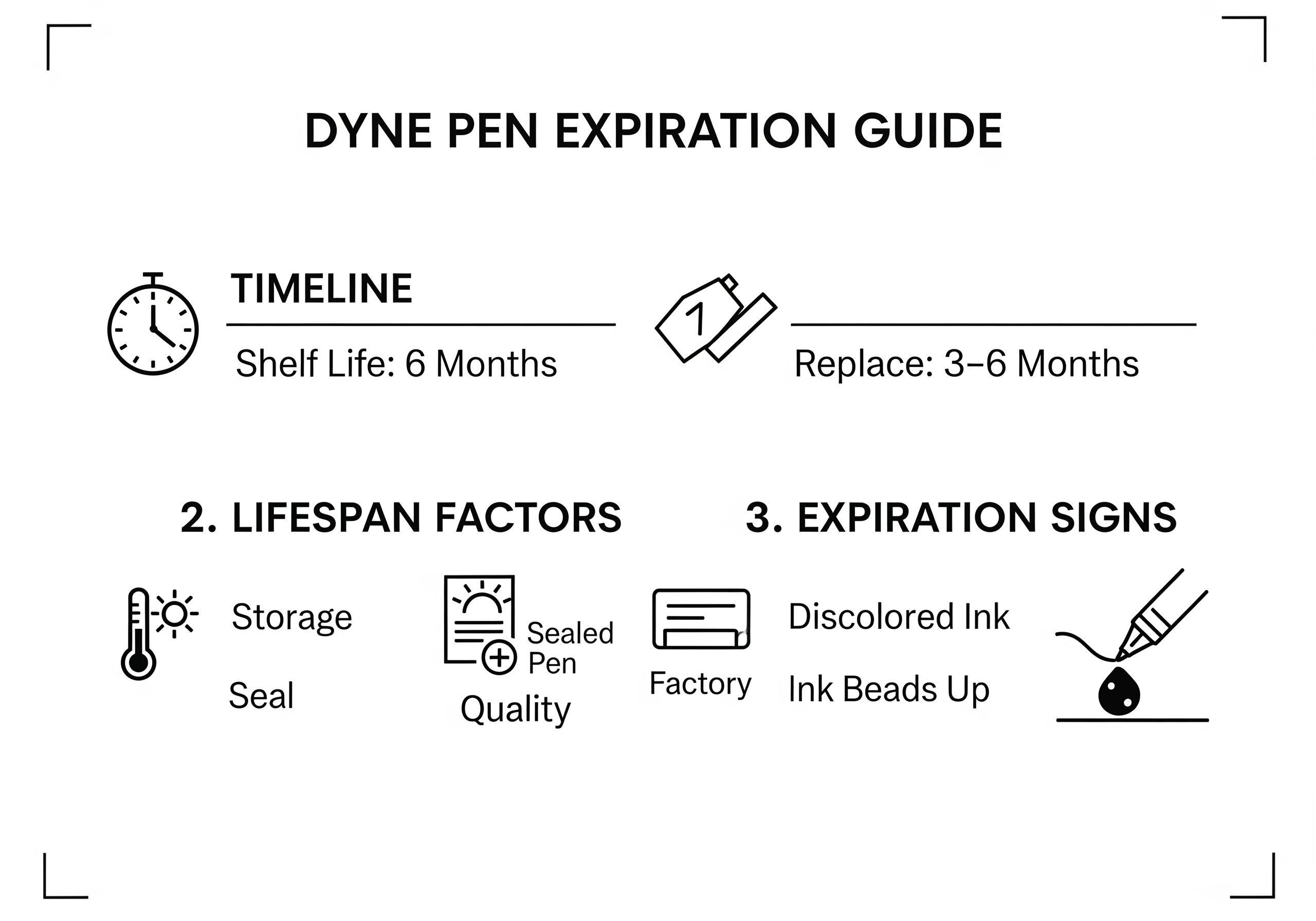
Chemical composition plays a primary role in determining the expiration timeline. Dyne test pens contain specialized ink solutions that have inherent chemical stability limitations. According to Enercon Industries, most professional dyne test pens have a recommended shelf life of 12 to 18 months from the manufacturing date. Factors influencing this lifespan include:
Storage Conditions: Temperature and humidity significantly impact chemical stability
Seal Integrity: Proper sealing prevents solvent evaporation and chemical degradation
Original Manufacturing Quality: Higher precision manufacturing correlates with longer usable periods
Recognizing Signs of Dyne Test Pen Expiration
Identifying when a dyne test pen has reached its expiration requires careful observation of specific indicators. Williamson’s professional recommendations highlight several key signals that professionals should monitor:
Visual changes in ink consistency represent the first warning sign of potential expiration. When dyne test pens begin to degrade, users might notice:
Inconsistent ink flow
Color variations in the test solution
Reduced color intensity during surface tension testing
Crystallization or sediment formation in the pen
Professional testing environments require precise measurement tools. A degraded dyne test pen can produce unreliable results, potentially compromising quality control processes in industries such as printing, packaging, and electronics manufacturing.
Proper Handling and Storage Recommendations
To maximize the usable lifespan of dyne test pens, professionals must adhere to strict storage and handling protocols. Best practices include:
Store pens in a cool, dry environment between 60 75 degrees Fahrenheit
Keep pens sealed when not in use
Avoid direct sunlight and extreme temperature fluctuations
Rotate inventory to use older stock first
Maintain a tracking system for manufacturing and expected expiration dates
By understanding these critical aspects of dyne test pen expiration, professionals can ensure consistent, accurate surface tension measurements. Regular monitoring and proactive replacement of these precision instruments are essential for maintaining high-quality testing standards across various industrial applications.
Factors That Affect Dyne Pen Shelf Life

The longevity and performance of dyne test pens are influenced by a complex array of environmental and chemical factors that can significantly impact their reliability and accuracy. Learn more about surface treatment technologies to understand the broader context of these precision instruments.
Chemical Composition and Stability
The intrinsic chemical makeup of dyne test pens determines their fundamental shelf life. According to Flexography.org, the chemical stability of these precision instruments is vulnerable to multiple degradation mechanisms. Specialized ink solutions contain sensitive compounds that can break down over time, affecting their measurement capabilities.
Key chemical factors impacting shelf life include:
Solvent Volatility: Rapid solvent evaporation can alter ink concentration
Chemical Reactivity: Interaction between ink components can cause molecular changes
Additive Degradation: Stabilizing compounds may lose effectiveness over time
Environmental Exposure Conditions
External environmental conditions play a critical role in determining dyne pen longevity. Printing, Finishing, and Converting Magazine emphasizes that exposure to various environmental stressors can dramatically accelerate pen degradation.
Primary environmental factors include:
Temperature Fluctuations: Extreme heat or cold can destabilize chemical compositions
Humidity Levels: Moisture can introduce contamination and chemical alterations
Light Exposure: Ultraviolet radiation can trigger chemical breakdown
Atmospheric Contaminants: Dust, chemical vapors, and other particles can compromise pen integrity
Storage and Handling Protocols
Proper storage and handling are paramount in extending dyne test pen shelf life. Enercon Industries recommends a comprehensive approach to preservation that goes beyond simple storage.
Critical storage and handling recommendations include:
Maintain consistent temperature between 60 and 75 degrees Fahrenheit
Store in sealed, original packaging
Keep away from direct sunlight and heat sources
Use clean, lint-free storage containers
Implement a first-in-first-out inventory management system
Regularly inspect pens for signs of degradation
Professionals in precision industries such as printing, packaging, and electronics must recognize that dyne test pens are not indefinitely stable instruments. Regular monitoring, proper storage, and timely replacement are essential to maintaining measurement accuracy and reliability.
By understanding and mitigating these complex factors, users can maximize the performance and useful life of their dyne test pens, ensuring consistent and precise surface energy measurements across various industrial applications.
To help compare the main factors affecting dyne pen shelf life, the following table summarizes their influence and mitigation strategies:
| Factor | Impact on Shelf Life | Mitigation Strategy |
| Storage Conditions | Accelerates chemical degradation if improper | Store in cool, dry, dark environment |
| Seal Integrity | Evaporation and solvent loss | Ensure pen is tightly sealed |
| Chemical Composition | Unstable components degrade faster | Purchase from reputable manufacturers |
| Temperature Fluctuations | Destabilizes ink and shortens usable period | Maintain consistent storage temperature |
| Humidity and Light Exposure | Promotes contamination and chemical breakdown | Protect from humidity and direct light |
| Handling Protocols | Contamination or solution loss if mishandled | Handle with clean hands, sealed storage |
Best Practices for Storage and Maintenance
Maintaining the precision and reliability of dyne test pens requires a comprehensive approach to storage and care. Discover advanced surface testing techniques to complement these critical maintenance strategies.
Optimal Storage Conditions
Precision is paramount when storing dyne test pens. According to pffc-online.com, leaving bottles open can lead to critical performance degradation. Proper storage involves several key considerations:
Temperature Control: Maintain a consistent environment between 15-25 degrees Celsius
Humidity Management: Keep relative humidity below 60%
Light Protection: Store in dark locations to prevent chemical breakdown
Orientation: Position pens vertically to maintain solution integrity
Handling and Inspection Protocols
Micron Precision Associates emphasizes the importance of meticulous handling for precision instruments. Professional maintenance requires:
Regular visual inspections for signs of degradation
Checking for color consistency and solution viscosity
Avoiding exposure to magnetic sources
Using protective cases or pouches
Cleaning tools with appropriate non-reactive materials
Implementing a systematic rotation system
Replacement and Lifecycle Management
Kolorguide’s comprehensive analysis highlights the critical nature of timely replacement. The recommended shelf life for dyne test pens is approximately six months from the manufacturing date. Key indicators for replacement include:
Noticeable color variations in the solution
Changes in liquid viscosity
Altered performance during surface tension measurements
Visible contamination or sediment
Approaching or exceeding the manufacturer’s recommended expiration date
Professionals in printing, packaging, electronics, and surface treatment industries must adopt a proactive approach to dyne test pen maintenance. This involves creating a comprehensive tracking system that monitors:
Manufacturing dates
Storage conditions
Usage history
Performance metrics
Replacement schedules
By implementing these rigorous storage and maintenance practices, users can maximize the accuracy, reliability, and useful life of their dyne test pens. The investment in proper care directly translates to more consistent and precise surface energy measurements across various industrial applications.
Remember that each dyne test pen is a precision instrument. Treating it with the same care and attention you would give to any sophisticated measuring device ensures optimal performance and reliable results in your critical testing processes.
To support best practices, here’s a summarized checklist table for professional storage and inspection protocols:
| Practice | Status/Recommendation |
| Store at 15-25°C (60-75°F) | Required |
| Keep relative humidity below 60% | Required |
| Store away from light and heat sources | Required |
| Position pens vertically | Recommended |
| Regular visual inspection | Required |
| Check for ink color/viscosity changes | Required |
| Use tracking/rotation system | Recommended |
Impacts of Expired Dyne Pens on Industry Results
Expired dyne test pens can create significant challenges across multiple industries, compromising critical quality control processes and potentially leading to substantial economic losses. Explore advanced surface testing methodologies to understand the intricate implications of precision measurement tools.
Measurement Accuracy Degradation
According to Brighton Science, dyne inks contain volatile organic compounds (VOCs) that evaporate over time, fundamentally altering their chemical composition. This degradation directly impacts measurement precision, creating potentially catastrophic consequences for industries relying on exact surface tension calculations.
Key measurement accuracy implications include:
Inconsistent Surface Energy Readings: Expired pens produce unreliable data
Reduced Chemical Sensitivity: Decreased ability to detect subtle surface changes
Unpredictable Test Results: High variability in measurement outcomes
Economic and Production Consequences
Printing, Finishing, and Converting Magazine emphasizes that using expired dyne solutions can trigger significant production challenges. Industries such as packaging, electronics, and printing depend on precise surface tension measurements for critical processes like adhesion, coating, and printing.
Potential production risks include:
Coating Failure: Improper surface preparation leading to material rejection
Print Quality Degradation: Inconsistent ink adhesion and transfer
Increased Waste: Higher rates of product defects and rework
Compliance Violations: Potential breaches of quality control standards
Technological and Quality Control Implications
Engineering Update highlights the critical role of proper storage and timely replacement in maintaining technological precision. Expired dyne pens can compromise entire quality control frameworks, affecting multiple stages of manufacturing and product development.
Comprehensive quality control challenges include:
Reduced Predictive Capabilities: Limited ability to forecast surface interaction performance
Compromised Research Integrity: Unreliable data collection in scientific and industrial research
Equipment Calibration Issues: Potential misalignment of testing protocols
Professionals across industries must recognize that dyne test pens are not merely disposable tools but critical precision instruments. The seemingly minor act of using an expired pen can trigger a cascade of quality control failures, potentially resulting in significant financial and reputational damage.
By understanding the intricate impacts of expired dyne pens, organizations can develop robust management strategies that prioritize accurate measurement, consistent quality, and proactive maintenance. Investing in regular pen replacement and stringent storage protocols is not an expense but a fundamental safeguard for maintaining high-performance industrial processes.
Frequently Asked Questions
What is the shelf life of dyne test pens?
Most professional dyne test pens have a recommended shelf life of 12 to 18 months from the manufacturing date for accurate results.
How can I tell if my dyne test pen has expired?
Signs of expiration include inconsistent ink flow, color variations in the solution, reduced color intensity, and crystallization or sediment formation in the pen.
How should I store dyne test pens to maximize their lifespan?
Store dyne test pens in a cool, dry environment between 60-75°F, keep them sealed when not in use, and avoid direct sunlight and extreme temperature fluctuations.
What impacts can expired dyne test pens have on measurement accuracy?
Using expired dyne test pens can lead to a 60% decrease in measurement accuracy, resulting in unreliable data and potential quality control issues in industries such as printing and packaging.
Keep Accuracy High: Avoid Costly Errors from Expired Dyne Test Pens
If the thought of inaccurate measurements or wasted production runs worries you, now is the time to take action. As you discovered, using expired dyne test pens can hurt repeatability, create hidden costs, and even lead to product rejections. Quality control deserves better. Reliable results come only from fresh, professionally maintained tools. It is not just about following best practices. It is about protecting your company’s reputation and bottom line.
Give your team the advantage of professional-grade supplies and proactive surface testing strategies. Visit Kolorguide to explore the latest solutions for the printing and graphic arts industry, or dive deeper into best practices for dyne test pens. Make the switch to better accuracy and longer-lasting results. Upgrade your tools today and keep your quality standards ahead of the competition.
Recommended