
No products in the cart.
Return To Shop
ISO 8296 Dyne Test Pens: Accurate Surface Testing
What are Dyne Test Pens ISO 8296?
Dyne Test Pens ISO 8296 are precision testing instruments designed to measure the surface energy or wetting tension of plastic materials, films, and coatings. These testing tools follow the international standard ISO 8296:2003, which specifies the method for determining the wetting tension of plastic film and sheet surfaces.
ISO 8296:2003 Standard – Technical Fundamentals
Standard Definition
The ISO 8296:2003 standard specifies a method for determining the wetting tension of plastic film and sheet surfaces in contact with drops of specific test solutions. The ability of plastic films to retain inks, coatings, adhesives, etc., depends primarily on the character of their surfaces.
Regulated Chemical Composition
Test fluids compliant with ISO 8296 are formulated with:
- Formamide as the base component
- 2-ethoxyethanol or distilled water as diluent
- Methyl Violet 2B as high-visibility dye (concentration: 3.0 grams/liter)
- 100% reagent grade materials for maximum precision
Technical Specifications of Dyne Test Pens ISO 8296
Measurement Range
Dyne Test Pens ISO 8296 are available in ranges from 30 to 72 dynes/cm (mN/m), covering virtually all industrial application needs:
- 30-38 dynes/cm: Untreated polyethylene (PE), low-energy materials
- 38-42 dynes/cm: Untreated polypropylene (PP), moderately treated materials
- 42-52 dynes/cm: Corona or plasma treated materials
- 52-72 dynes/cm: Highly treated surfaces, glass, metals
Precision and Accuracy
- Precision: ±1 mN/m (dyne/cm)
- Reproducibility: Consistent between batches
- Calibration: Certified according to international standards
- Shelf life: 6 months from manufacturing date
Testing Method According to ISO 8296
Step-by-Step Procedure
- Surface Preparation
- Clean test surface with appropriate solvent
- Ensure completely dry
- Avoid contamination with oils or residues
- Test Fluid Application
- Apply fluid to approximately 1 square inch area
- Use binder-free cotton swabs to avoid contamination
- Apply thin, uniform film
- Result Evaluation
- Observe fluid behavior for 3 seconds
- If fluid remains as film: surface energy is ≥ fluid value
- If fluid retracts into droplets: surface energy is < fluid value
Acceptance Criteria
- Stable film for 3+ seconds: Material meets or exceeds dyne level
- Retraction into droplets: Material is below dyne level
- Intermediate behavior: Test with intermediate value fluid
Advantages of Dyne Test Pens ISO 8296
Technical Benefits
- International Compliance: Full compliance with ISO 8296 standards
- High Visibility: High-visibility dye for precise readings
- Portability: Disposable pen format for field use
- Speed: Results in seconds, not minutes
- Cost-effective: Economic alternative to complex measurement equipment
Industrial Applications
Packaging Industry
- Corona treatment verification on PE/PP films
- Quality control in lamination processes
- Validation of ink and adhesive adhesion
Automotive Industry
- Surface testing before coating application
- Quality control on plastic components
- Surface treatment verification on interiors
Aerospace Industry
- Surface preparation validation
- Paint and coating process control
- Composite material testing
Medical Devices
- Surface biocompatibility verification
- Sterilization process control
- Medical coating adhesion testing
Differences Between Fluid Types
Type A vs Type B
Type A Fluids (ISO 8296)
- More precise and reproducible
- International standard formulation
- Considered more hazardous (require special precautions)
- Recommended for critical applications
Type B Fluids (Generic)
- Safer to handle
- Less precise than Type A
- Variable formulations between manufacturers
- Suitable for general applications
Factors Affecting Results
Environmental Variables
- Temperature: Maintain between 20-25°C for maximum precision
- Humidity: Control relative humidity (45-65% RH)
- Contamination: Avoid oils, dust, and residues
Material Variables
- Aging: Treated surfaces lose energy over time
- Contamination: Additive migration can affect results
- Processing: Manufacturing conditions influence surface energy
Result Interpretation
Typical Levels by Material
| Material | Dyne Level (mN/m) | Application |
|---|---|---|
| Untreated PE | 30-32 | Difficult to print/adhere |
| Untreated PP | 30-32 | Requires treatment |
| Treated PE | 38-42 | Good adhesion |
| Treated PP | 38-44 | Standard printing |
| PET | 42-45 | Excellent adhesion |
| Nylon | 46-52 | Technical applications |
Recommendations by Application
- Printing: Minimum 38 dynes/cm
- Lamination: Minimum 40 dynes/cm
- Structural adhesion: Minimum 44 dynes/cm
- Critical coatings: Minimum 48 dynes/cm
Maintenance and Storage
Optimal Conditions
- Temperature: 15-25°C
- Humidity: <60% RH
- Light: Store in dark location
- Position: Keep in vertical position
Shelf Life
- Dyne Test Pens: 6 months from manufacturing
- Bottled fluids: 5 months recommended
- Deterioration indicators: Color change, altered viscosity
Safety and Handling
Safety Precautions
- Ventilation: Use in well-ventilated area
- Skin contact: Avoid direct contact
- Protective equipment: Use gloves and safety glasses
- Disposal: Follow local regulations for solvent disposal
Safety Data Sheets
Always consult SDS (Safety Data Sheets) before use, especially for:
- Exposure limits
- Emergency procedures
- Chemical incompatibilities
- Disposal methods
Comparison with Other Methods
Dyne Test Pens vs Other Methods
| Method | Precision | Speed | Cost | Portability |
|---|---|---|---|---|
| Dyne Test Pens | ±1 mN/m | Seconds | Low | Excellent |
| Goniometer | ±0.1 mN/m | Minutes | High | Limited |
| Tensiometer | ±0.5 mN/m | Minutes | Medium | Limited |
Common Troubleshooting
Inconsistent Results
Possible Causes:
- Surface contamination
- Degraded test fluid
- Temperature/humidity out of range
- Incorrect application technique
Solutions:
- Clean surface with IPA
- Use fresh fluid
- Control environmental conditions
- Train personnel on correct technique
Fluid Behaves Abnormally
Symptoms:
- Very slow retraction
- Altered coloration
- Changed viscosity
Actions:
- Verify expiration date
- Confirm storage conditions
- Replace fluid if necessary
Certification and Traceability
Required Documentation
- Certificate of analysis: Each batch must include COA
- Traceability: Record of manufacturing date and batch
- Calibration: Verification against certified standards
Regulatory Compliance
Dyne Test Pens ISO 8296 comply with:
- ISO 8296:2003 (International)
- ASTM D2578 (United States)
- Local chemical safety regulations
Best Practices for Accurate Testing
Operator Training
- Proper technique: Consistent application method
- Timing: Precise 3-second observation
- Surface preparation: Thorough cleaning protocols
- Documentation: Accurate record keeping
Quality Control
- Regular calibration: Verify against known standards
- Batch testing: Test multiple samples
- Environmental monitoring: Track temperature and humidity
- Fluid rotation: Use oldest stock first
Industry-Specific Applications
Packaging and Converting
Primary uses:
- Corona treatment verification
- Lamination bond strength prediction
- Ink adhesion testing
- Coating uniformity assessment
Critical parameters:
- Film thickness considerations
- Treatment decay monitoring
- Multi-layer film testing
- Adhesive compatibility
Automotive and Transportation
Applications:
- Interior component testing
- Paint adhesion verification
- Weatherstrip compatibility
- Molded part qualification
Standards compliance:
- OEM specifications
- Durability requirements
- Environmental resistance
- Aesthetic quality standards
Electronics and Technical Films
Specialized testing:
- Conductor adhesion
- Conformal coating preparation
- Substrate compatibility
- Multi-layer circuit boards
Advanced Testing Considerations
Complex Geometries
- Curved surfaces: Adaptation techniques
- Textured materials: Result interpretation
- Multilayer structures: Layer-specific testing
- Flexible substrates: Handling considerations
Environmental Testing
- Temperature cycling: Effect on surface energy
- Humidity exposure: Long-term stability
- Chemical exposure: Compatibility assessment
- UV exposure: Degradation monitoring
Cost-Benefit Analysis
Economic Advantages
Direct benefits:
- Reduced adhesion failures
- Improved print quality
- Lower rejection rates
- Faster quality control
Indirect benefits:
- Reduced customer complaints
- Improved brand reputation
- Process optimization
- Regulatory compliance
ROI Calculation
Investment considerations:
- Initial pen cost
- Training requirements
- Testing time
- Documentation needs
Return factors:
- Defect reduction
- Process improvement
- Customer satisfaction
- Regulatory compliance
Future Developments
Technology Trends
- Digital measurement: Integration with data systems
- Automated testing: Robotic application
- Real-time monitoring: In-line testing systems
- Data analytics: Predictive quality control
Regulatory Evolution
- Stricter standards: Enhanced precision requirements
- Environmental compliance: Safer formulations
- Global harmonization: Unified testing protocols
- Sustainability focus: Eco-friendly alternatives
Conclusion
Dyne Test Pens ISO 8296 represent the most practical and reliable solution for surface energy measurement in industrial environments. Their compliance with international standards, combined with ease of use and cost-effectiveness, makes them the tool of choice for quality control professionals, packaging engineers, and laboratory technicians.
Proper implementation of these measurement instruments not only ensures final product quality but also optimizes production processes by providing accurate and reproducible data on material surface characteristics.
The adoption of ISO 8296 compliant testing methods demonstrates commitment to quality excellence and international best practices, essential for competitive advantage in today’s global marketplace.
For certified, highest quality Dyne Test Pens ISO 8296, contact our specialized technical team for expert consultation and product selection.
Need a Dyne Test Pen?
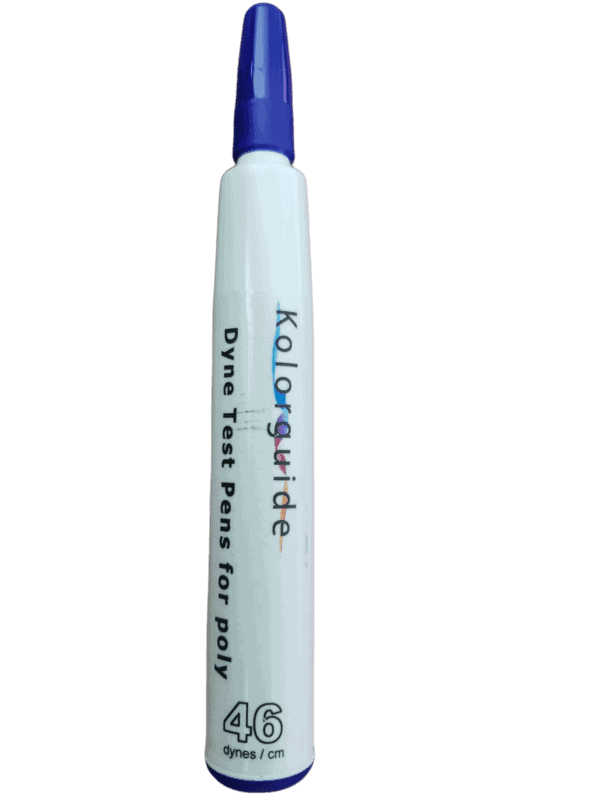
For routine production verification, Kolorguide Dyne Test Pens are sold individually with no minimum order and free U.S. shipping.
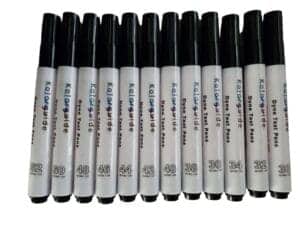
Dyne Test Pens Kit 30-52
Tags: Does dyne expire?, Does dyne go bad?, How to check dyne level?, How to increase dyne level?, How to measure surface energy?, How to use dyne test pen?, What are the levels of dyne pens?, What does a dyne test tell you?, What does a high dyne mean?, What is a good dyne level?, What is dyne cm 2?, What is the ASTM standard for dyne test?, What is the dyne level for printing?, What is the dyne test for cleanliness?, What is the dyne test inks to ISO 8296?, What is the dyne value?, What is the shelf life of dyne solution?

About author
Related posts
Anilox Roll Maintenance: The Complete Guide to Cleaning, Control, and Performance In flexography, the anilox roll is often defined by its specifications. Line screen.Cell volume.Engraving.... Continue reading
Surface Energy Chart by Material (Dyne Levels for Plastics, Films, Metals and Packaging) This reference chart is used by engineers and technicians to evaluate adhesion,... Continue reading
Surface Energy and Dyne Testing Guide: 105 Technical Questions for Printing and Converting January 26, 2026Kolorguide Technical Division Introduction Surface energy is one of the... Continue reading
Surface energy testing is a critical control point in printing, coating, laminating, and converting operations. Dyne test pens are routinely used to verify surface treatment... Continue reading
Corona treatment is not eternal and Why Geography is Killing Your Surface Tension (and Your Profits)
At Kolorguide, we live by one technical truth: “Corona treatment is not eternal; it is an unstable physical state that tends to decay.”Have you ever... Continue reading