
No products in the cart.
Return To Shop
What is Digital Printing? Key Facts for 2025 Industries
Digital printing is taking over industries with its speed and flexibility. It can cut supply chain waste by up to 26 percent and shrink a carbon footprint by as much as 80 percent. Think traditional printing presses need complex setups and big production runs? Not anymore. The real shift is that digital printing lets businesses customize every piece and respond instantly to market changes, setting a new standard for efficiency and sustainability.
Table of Contents
- Understanding What Is Digital Printing
- How Digital Printing Works Across Industries
- Benefits For Packaging, Plastics, And More
- Trends And Innovations In Digital Printing 2025
Quick Summary
| Takeaway | Explanation |
|---|---|
| Digital printing utilizes direct electronic files | This method eliminates the need for physical plates, allowing for quick and precise image reproduction on various substrates. |
| It supports on-demand production and customization | Businesses can produce tailored outputs without significant waste, adapting to changing market demands efficiently. |
| Digital printing enhances sustainability in industries | This technology reduces waste and carbon footprints, promoting greener manufacturing practices across sectors like packaging and textiles. |
| Innovations are driving advanced material printing | New eco-friendly materials and techniques are emerging, enabling high-performance products, such as smart packaging and biostickers. |
| Smart technologies are shaping future printing | Incorporating sensors and multifunctional surfaces transforms traditional printing into a responsive manufacturing process, elevating product capabilities. |
Understanding What is Digital Printing
Digital printing represents a revolutionary approach to reproducing images and documents directly from electronic files, transforming how industries create visual communications. Learn more about digital printing technologies that are reshaping production processes across multiple sectors.
The Core Technology Behind Digital Printing
At its fundamental level, digital printing is a method that transfers digital images onto various substrates using advanced printing technologies. Unlike traditional printing methods that require physical plates or screens, digital printing uses electronic files as the direct source for reproduction. According to Kent State University, this process involves printing from digital-based images directly to multiple media types, offering unprecedented flexibility and precision.
The core mechanism involves specialized digital printers that interpret computer files and translate them into precise ink or toner applications. These printers utilize advanced technologies like inkjet or laser systems to create high-resolution images with remarkable accuracy. The digital workflow allows for rapid production, minimal setup times, and the ability to customize each printed piece individually.
Digital Printing Applications in Modern Industries
Workforce LibreTexts highlights that digital printing has become crucial across multiple industries due to its versatility. From graphic design and marketing materials to industrial packaging and textile production, digital printing enables businesses to produce high-quality, customized outputs with remarkable efficiency.
Key advantages include on-demand printing capabilities, reduced waste, faster turnaround times, and the ability to modify images for each individual impression. This technology supports everything from small print runs to complex, personalized production requirements. Industries such as packaging, marketing, fashion, and manufacturing increasingly rely on digital printing to meet dynamic market demands and create more responsive production workflows.
Understanding digital printing means recognizing its transformative potential. By eliminating traditional printing constraints, this technology empowers businesses to produce more targeted, flexible, and cost-effective visual communications across virtually every sector of modern industry.
How Digital Printing Works Across Industries
Digital printing technologies have revolutionized production processes across multiple industries, offering unprecedented flexibility and precision. Learn more about digital textile printing innovations that demonstrate the technology’s transformative potential.
Digital Printing Technologies and Mechanisms
According to HP’s Industrial Digital Presses Learning Center, digital printing transfers digital images directly onto various substrates without traditional printing plates. This process involves sophisticated printing technologies like inkjet and laser systems that interpret electronic files and translate them into precise visual outputs.
Two primary digital printing technologies dominate the industry: inkjet and laser printing. Inkjet printers create documents by strategically placing microscopic ink droplets onto print media, delivering vibrant and professional color reproduction. Laser printers utilize electromagnetic mechanisms and precise laser technology to generate high-speed, high-volume printed documents with exceptional clarity and consistency.
Here is a comparison table highlighting the differences between inkjet and laser digital printing technologies described above:
| Feature | Inkjet Printing | Laser Printing |
|---|---|---|
| Printing Mechanism | Sprays microscopic ink droplets on the substrate | Uses lasers to transfer toner powder to the substrate |
| Output Quality | Vibrant, professional color reproduction | Sharp, consistent text and images |
| Speed | Moderate (varies by model) | High-speed, suitable for large volumes |
| Typical Use Cases | Photos, artistic prints, textiles | Documents, labels, industrial/high-volume needs |
| Media Compatibility | Wide range (including textured and unusual surfaces) | Best for standard papers and labels |
Industry-Specific Digital Printing Applications
Research from HP reveals that digital printing has transformed production across diverse sectors. In packaging, digital printing enables rapid design iterations, personalized packaging solutions, and the integration of unique identifiers like barcodes and QR codes. Marketing materials benefit from on-demand customization, allowing businesses to create targeted, dynamic communication tools with minimal waste.
The textile industry has experienced significant disruption through digital printing technologies. Designers can now reproduce intricate patterns with unprecedented color accuracy, reducing production times and material waste. Similarly, industrial sectors like electronics and automotive manufacturing leverage digital printing for creating precise component labels, circuit board markings, and custom instrumentation panels.
Understanding digital printing’s cross-industry potential means recognizing its capacity to deliver high-quality, customizable, and efficient production solutions. By eliminating traditional printing limitations, this technology empowers businesses to respond quickly to market demands, reduce operational costs, and create more personalized product experiences across virtually every modern industrial sector.
Benefits for Packaging, Plastics, and More
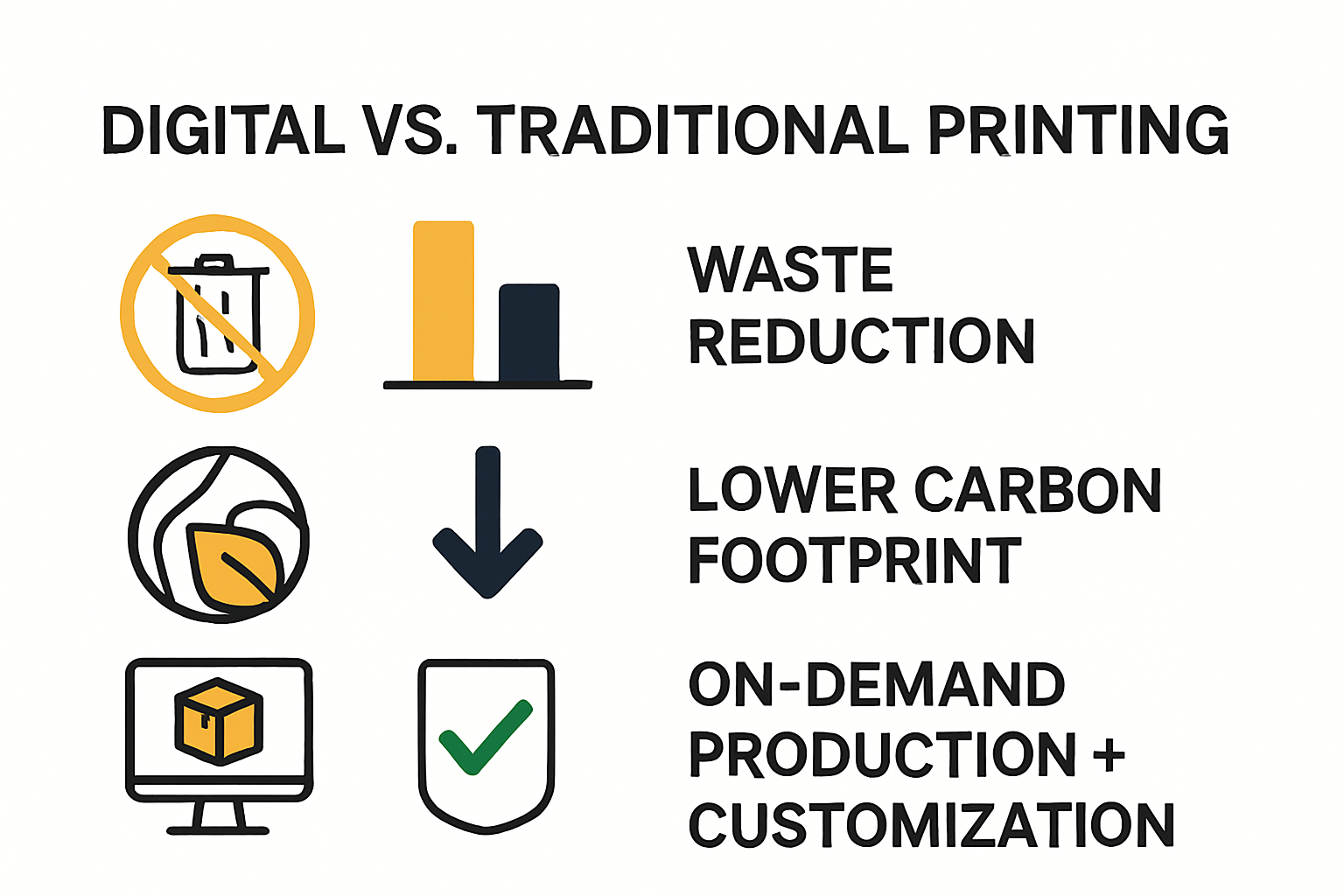
Digital printing has transformed multiple industrial sectors by offering unprecedented advantages in production efficiency, customization, and sustainability. Explore innovative printing solutions that are reshaping manufacturing approaches across industries.
Sustainability and Economic Advantages
According to Sustainable Brands, digital printing can dramatically reduce supply chain waste by up to 26% and decrease the carbon footprint of printing by 65 to 80%. This significant environmental impact makes digital printing a critical technology for industries seeking more sustainable production methods.
The just-in-time production model enabled by digital printing allows businesses to optimize inventory management, reduce warehousing costs, and minimize waste from obsolete stock. Research from Food Engineering Magazine highlights how digital printing enables companies to produce precise quantities of packaging, eliminating the need for large inventory holdings and reducing material waste.
Below is a table summarizing key sustainability and economic advantages of digital printing mentioned above:
| Advantage | Impact |
|---|---|
| Supply Chain Waste Reduction | Up to 26% decrease in waste |
| Carbon Footprint Reduction | 65%–80% smaller carbon footprint |
| Just-in-Time Production | Optimizes inventory management, reduces warehousing costs |
| Lower Material Waste | Only needed amounts produced, minimizing obsolete stock |
| Efficient Customization | Supports production of precise quantities, reducing overruns and excess inventory |
Industry-Specific Transformations
In the packaging sector, digital printing revolutionizes product presentation and functionality. Companies can now create highly customized packaging with unique identifiers, intricate designs, and personalized branding. The technology supports rapid prototyping, allowing businesses to test and iterate packaging designs quickly and cost-effectively.
For plastics and industrial manufacturing, digital printing offers unprecedented precision in creating component labels, technical markings, and complex surface decorations. The ability to print directly onto various substrate materials enables manufacturers to produce more sophisticated and functional products with enhanced visual and informational capabilities.
The economic and operational benefits of digital printing extend across multiple industries. By providing flexible, efficient, and sustainable printing solutions, this technology empowers businesses to reduce costs, minimize environmental impact, and create more responsive, customized production workflows. From packaging and plastics to electronics and automotive sectors, digital printing represents a transformative approach to modern manufacturing and product communication.
Trends and Innovations in Digital Printing 2025
Digital printing is experiencing remarkable technological advancements that promise to revolutionize industrial production and design capabilities. Explore cutting-edge digital textile printing technologies that are pushing the boundaries of what is possible in manufacturing.
Advanced Material Printing Technologies
Research from January 2025 introduces groundbreaking eco-friendly conductive ink composed of silver flakes and water-based polyurethane dispersion. This innovative material offers extraordinary capabilities, including high electrical conductivity, high-resolution digital printability, and robust adhesion for microchip integration. The technology demonstrates remarkable potential in diverse applications such as on-skin electrophysiological monitoring biostickers and smart packaging with integrated food monitoring sensors.
Parallel developments are emerging in structural color printing. A study published in July 2022 revealed a high-speed laser writing technique for producing structural colors on ultrathin hybrid films. This breakthrough achieves an impressive 90% sRGB color gamut, angle-insensitive colors, and an exceptional printing speed of 1.4 cm8/s, with a resolution exceeding 25,000 dpi. The durability and precision of these laser-printed colors position this technology as a potential game-changer for high-throughput industrial applications.
Sustainable and Smart Printing Innovations
Digital embossing represents another significant trend transforming the printing landscape. As documented by digital printing experts, this technology eliminates the need for traditional printing plates, molds, chemicals, and solvents, substantially reducing environmental impact. The process enables selective coating with variable thickness and stampless embossing, allowing manufacturers to produce print runs ranging from a single item to thousands of copies with unprecedented flexibility.

The convergence of digital printing with smart technologies is creating unprecedented opportunities across industries. Emerging innovations are focusing on integrating sensors, developing recyclable printing materials, and creating multi-functional printed surfaces that can perform beyond traditional visual communication. These advancements are not just improving print quality but are fundamentally reimagining printing as an intelligent, responsive manufacturing process.
As we approach 2025, digital printing is evolving from a purely reproductive technology to a sophisticated manufacturing solution. By combining advanced materials, precision engineering, and sustainability principles, digital printing is set to become a critical enabler of innovation across packaging, electronics, healthcare, and numerous other industrial sectors. The future of digital printing lies in its ability to deliver customized, intelligent, and environmentally responsible printing solutions that meet the complex demands of modern industry.
Frequently Asked Questions
What is digital printing?
Digital printing is a modern printing method that reproduces images directly from electronic files onto various substrates. Unlike traditional printing, it doesn’t require physical plates and allows for quick customization and on-demand production.
What are the benefits of digital printing for businesses?
Digital printing provides several advantages, including reduced supply chain waste, lower carbon footprints, faster turnaround times, the ability to customize prints, and on-demand production that minimizes excess inventory.
How does digital printing work in different industries?
Digital printing technology works across various industries by allowing businesses to produce high-quality, customizable outputs rapidly. It is used in packaging for personalized products, in textiles for intricate designs, and in manufacturing for precise component labeling.
What innovations are shaping digital printing by 2025?
By 2025, innovations in digital printing include advanced material printing technologies like eco-friendly conductive inks, sustainable printing processes such as digital embossing, and the integration of smart technology to enhance product capabilities and sustainability.
Ready to Transform Your Printing Workflow in 2025?
Are you struggling to keep up with the demand for faster delivery, waste reduction, and more sustainable production? As the article highlights, digital printing is no longer optional for businesses facing supply chain inefficiencies and costly setup times. Companies in the printing, design, and graphic arts industries need reliable tools, supplies, and cutting-edge solutions to harness these new digital trends and stay competitive. If you want to implement high-resolution, on-demand printing and boost your customization capabilities, you’re in the right place.
Unlock your advantage now by exploring the latest products for the printing and graphic arts sector at Kolorguide. See how our wide range of supplies can help you cut waste, save time, and accelerate sustainable innovation. Want to learn more about how digital technologies can upgrade your workflow? Start discovering who we are and what we offer. Don’t let your business fall behind—visit us today for powerful solutions that keep you ahead of industry changes.
Recommended
- El crecimiento de la impresión digital para textiles – kolorguide
- La importancia de la economía circular y omnicanal – kolorguide
- The Key to Controlling Color on Flexible Film – kolorguide
- Cómo lograr el color PANTONE® del año 2020 en bienes duraderos y electrónica de consumo – kolorguide
- Key Trends in Industrial Automation for 2025: What Construction Pros Need to Know – Sterling Access
- Understanding Image Resolution: A 2025 Guide for Creatives – Webflow HTML website template


About author
Related posts

Discover why registration is important for businesses in the printing, packaging, plastics, and technology industries. Learn how it protects and boosts your company’s growth. Continue reading

Explore essential printing press terminology to enhance your knowledge as a graphic designer or industry professional. Comprehensive insights included. Continue reading