No products in the cart.
Return To Shop
Understanding Graphic Arts vs Graphic Design
Graphic arts and graphic design might sound like two sides of the same creative coin, both dedicated to catching your eye and telling visual stories. But get this. Graphic design professionals add billions to the economy every year, with their skills in high demand across industries, while graphic artists focus less on selling products and more on self-expression and pushing aesthetic boundaries. Most people mix up these fields or think they overlap completely, but the reality is that their differences shape the worlds of business, technology, and culture in ways you probably never realized.
Table of Contents
- Defining Graphic Arts: An Overview Of The Field
- Understanding Graphic Design: Core Principles And Purpose
- The Importance Of Graphic Arts Vs Graphic Design In Industry
- Key Differences: Techniques, Tools, And Applications
- The Interplay Between Graphic Arts And Graphic Design
Quick Summary
| Takeaway | Explanation |
|---|---|
| Graphic arts focus on creative expression. | Unlike graphic design, graphic arts prioritize artistic exploration and visual storytelling, allowing personal expression. |
| Graphic design solves specific communication problems. | Graphic design aims to clarify messages and engage audiences through structured and effective visual solutions. |
| Both disciplines are economically valuable. | Graphic arts and graphic design contribute significantly to industries by enhancing branding, marketing, and visual communication strategies. |
| Collaboration between arts and design is essential. | Professionals who navigate both graphic arts and design create richer, more innovative visual experiences across various platforms. |
| Understanding both fields enhances creative strategies. | Knowing the differences and interactions between graphic arts and design improves visual communication and broadens professional opportunities. |
Defining Graphic Arts: An Overview of the Field
Graphic arts represent a dynamic and expansive creative discipline that encompasses the visual communication of ideas, concepts, and information through various artistic and technical mediums. Unlike graphic design, which focuses primarily on problem solving and commercial communication, graphic arts represent a broader artistic expression that blends creativity, technical skill, and visual storytelling.
Historical Origins and Artistic Evolution
The foundations of graphic arts trace back thousands of years, originating from ancient visual communication methods like cave paintings, hieroglyphics, and early printmaking techniques. As human societies developed, graphic arts expanded from purely functional representations to sophisticated forms of artistic expression. UNESCO recognizes graphic arts as a critical form of cultural communication that transcends linguistic and geographical boundaries.
Key historical developments in graphic arts include:
- Emergence of printmaking techniques during the Renaissance
- Development of lithography in the early 19th century
- Introduction of digital technologies in the late 20th century
- Expansion of multimedia and interactive artistic platforms
Diverse Mediums and Creative Expressions
Graphic arts encompass an incredibly wide range of creative mediums, including but not limited to:
- Traditional printmaking (etching, woodcut, lithography)
- Illustration and drawing
- Painting and mixed media
- Digital art and computer graphics
- Photography and film art
- Sculpture and three dimensional visual representations
Unlike graphic design, which typically serves commercial objectives, graphic arts prioritize artistic exploration, personal expression, and aesthetic innovation. Professionals in this field are not merely communicating messages but creating visual experiences that provoke emotion, challenge perceptions, and represent complex human experiences through visual language.
The versatility of graphic arts allows artists to experiment across multiple platforms, blending traditional techniques with cutting edge digital technologies, thereby continuously expanding the boundaries of visual communication and artistic representation.
Understanding Graphic Design: Core Principles and Purpose
Graphic design represents a strategic and purposeful discipline focused on solving communication challenges through visual means. While graphic arts emphasize creative expression, graphic design centers on delivering clear, effective messages that engage target audiences and solve specific communication problems.
Fundamental Design Principles
At its core, graphic design operates through a structured approach combining aesthetics with functional communication. Stanford University Design School emphasizes that effective graphic design relies on fundamental principles that guide visual communication:
- Balance and visual harmony
- Strategic use of color and typography
- Hierarchy and information organization
- Purposeful visual composition
- Clear communication objectives
These principles transform abstract ideas into comprehensible visual narratives that communicate complex information quickly and effectively.
 Graphic designers serve as visual translators, converting intricate concepts into accessible visual languages that resonate with specific audiences.
Professional Applications and Strategic Communication
Graphic design extends far beyond mere aesthetic creation. It represents a critical professional discipline with applications across multiple industries. Whether developing corporate branding, creating user interfaces, designing marketing materials, or constructing information graphics, designers use visual problem solving as their primary tool.
Modern graphic design integrates technological proficiency with creative strategy. Professionals utilize advanced software tools and digital platforms to craft precise visual solutions. For more insights into essential graphic design tools, designers continuously update their technical skills and creative approaches.
Unlike graphic arts which prioritize personal expression, graphic design demands a solution oriented approach. Designers must balance creative vision with client requirements, audience expectations, and communication objectives. This discipline requires not just artistic talent but strategic thinking, technical skills, and an deep understanding of human visual perception and communication dynamics.
The Importance of Graphic Arts vs Graphic Design in Industry
The professional landscape of visual communication demands a nuanced understanding of both graphic arts and graphic design as complementary yet distinct disciplines. Each plays a critical role in transforming visual experiences across multiple industries, from marketing and advertising to technology and manufacturing.
Economic and Creative Contributions
Graphic arts and graphic design contribute significantly to economic productivity and innovation. Bureau of Labor Statistics reports that graphic design professionals generate substantial economic value, with the industry projected to grow and adapt to emerging technological trends.
Key economic contributions include:
- Creating visual brand identities
- Developing marketing communication materials
- Designing user interfaces for digital platforms
- Producing visual content for multimedia campaigns
- Supporting product development through visual prototyping
Industry Specific Applications
Different industries leverage graphic arts and graphic design in unique ways. While graphic design focuses on solving communication challenges, graphic arts provide deeper artistic exploration and creative interpretation. Manufacturing, technology, entertainment, and advertising sectors rely on both disciplines to communicate complex ideas and enhance visual experiences.
Industry applications demonstrate the complementary nature of these disciplines:
- Automotive design integrates technical graphic design with artistic visualization
- Technology companies use graphic design for user interface development
- Entertainment industries employ graphic arts for conceptual and promotional materials
- Packaging design combines graphic design principles with artistic creativity
Professionals who understand the symbiotic relationship between graphic arts and graphic design create more compelling and effective visual communication strategies. Strategic integration of artistic expression and design thinking enables organizations to develop innovative visual solutions that resonate with target audiences.
By recognizing the unique strengths of graphic arts and graphic design, industries can leverage visual communication as a powerful tool for storytelling, brand development, and user engagement.
To clarify the essential distinctions between graphic arts and graphic design, this comparison table highlights their key purposes, approaches, and applications based on the article content.
| Aspect | Graphic Arts | Graphic Design |
|---|---|---|
| Primary Purpose | Artistic expression and visual storytelling | Communication problem-solving and message clarity |
| Core Approach | Personal exploration, emotional resonance | Structured, client-focused, audience-driven |
| Typical Mediums | Printmaking, illustration, painting, digital art | Branding, user interfaces, marketing, information graphics |
| Focus | Aesthetic innovation, pushing boundaries | Effective visual communication, accomplishing objectives |
| Methodology | Experimental, interpretative, less standardized | Technical, precise, strategically standardized |
| Role in Industry | Drives creativity, culture, and emotional impact | Supports branding, marketing, business communication |
| Tool Emphasis | Traditional and digital media, open-ended use | Software proficiency and precision design tools |
Key Differences: Techniques, Tools, and Applications
While graphic arts and graphic design share visual communication as a common foundation, they diverge significantly in their techniques, technological approaches, and professional methodologies.
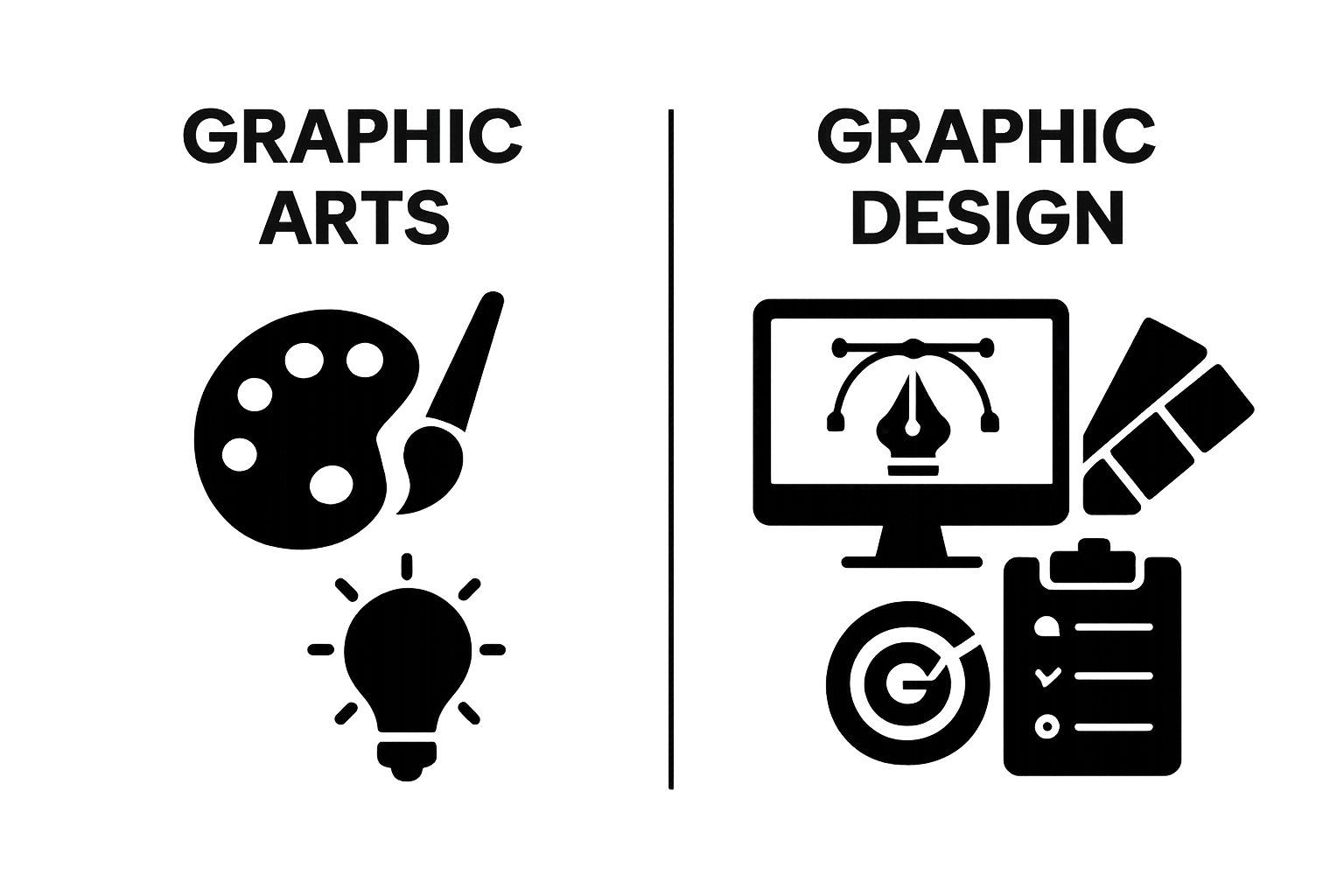 Understanding these distinctions helps professionals and students navigate their creative and professional trajectories more effectively.
Technological Tools and Techniques
GeeksforGeeks highlights the technological nuances that distinguish these disciplines. Graphic design relies heavily on digital tools and precise technical skills, while graphic arts maintain a more fluid and exploratory approach to visual creation.
Technological differences include:
- Digital software proficiency (Adobe Creative Suite)
- Precision based design methodologies
- Commercial communication focused platforms
- User experience and interface design tools
- Strategic visual communication technologies
Professional Methodological Approaches
Graphic design operates within a structured problem solving framework, where visual solutions are developed to address specific communication challenges. In contrast, graphic arts embrace a more experimental and personal creative process that prioritizes individual artistic expression and aesthetic exploration.
Key methodological distinctions encompass:
- Objective driven visual communication
- Client and audience centered design strategies
- Measurable communication outcomes
- Technical precision and standardization
- Conceptual and interpretative artistic approaches
Professionals in both disciplines develop unique skill sets that complement modern visual communication requirements. While graphic designers focus on creating clear, effective messages, graphic artists explore deeper layers of visual storytelling and emotional resonance.
The convergence of these disciplines ultimately creates a rich, multifaceted landscape of visual communication that adapts to rapidly evolving technological and creative challenges.
This table summarizes the key technological tools and methodological approaches that set graphic arts and graphic design apart, as discussed in the techniques and practices section of the article.
| Category | Graphic Arts | Graphic Design |
|---|---|---|
| Technological Tools | Flexible use of digital and traditional media | Advanced digital software (Adobe Creative Suite, etc.) |
| Main Techniques | Artistic experimentation, mixed media | Precision-based, structured design processes |
| Methodological Approach | Personal, conceptual, interpretative | Objective-driven, standardized, client/audience-focused |
| Communication Goals | Artistic exploration, emotion, aesthetics | Solving communication challenges, message clarity |
| Outcome Measurement | Subjective, based on expression or impact | Measurable results, clarity, effectiveness |
The Interplay Between Graphic Arts and Graphic Design
The relationship between graphic arts and graphic design represents a sophisticated dance of creativity, technical skill, and strategic communication. Far from being mutually exclusive, these disciplines interact dynamically, creating rich visual narratives that bridge artistic expression and purposeful communication.
Creative Synergy and Collaborative Potential
MIT Design Lab emphasizes that contemporary visual communication thrives on interdisciplinary collaboration. Graphic arts provide the foundational artistic vision, while graphic design translates that vision into structured, targeted communication strategies.
Key areas of collaborative interaction include:
- Developing visual storytelling approaches
- Exploring innovative aesthetic techniques
- Integrating emotional resonance with strategic messaging
- Creating multilayered visual experiences
- Bridging conceptual art with practical design solutions
Professional Integration and Skill Transformation
Modern professionals increasingly recognize that graphic arts and graphic design are complementary rather than competing disciplines. Artists bring imaginative perspectives, while designers provide systematic implementation frameworks. This integration allows for more nuanced and compelling visual communication across multiple platforms.
Professional integration manifests through:
- Cross disciplinary education programs
- Collaborative design studios
- Multimedia project development
- Digital art and design platforms
- Experimental visual communication approaches
The boundaries between graphic arts and graphic design continue to blur, creating opportunities for innovative visual expression. Professionals who can navigate both artistic creativity and strategic design thinking become exceptionally valuable in industries ranging from technology and marketing to entertainment and education.
Ultimately, the interplay between graphic arts and graphic design represents a dynamic ecosystem of visual communication that constantly evolves, adapts, and reimagines how humans perceive and interact with visual information.
Elevate Your Visual Communication With Precise Color Tools
Struggling to bridge the creative energy of graphic arts with the precise demands of graphic design? This article highlights the real challenge of maintaining color fidelity and visual consistency across multiple mediums, whether you are crafting expressive artwork or designing for commercial clients. You know how vital it is to match colors accurately and present professional results in both artistic exploration and strategic communication. Achieving this level of quality demands professional-grade resources that inspire confidence.

Take the next step and browse our range of trusted color guides and reference tools built specifically for graphic designers and visual artists. Find popular Pantone guides, reliable color swatches, and smart solutions that ensure every print, branding project, or digital composition meets your standards for excellence. Make your creative workflow seamless and dependable: visit Kolorguide.com now to experience fast USA delivery, secure checkout, and proven customer satisfaction. Upgrade your tools today and see the difference true color accuracy makes.
Frequently Asked Questions
What is the main difference between graphic arts and graphic design?
Graphic arts emphasize artistic expression and creativity, focusing on visual storytelling, while graphic design is solution-oriented, primarily aimed at effective communication and problem-solving through visual means.
What are some common mediums used in graphic arts?
Graphic arts include various mediums such as traditional printmaking, illustration, painting, digital art, photography, and mixed media, allowing for a broad range of creative expressions.
How do design principles impact graphic design?
Fundamental design principles, such as balance, color theory, typography, and visual hierarchy, guide graphic designers in creating clear, effective visual narratives that resonate with targeted audiences.
Why is understanding both graphic arts and graphic design important in the industry?
Recognizing the unique strengths of both fields allows professionals to create compelling visual communication strategies that integrate artistic exploration with strategic messaging, enhancing user engagement across diverse industries.
Recommended


About author
Related posts

Discover why registration is important for businesses in the printing, packaging, plastics, and technology industries. Learn how it protects and boosts your company’s growth. Continue reading

Explore essential printing press terminology to enhance your knowledge as a graphic designer or industry professional. Comprehensive insights included. Continue reading