
No products in the cart.
Return To Shop
How to Reduce Downtime for Efficient Production Flow
Production lines lose more than 20 percent of their available time to downtime in some facilities. Most managers think the main culprit is equipment failure or worn out machines. That hardly scratches the surface. The biggest surprises usually hide in daily routines, overlooked workflows, and the way teams react to small hiccups—these overlooked factors can quietly drain thousands of hours before anyone notices.
Table of Contents
- Step 1: Assess Current Downtime Causes
- Step 2: Implement Preventive Maintenance Strategies
- Step 3: Train Staff on Best Practices
- Step 4: Streamline Workflow Procedures
- Step 5: Monitor and Evaluate Performance Metrics
Quick Summary
| Key Point | Explanation |
|---|---|
| 1. Assess Downtime Causes Thoroughly | Conduct a detailed analysis of production downtime to identify specific issues and their relationships. This allows for targeted improvement strategies. |
| 2. Implement Preventive Maintenance | Create a preventive maintenance schedule to address potential equipment failures proactively, reducing unexpected production disruptions. |
| 3. Train Staff Effectively | Develop a structured training program that empowers workers to identify and resolve production issues, enhancing operational efficiency. |
| 4. Streamline Workflow Procedures | Map production processes to eliminate inefficiencies, creating clear procedures and communication standards to improve overall workflow. |
| 5. Monitor Performance Metrics Continuously | Establish a robust performance tracking system that provides actionable insights, utilizing KPIs for ongoing optimization of production processes. |
Step 1: Assess Current Downtime Causes
Understanding the root causes of production downtime is the critical first step in creating a more efficient manufacturing workflow. This comprehensive assessment allows organizations to pinpoint precise interruption sources and develop targeted strategies for minimizing operational disruptions.
Diagnostic Data Collection Approach
Begin by conducting a systematic downtime tracking and documentation process. Implement a standardized method for recording every production interruption, capturing essential details such as duration, specific equipment involved, precise timing, and potential triggering factors. Manufacturing teams should create detailed logs that go beyond surface level observations, drilling into granular information about each stoppage.
According to research in the Journal of Intelligent Manufacturing, effective downtime analysis requires meticulous data preprocessing and causal structure learning. This means collecting not just when stoppages occur, but understanding the intricate relationships between different operational variables.
Your documentation should include comprehensive information such as:
- Exact timestamp of production interruption
- Specific machine or workstation experiencing the stoppage
- Duration of the downtime
- Immediate suspected cause
- Technician or operator notes
- Potential cascading effects on subsequent production stages
To maximize the effectiveness of your assessment, integrate multiple data collection methods. This might involve combining manual operator reports, automated machinery sensors, maintenance records, and production management software outputs. Cross referencing these sources provides a more holistic understanding of downtime patterns.
Critical to this process is developing a standardized classification system for downtime events. Rather than generic categorizations, create nuanced classifications that reflect your specific manufacturing environment. Categories might include mechanical failures, material supply interruptions, human error, quality control stops, or unexpected equipment calibration needs.
Successful completion of this assessment phase means generating a comprehensive report that clearly illustrates downtime frequency, duration, financial impact, and underlying systemic issues. This foundational analysis will directly inform subsequent optimization strategies, transforming raw data into actionable insights for improved production efficiency.
To help you compare different downtime causes and their collection methods, here is a table summarizing essential details to capture during downtime analysis.
| Downtime Cause | Information to Capture | Collection Method |
|---|---|---|
| Equipment Failure | Machine ID, timestamp, duration, suspected cause | Logs, sensor data |
| Material Supply Interruption | Workstation, missing material, impact sequence | Operator report, logs |
| Human Error | Operator notes, incident description | Manual log, interviews |
| Quality Control Stop | Cause, affected batch, follow-up actions | QC records, logs |
| Equipment Calibration Needed | Machine, frequency, cascading effects | Maintenance logs |
Step 2: Implement Preventive Maintenance Strategies
Preventive maintenance represents a proactive approach to minimizing production downtime by addressing potential equipment issues before they escalate into significant operational disruptions. This strategic method transforms reactive problem solving into a systematic, anticipatory process that protects both machinery performance and overall production efficiency.
Transitioning from your initial downtime assessment, develop a comprehensive preventive maintenance schedule tailored specifically to your manufacturing environment. This involves creating a detailed maintenance calendar that outlines regular inspection intervals, routine servicing requirements, and predictive maintenance techniques for each critical piece of equipment.
According to research in industrial maintenance strategies, implementing a structured preventive maintenance program can reduce unexpected equipment failures by up to 45%.
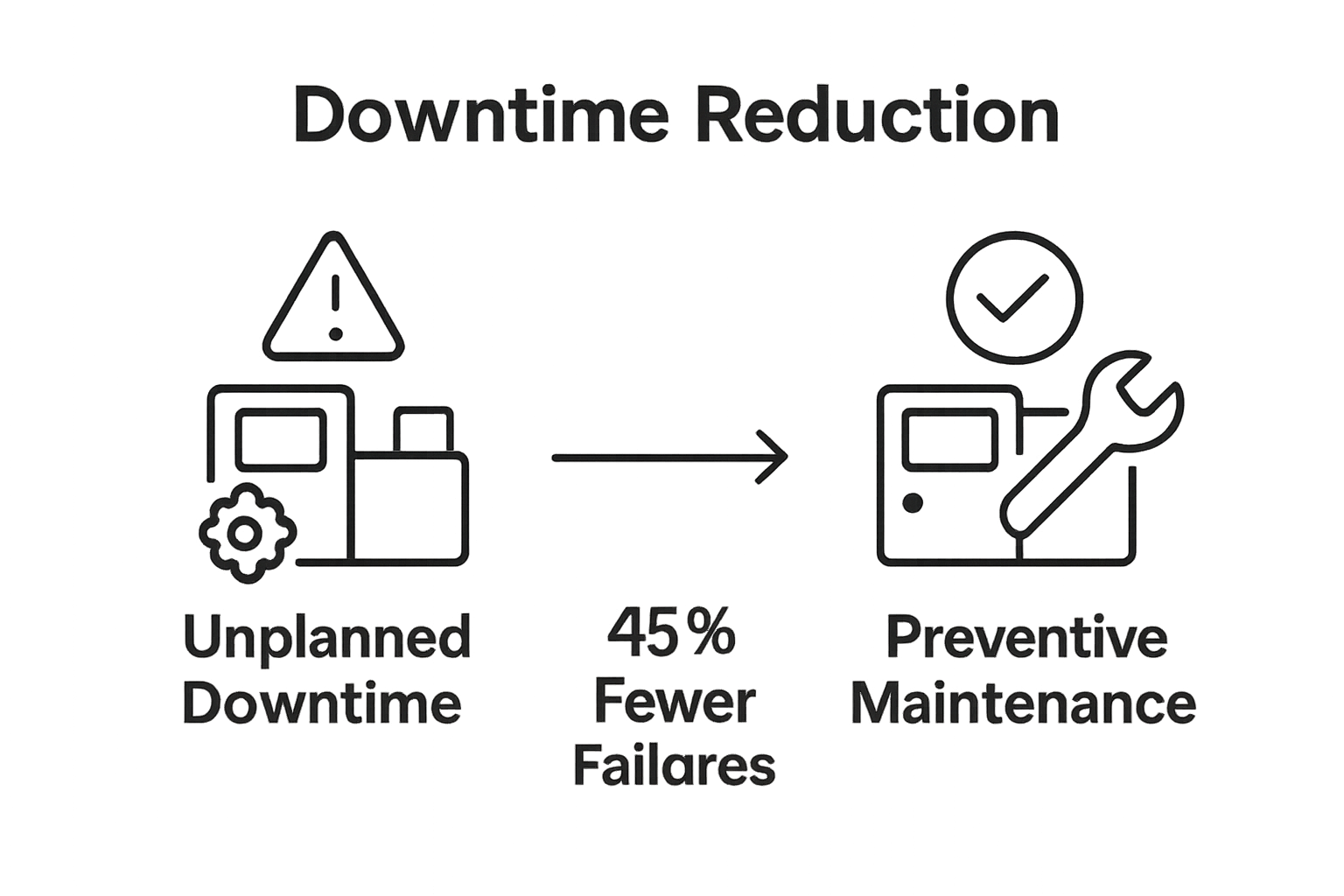 The key is developing a nuanced approach that balances scheduled interventions with real time monitoring technologies.
Begin by categorizing equipment based on criticality and potential impact on production flow. High priority machinery requires more frequent and intensive maintenance protocols. Create a tiered maintenance strategy where essential production equipment receives more rigorous and frequent attention compared to supplementary systems.
Your preventive maintenance strategy should include:
- Detailed equipment maintenance logs
- Specific inspection checklists for each machine type
- Replacement schedules for critical components
- Predictive monitoring technologies
- Staff training protocols for maintenance procedures
Integrate advanced diagnostic technologies to enhance your maintenance approach. Implement sensor based monitoring systems that can provide real time data about equipment performance, detecting subtle changes that might indicate impending mechanical issues. These technologies enable predictive maintenance, allowing teams to address potential problems before they cause significant production interruptions.
Crucial to success is developing a skilled maintenance workforce. Invest in comprehensive training programs that equip technicians with both technical skills and advanced diagnostic capabilities. This means moving beyond traditional repair approaches to cultivating a proactive maintenance culture where prevention is prioritized over reactive problem solving.
Successful implementation of preventive maintenance strategies will result in a documented reduction of unexpected equipment failures, improved production consistency, and demonstrable increases in overall operational efficiency.
Below is a table summarizing key preventive maintenance elements and their objectives for efficient downtime reduction.
| Maintenance Element | Purpose |
|---|---|
| Maintenance Logs | Track performed work and recurring issues |
| Equipment Inspection Checklists | Ensure consistent and thorough inspections |
| Replacement Schedules | Prevent failures from worn parts |
| Predictive Monitoring Technologies | Detect potential problems before they escalate |
| Maintenance Staff Training | Improve problem detection and repair proficiency |
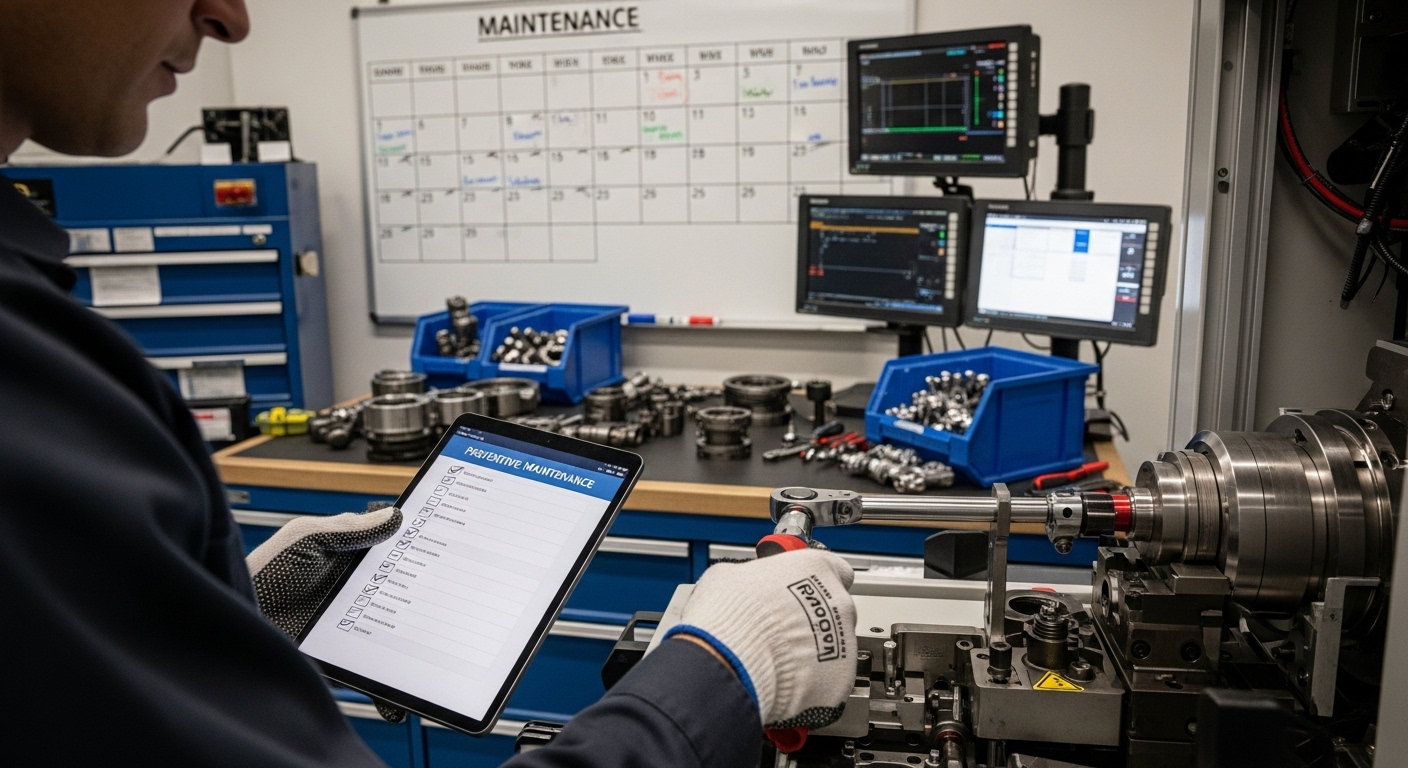 Your maintenance logs should reflect decreasing downtime incidents and more predictable equipment performance across all critical production systems.
Step 3: Train Staff on Best Practices
Staff training represents a critical intervention in reducing production downtime, transforming employee knowledge from a potential weakness into a strategic operational strength. Effective training goes beyond simple instruction, creating a comprehensive approach that empowers workers to proactively identify, prevent, and respond to potential production interruptions.
Develop a structured training program that addresses multiple dimensions of operational efficiency. This comprehensive approach should integrate technical skill development, process understanding, and problem solving capabilities. Your training curriculum must connect directly with the downtime assessment and preventive maintenance strategies established in previous steps, ensuring a cohesive approach to production optimization.
According to OSHA guidelines, effective workplace training programs should focus on creating a culture of continuous improvement and proactive problem resolution. This means moving beyond traditional instructional methods to develop adaptive learning environments that encourage critical thinking and technical proficiency.
Customized training modules should be designed to address specific equipment, processes, and potential failure points identified during your initial downtime assessment. Each module must provide practical, hands on learning experiences that simulate real world scenarios workers might encounter during production.
Key components of an effective training program include:
- Comprehensive equipment operation workshops
- Troubleshooting and diagnostic skill development
- Safety protocol and risk management training
- Hands on maintenance technique instruction
- Performance monitoring and reporting skills
Interactive learning technologies can significantly enhance training effectiveness. Implement simulation based training platforms that allow workers to practice complex procedures in controlled, risk free environments. These digital tools provide immediate feedback, helping employees develop muscle memory and decision making skills without risking actual production equipment.
Establish a continuous learning framework that goes beyond initial training. Create regular refresher courses, skill assessment protocols, and ongoing professional development opportunities. This approach ensures that staff skills remain current with evolving technological and operational requirements.
Successful implementation of staff training will be evident through measurable improvements in production consistency, reduced error rates, and demonstrable decreases in equipment related downtime. Track performance metrics before and after training implementation to validate the program’s effectiveness and identify areas for further refinement.
This table highlights essential staff training components and their benefits in reducing downtime and enhancing production efficiency.
| Training Component | Key Benefit |
|---|---|
| Equipment Operation Workshops | Boosts operator competency and confidence |
| Troubleshooting Skill Development | Enables proactive issue identification |
| Safety and Risk Management | Reduces accidents and related downtime |
| Hands-on Maintenance Instruction | Improves responsiveness to equipment issues |
| Performance Reporting Skills | Promotes accountability and transparency |
Step 4: Streamline Workflow Procedures
Streamlining workflow procedures represents a critical strategy for reducing production downtime by eliminating inefficiencies, reducing bottlenecks, and creating a more responsive operational environment. This step transforms complex manufacturing processes into smooth, interconnected systems that maximize productivity and minimize interruptions.
Process mapping becomes the foundational technique for understanding and improving workflow efficiency. Carefully document each step of your production process, identifying potential points of friction, unnecessary movements, and time consuming transitions. This visual representation allows teams to recognize systemic inefficiencies that might otherwise remain hidden.
According to research on lean manufacturing methodologies, successful workflow optimization requires a holistic approach that considers equipment, personnel, and procedural interactions. The goal is creating a continuous flow manufacturing environment where materials and information move seamlessly through production stages.
Implement a standardized operating procedure (SOP) framework that clearly defines expectations, responsibilities, and optimal performance metrics for each workflow stage. These documented procedures eliminate ambiguity, reduce human error, and create consistent performance benchmarks across different production shifts and team configurations.
Key elements to address in workflow streamlining include:
- Identifying and eliminating redundant process steps
- Minimizing unnecessary material handling
- Creating clear communication protocols
- Establishing performance measurement standards
- Developing rapid response mechanisms for potential disruptions
Technology integration plays a crucial role in workflow optimization. Invest in digital tools that enable real time tracking, automated reporting, and predictive analytics. Computerized maintenance management systems can provide instantaneous insights into equipment performance, material flow, and potential bottlenecks, allowing for proactive interventions before they escalate into significant production interruptions.
Encourage a culture of continuous improvement where employees at all levels are empowered to suggest workflow enhancements. Create feedback mechanisms that allow workers to share observations, propose efficiency improvements, and participate actively in process refinement. This approach transforms workflow optimization from a top down directive into a collaborative organizational strategy.
Successful workflow streamlining will be evident through measurable improvements in production speed, reduced idle time, and more consistent output quality. Track key performance indicators such as cycle time, throughput rate, and equipment utilization to validate the effectiveness of your procedural refinements and identify ongoing optimization opportunities.
Step 5: Monitor and Evaluate Performance Metrics
Monitoring and evaluating performance metrics transforms raw operational data into actionable insights, creating a powerful mechanism for continuous improvement and downtime reduction. This critical step moves beyond simple measurement, developing a comprehensive understanding of production efficiency through systematic performance tracking and analysis.
Establish a robust performance tracking system that captures comprehensive data across multiple operational dimensions. This involves implementing advanced monitoring technologies that provide real time insights into equipment performance, workflow efficiency, and potential disruption points. Your metrics should go beyond traditional measurements, creating a holistic view of production capabilities and limitations.
According to research on predictive maintenance strategies, modern performance monitoring requires integrating advanced data collection technologies that enable predictive analysis. This means moving from reactive measurement to proactive performance optimization.
Key performance indicators (KPIs) should be carefully selected to provide meaningful insights into production efficiency. These metrics must directly connect to your downtime reduction objectives, offering clear, measurable benchmarks for operational improvement. Focus on indicators that provide actionable intelligence rather than collecting data for data’s sake.
Critical metrics to track include:
- Equipment overall effectiveness (OEE)
- Mean time between failures (MTBF)
- Mean time to repair (MTTR)
- Production cycle time
- Unplanned downtime duration
- Maintenance response time
Implement advanced analytics platforms that can process complex data sets and generate predictive insights. These technologies should provide visual dashboards, automated reporting, and trend analysis capabilities. Machine learning algorithms can help identify subtle patterns and potential future disruption risks that might escape traditional monitoring approaches.
Develop a continuous improvement framework that uses performance metrics as a catalyst for ongoing optimization. Regular performance review meetings should involve cross functional teams, allowing for collaborative analysis of collected data. This approach transforms performance monitoring from a passive reporting exercise into an active problem solving mechanism.
Successful performance metric monitoring will demonstrate tangible improvements in production efficiency, reduced downtime incidents, and more predictable operational outcomes. Your metrics should show progressive enhancement across key indicators, validating the effectiveness of your comprehensive downtime reduction strategy.
Take Control of Downtime with Reliable Color Management
Struggling with production delays because of inconsistent color results, workflow bottlenecks, or preventable errors? As highlighted in reducing downtime, accuracy and proactive tools are essential. Many teams face wasted time and costly mistakes when they lack dependable color reference materials or standardized guides, which directly impacts efficiency and quality. You deserve tools that help you reduce errors at every stage, simplify processes, and keep projects moving seamlessly.

Ready to upgrade your workflow? Visit Kolorguide.com right now to browse our top-tier Pantone color guides, swatches, and color management solutions. Our detailed product catalog empowers professionals to ensure color precision, optimize print outcomes, and support preventive routines outlined in this article. Shop today for fast USA shipping and the reliability trusted by industry experts. Take the first step toward smoother, more efficient production—explore the full range of graphic arts supplies and ensure your next job runs without interruptions.
Frequently Asked Questions
What are the main causes of production downtime?
Understanding the root causes of production downtime often involves analyzing interruptions related to equipment failures, human errors, material supply issues, and quality control processes. A comprehensive assessment can help pinpoint these specific sources of downtime.
How can preventive maintenance strategies help reduce downtime?
Preventive maintenance strategies aim to address equipment issues before they escalate into serious problems. By scheduling regular inspections, employing predictive maintenance technologies, and developing a highly trained maintenance workforce, organizations can significantly reduce unexpected equipment failures and maintain consistent production flow.
What role does staff training play in minimizing production interruptions?
Staff training is crucial as it equips employees with the knowledge and skills needed to identify, prevent, and respond to potential production interruptions. A structured training program that includes hands-on experience and continuous learning fosters a culture of proactive problem resolution, resulting in fewer operational disruptions.
How can we effectively monitor and evaluate production performance metrics?
Establishing a robust performance tracking system that captures comprehensive data across multiple operational dimensions is vital. Key performance indicators (KPIs) like equipment overall effectiveness (OEE), mean time between failures (MTBF), and unplanned downtime duration should be monitored to provide actionable insights for continuous improvement.
Recommended
- UPDATING YOUR PANTONE GUIDES CAN SAVE YOU VALUABLE PRODUCTION TIME AND MONEY! – kolorguide
- The Key to Controlling Color on Flexible Film – kolorguide
- La importancia de la economía circular y omnicanal – kolorguide
- Capatch is an efficient tool that measures the volume of anilox rolls – kolorguide
- Odoo Production Planning & Scheduling ERP. Best module by Bista.
- How to Streamline Operations for Greater Efficiency – Business Coach For Digital Marketing Companies, SEO, Social Media Agencies

