No products in the cart.
Return To Shop
Understanding Digital Printing on Glass for Today’s Markets
Digital printing on glass has taken design and manufacturing places nobody thought possible before. Manufacturers can now create highly customized glass products with reduced setup times and minimal waste. Most people still picture glass as just a blank, fragile sheet. But that view is out of date. Glass has become a high-tech canvas with nearly unlimited potential for detail, durability, and creativity.
Table of Contents
- What Is Digital Printing On Glass?
- Why Digital Printing On Glass Matters In Various Industries
- How Digital Printing On Glass Works: The Technology Behind It
- Key Concepts In Digital Printing On Glass: Materials And Techniques
- Practical Applications Of Digital Printing On Glass In Real-World Contexts
Quick Summary
| Takeaway | Explanation |
|---|---|
| Digital printing on glass offers unmatched customization. | This technology enables the creation of detailed, customized designs directly on glass, enhancing artistic and functional applications. |
| It improves production efficiency and reduces waste. | By allowing for quick design iterations and smaller production runs, digital printing minimizes material waste and lowers costs. |
| Advanced ink technologies ensure durability. | Specialized ceramic and UV-curable inks bond permanently with glass, resulting in graphics resistant to environmental degradation. |
| The technology supports innovative architectural designs. | Digital printing enables architectural elements like dynamic facades and interactive surfaces, enhancing visual appeal and functionality. |
| Critical applications span multiple industries. | From automotive to electronics and renewable energy, digital printing on glass is transforming production and design processes across various sectors. |
What is Digital Printing on Glass?
Digital printing on glass represents a sophisticated technological process that enables precise, high-resolution imagery and designs to be directly applied onto glass surfaces using advanced digital printing techniques. Unlike traditional printing methods, this innovative approach allows for unprecedented customization, intricate detail, and versatile application across numerous industries.
The Fundamental Technology
At its core, digital printing on glass involves transferring digital graphics directly onto glass substrates using specialized inkjet or ceramic printing technologies. Learn more about digital imaging techniques that enable this transformative process. The method utilizes high-precision digital printers that can reproduce complex images with remarkable accuracy, applying specialized inks that adhere permanently to glass surfaces.
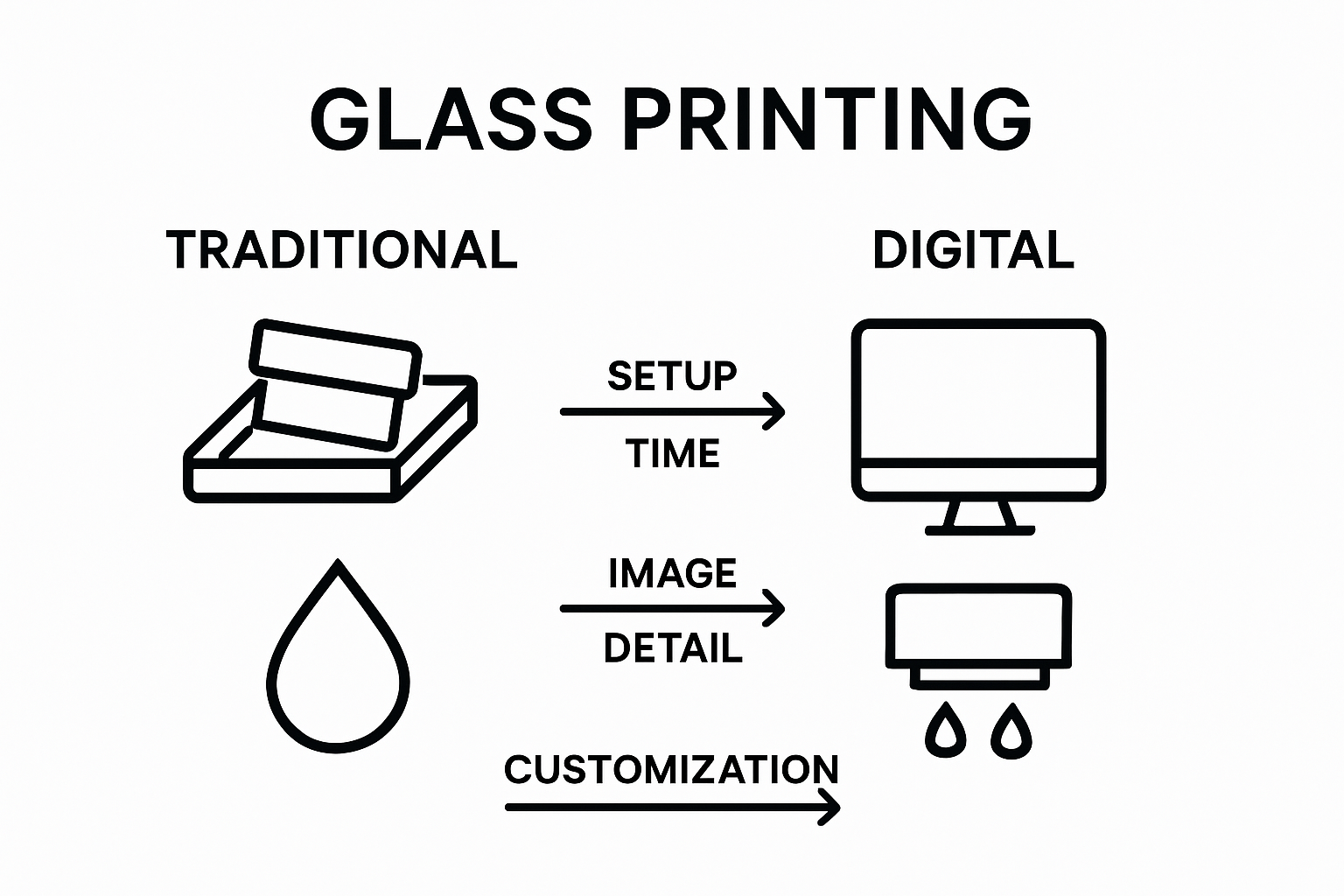
The printing process typically involves several key components:
- Digital image preparation and optimization
- Specialized glass-compatible ceramic or UV-curable inks
- Advanced inkjet printing mechanisms
- Thermal or UV curing systems for ink permanence
Industrial and Design Applications
Digital printing on glass has revolutionized multiple sectors by offering unprecedented design flexibility. According to research from UC Berkeley, emerging technologies are expanding the capabilities of glass printing, enabling intricate microstructures and complex geometries previously impossible.
Professionals across architecture, interior design, automotive manufacturing, electronics, and decorative arts now leverage digital glass printing to create:
- Architectural glass panels with custom graphics
- Automotive windshields with embedded design elements
- Decorative glass surfaces for residential and commercial spaces
- Specialized electronic display interfaces
- Scientifically engineered glass components with precise optical properties
This technology bridges the gap between artistic expression and technical precision, transforming glass from a mere functional material into a dynamic canvas for innovative design and communication.
To help readers quickly compare the main advantages of digital printing on glass versus traditional methods, the following table summarizes key differences highlighted in the article.
| Aspect | Digital Printing on Glass | Traditional Glass Printing Methods |
|---|---|---|
| Customization | High, supports intricate and unique designs | Limited, often costly for custom work |
| Setup Time | Short, allows rapid changes | Long, requires extensive preparation |
| Material Waste | Minimal, efficient use of resources | High, significant excess material |
| Production Runs | Suitable for small and large batches | Economical mainly for large runs |
| Design Complexity | Supports high-resolution, detailed graphics | Restricted detail and complexity |
| Environmental Durability | Enhanced with specialized inks | Varies based on method |
| Cost Efficiency | Lower for short runs and iterations | Lower only for large-scale production |
Why Digital Printing on Glass Matters in Various Industries
Digital printing on glass has emerged as a transformative technology that transcends traditional manufacturing and design limitations, offering unprecedented capabilities across multiple professional domains. By enabling precise, customizable, and high-resolution imagery directly on glass surfaces, this technology has become a critical innovation driving creativity and functionality in numerous industries.
Economic and Design Flexibility
The economic implications of digital glass printing are profound. Manufacturers can now produce highly customized glass products with reduced setup times and minimal waste, dramatically improving production efficiency. Explore advanced printing quality techniques that enhance these technological capabilities. Unlike traditional screen printing or etching methods, digital printing allows for rapid design iterations, smaller production runs, and complex graphic applications that were previously impossible or prohibitively expensive.
Key economic advantages include:
- Reduced material waste
- Lower initial production costs
- Faster time to market
- Enhanced design complexity
- Minimal setup requirements
Technological Innovation and Industrial Applications
According to research from MIT, digital glass printing technologies are pushing the boundaries of material science and design engineering. The technique has critical applications across diverse sectors such as:
- Architecture: Creating sophisticated, customized building facades
- Automotive: Developing advanced windshield and window designs
- Electronics: Manufacturing specialized display interfaces
- Medical Technology: Producing precision diagnostic equipment
- Renewable Energy: Engineering solar panel components
The ability to print intricate designs, functional coatings, and complex geometries directly onto glass surfaces represents a significant technological breakthrough. This innovation enables engineers and designers to reimagine glass not just as a transparent material, but as an active, intelligent substrate capable of transmitting information, controlling light, and serving multiple functional purposes.
By bridging artistic expression with technical precision, digital printing on glass continues to revolutionize how industries conceptualize, design, and manufacture glass-based products and solutions.
How Digital Printing on Glass Works: The Technology Behind It
Digital printing on glass represents a sophisticated intersection of advanced digital imaging technologies and precision materials engineering. This complex process transforms digital design files into permanent, high-resolution graphics directly applied onto glass surfaces through intricate technological mechanisms.
Printing Mechanisms and Technical Components
Digital glass printing employs specialized inkjet technologies that fundamentally differ from traditional printing approaches. Learn more about color control techniques that enhance printing precision. The process involves converting digital images into microscopic ink droplets precisely deposited onto glass substrates using advanced printing heads with extraordinary accuracy.
The primary technical components involved include:
- High-resolution digital imaging sensors
- Specialized glass-compatible ceramic or UV-curable inks
- Precision inkjet printing mechanisms
- Temperature-controlled curing systems
- Advanced digital file preparation software
Ink Deposition and Curing Processes
According to research from UC Berkeley, contemporary digital glass printing technologies have dramatically expanded the possibilities of image reproduction on glass surfaces. The ink deposition process involves several critical stages:
- Digital image preprocessing and color calibration
- Precise ink droplet generation
- Controlled droplet placement on glass surface
- Thermal or UV light curing for ink permanence
- Quality verification and surface inspection
The thermal or UV curing stage is particularly crucial, as it transforms liquid ink into a permanent, durable graphic layer that bonds molecularly with the glass substrate. This process ensures exceptional resistance to abrasion, moisture, and environmental degradation, making digital glass printing suitable for both decorative and industrial applications.
By integrating advanced digital imaging technologies with specialized materials science, digital printing on glass has revolutionized how industries conceptualize and execute complex graphic designs on glass surfaces.
Key Concepts in Digital Printing on Glass: Materials and Techniques
Digital printing on glass represents a complex intersection of materials science, digital imaging technologies, and precision engineering. Understanding the fundamental materials and techniques is crucial for achieving high-quality, durable, and visually stunning results across various industrial and artistic applications.
Glass Substrate Considerations
Glass surfaces are not uniform substrates, but intricate materials with unique physical and chemical properties that significantly impact printing outcomes. Explore advanced printing quality techniques that address substrate complexities. The selection of appropriate glass substrate involves evaluating critical characteristics such as surface smoothness, chemical composition, thermal stability, and optical transparency.
Key substrate selection factors include:
- Surface roughness and microstructure
- Chemical composition and purity
- Thermal expansion coefficient
- Optical transmission properties
- Intended final application environment
Specialized Ink Technologies
According to research exploring photoluminescent enamels, digital glass printing requires highly specialized ink formulations that differ dramatically from traditional printing technologies. Ceramic and UV-curable inks represent the primary technological solutions for achieving permanent, high-resolution graphics on glass surfaces.
Critical ink performance characteristics include:
- Chemical compatibility with glass substrates
- Precise droplet formation capabilities
- Thermal and UV curing properties
- Color stability and vibrancy
- Adhesion and durability
The molecular interactions between specialized inks and glass surfaces determine the ultimate print quality, resistance to environmental degradation, and long-term performance of digitally printed glass components. By understanding these intricate material science principles, manufacturers and designers can leverage digital printing technologies to create sophisticated, functional glass products with unprecedented visual complexity and durability.
This table organizes the critical factors to consider when selecting materials and technologies for digital printing on glass, as outlined in the section on materials and techniques.
| Factor | Description |
|---|---|
| Surface Roughness | Influences ink adhesion and graphic resolution |
| Chemical Composition | Affects compatibility with ink formulations |
| Thermal Stability | Determines resistance to process and environmental heat |
| Optical Transmission Properties | Impacts transparency and color vibrancy |
| Ink Chemical Compatibility | Ensures strong, permanent bonding to the glass surface |
| Curing Method (Thermal/UV) | Defines the permanence and durability of the printed layer |
| Color Stability and Vibrancy | Determines visual appeal and longevity of print aesthetics |
Practical Applications of Digital Printing on Glass in Real-World Contexts
Digital printing on glass has transcended theoretical boundaries, emerging as a transformative technology with diverse applications across multiple industries. This innovative technique enables unprecedented design complexity and functional integration that were previously unimaginable, revolutionizing how professionals approach glass as a dynamic, communicative material.
Architectural and Design Innovations
Explore advanced color management techniques that complement digital glass printing capabilities. Architectural applications represent a significant domain where digital glass printing demonstrates remarkable potential. Contemporary designers utilize this technology to create:
- Dynamic fa1ade systems with integrated graphics
- Translucent interior partitions with embedded information
- Solar control glass with precision-printed performance layers
- Customized decorative architectural elements
- Interactive building surfaces with embedded digital information
Industrial and Technological Applications
According to research in architectural composite technologies, digital printing on glass enables sophisticated material engineering across multiple sectors. Advanced manufacturing processes now allow intricate functional printing directly onto glass substrates, expanding technological possibilities in critical domains.
Significant industrial applications include:
- Automotive windshield performance enhancement
- Medical diagnostic device manufacturing
- Electronics display interface development
- Aerospace component fabrication
- Renewable energy panel design
By integrating digital imaging technologies with specialized glass substrates, manufacturers can now produce components with extraordinary precision, functionality, and aesthetic complexity. This technological convergence represents a paradigm shift in material design, enabling glass to serve not just as a passive structural element but as an active, intelligent surface capable of transmitting information, controlling energy, and enhancing user experience across diverse professional contexts.

Unlock Supreme Color Precision for Digital Glass Printing Success
Are you struggling with inconsistent color matching or navigating the complexity of color management in digital printing on glass? This article highlighted the importance of accurate color reproduction, substrate compatibility, and the need for visual clarity when dealing with high-resolution prints on glass. If you are seeking to deliver outstanding glass printing projects without color surprises, Kolorguide.com is here to help.
Tackle your most demanding color challenges with our range of graphic arts supplies and color management tools. Choose from trusted Pantone color guides, chips, and advanced software—perfect for professionals who want flawless results on any glass surface. Our focus on innovation and customer satisfaction means you get fast USA shipping, flexible payment options, and expert-backed quality. Don’t let color inaccuracies risk your next project. Visit Kolorguide.com now and elevate your printing with reliable, professional-grade tools made for today’s markets.
Frequently Asked Questions
What is digital printing on glass?
Digital printing on glass is a process that applies high-resolution imagery and designs directly to glass surfaces using advanced inkjet or ceramic printing technologies, allowing for customization and intricate detail.
How does digital printing on glass enhance design flexibility?
This technology allows for rapid design iterations, complex graphic applications, and the ability to create customized glass products with reduced material waste and lower production costs compared to traditional methods.
What are the primary technologies used in digital printing on glass?
Digital printing on glass utilizes specialized inkjet technologies, glass-compatible ceramic or UV-curable inks, and advanced printing mechanisms, often involving thermal or UV curing systems to ensure ink permanence and durability.
What industries benefit from digital printing on glass?
Industries such as architecture, automotive manufacturing, electronics, medical technology, and renewable energy leverage digital glass printing for applications ranging from architectural panels to specialized display interfaces and functional components.
Recommended


About author
Related posts

Discover the key differences in digital vs offset printing for designers, printers, and manufacturers. Learn which method best suits your industry needs. Continue reading

Discover what is digital prepress, why it matters in printing, packaging, plastics, and more. Learn the process and its benefits for your industry today. Continue reading