No products in the cart.
Return To Shop
Understanding Direct to Garment Printing: A Complete Guide
Direct to garment printing has taken the clothing industry by storm. This process can reproduce photorealistic graphics without complex setup and is behind those vibrant, one-off shirts people love online.
But most people are surprised to learn that the digital textile printing market is projected to reach billions in value in just a few years and growing faster than traditional methods ever did. What really stands out is how DTG makes it easy for anyone from solo artists to big brands to create custom clothing without waste or hefty minimum orders.
Table of Contents
- What Is Direct To Garment Printing And Its Importance?
- The Technology Behind Direct To Garment Printing
- Key Advantages Of Direct To Garment Printing
- Application Of Direct To Garment Printing In Various Industries
- Future Trends And Innovations In Direct To Garment Printing
Quick Summary
| Takeaway | Explanation |
|---|---|
| Direct to Garment Printing Offers Design Flexibility | DTG printing allows for complex, photorealistic designs, making it ideal for customization. |
| Lower Production Costs for Small Batches | This method reduces setup time, enabling cost-effective small batch production without extensive overhead. |
| Sustainable Approach with Environmental Benefits | DTG printing utilizes water-based inks and minimizes waste, supporting eco-friendly manufacturing practices. |
| Rapid Prototyping and Design Modifications | Instant design changes are possible, significantly speeding up the production process and improving workflow efficiency. |
| Broad Applications Across Multiple Industries | DTG printing is used not just in fashion, but also in corporate branding and tech, showcasing its versatility. |
What is Direct to Garment Printing and Its Importance?
Direct to garment printing represents a revolutionary digital printing technique that transforms how graphics and designs are applied directly onto textile surfaces. This advanced method allows for unprecedented precision and color vibrancy in apparel customization, offering graphic designers and businesses an innovative solution for creating personalized clothing and merchandise.
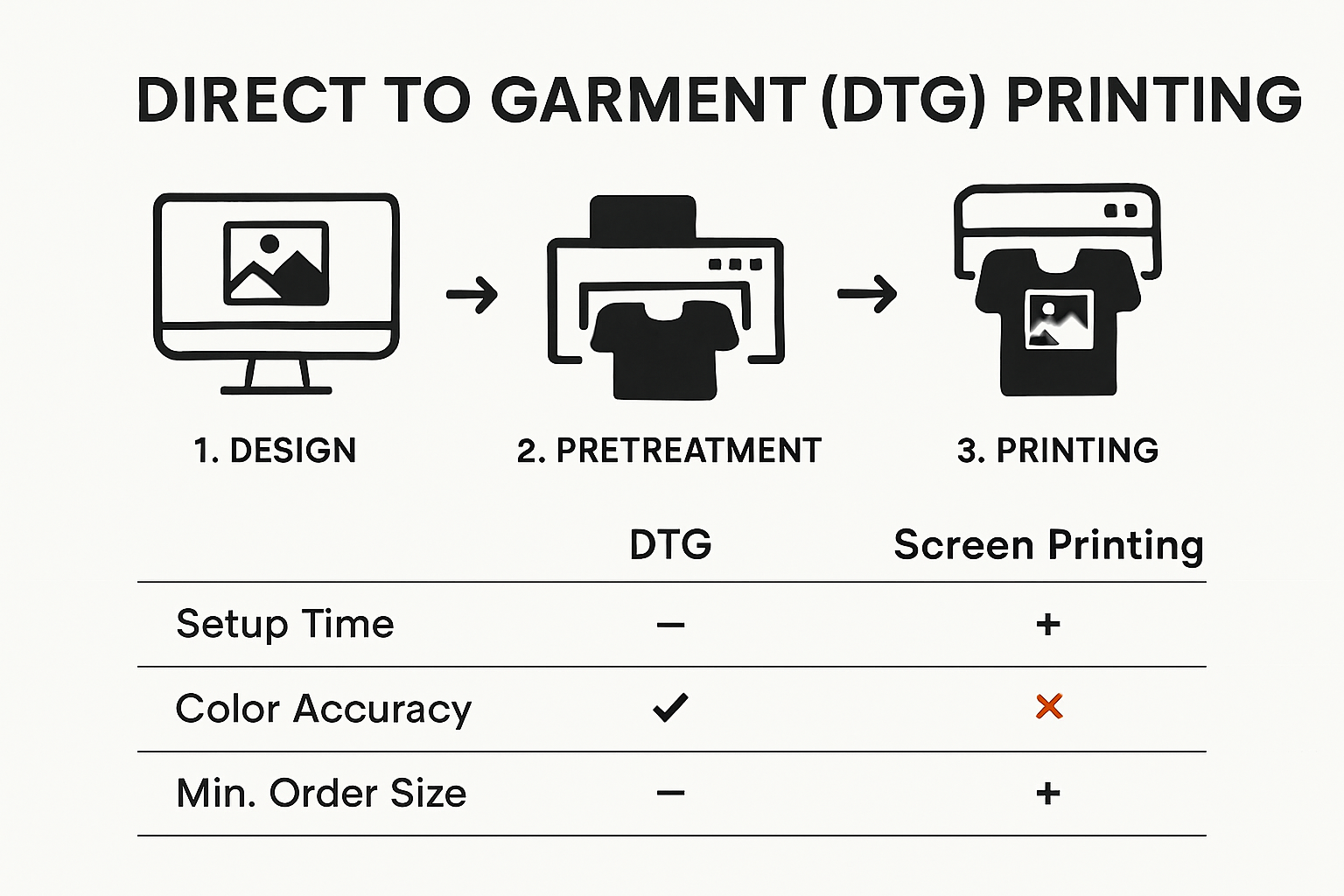
To help you quickly compare direct to garment (DTG) printing with traditional screen printing, here is a table highlighting their main differences based on features mentioned in this guide:
| Feature | Direct to Garment (DTG) Printing | Traditional Screen Printing |
|---|---|---|
| Design Complexity | Photorealistic, intricate, multicolor | Limited by setup, fewer colors |
| Setup Time | Minimal, almost instant | Extensive, multi-stage |
| Order Size Flexibility | Cost-effective small batches | Costly for small runs |
| Color Accuracy | High; detailed shading possible | Less precise |
| Environmental Impact | Water-based inks, less waste | More waste, often solvent inks |
| On-demand Production | Yes | Limited |
The Technical Mechanics of DTG Printing
Unlike traditional screen printing methods, direct to garment printing uses specialized aqueous inkjet technology to transfer digital designs seamlessly onto fabric. The process works similarly to how an inkjet printer operates on paper, but with textile-specific modifications. Printers equipped with DTG technology can print complex, multicolor designs with exceptional detail, making them ideal for small batch or custom orders.
Here is a table summarizing the key steps and components involved in the DTG printing process, clarifying each part as described in the article:
| Component/Step | Description |
|---|---|
| Fabric Preparation | Surface treatment/coating to enhance ink absorption |
| Ink Type | Specialized water-based inks compatible with textile fibers |
| Design Transfer | Digital inkjet printing deposits tiny droplets with high precision |
| Color Calibration | Process to ensure color accuracy across different fabric types |
| Curing Process | Heat/chemical treatment to set the ink and ensure durability |
Understanding the Significance in Modern Textile Production
The digital textile printing market is experiencing remarkable growth, with recent market research projecting significant expansion. DTG printing offers several critical advantages over conventional printing techniques:
- Low Volume Flexibility: Perfect for small production runs and personalized designs
- High Color Accuracy: Enables reproduction of intricate, photorealistic graphics
- Minimal Setup Time: Eliminates complex screen preparation required in traditional methods
Businesses and designers increasingly recognize DTG printing as a game changing technology that reduces production complexity while maximizing creative potential. Learn more about digital textile printing techniques to understand its transformative impact on the industry.
The combination of technological innovation and creative flexibility makes direct to garment printing an essential method for modern textile decoration, bridging the gap between digital design and physical product creation.
The Technology Behind Direct to Garment Printing
Direct to garment printing leverages sophisticated digital printing technologies that transform how textile designs are created and transferred. This innovative method combines precision engineering with advanced ink delivery systems to produce high-quality, detailed graphics directly onto fabric surfaces.
Inkjet Printing Mechanisms
At the core of DTG technology are specialized inkjet printing mechanisms that differ significantly from traditional textile printing techniques. Advanced digital printing insights reveal that these printers utilize Drop-on-Demand (DOD) technology, which precisely controls ink droplet placement. The process involves microscopic nozzles that release tiny ink droplets onto fabric with remarkable accuracy, enabling photorealistic and intricate design reproduction.
Specialized Ink and Fabric Preparation
Successful direct to garment printing requires meticulous ink formulation and fabric pretreatment. According to research from digital textile printing studies, the technology demands specialized water-based inks that can penetrate textile fibers while maintaining color vibrancy and durability. Key preparation steps include:
- Fabric Surface Treatment: Applying specialized coatings to enhance ink absorption
- Ink Compatibility: Developing inks that bond effectively with different textile materials
- Color Calibration: Ensuring consistent color reproduction across various fabric types
Technological Advantages and Precision
DTG printing technology represents a significant leap forward in textile decoration. Unlike screen printing, which requires multiple setup stages, digital printing allows for instantaneous design transfer with minimal preparation. The technology enables rapid prototyping, small batch production, and unprecedented design complexity, making it an essential tool for modern textile manufacturers and designers seeking high-quality, customized garment solutions.
Key Advantages of Direct to Garment Printing
Direct to garment printing has revolutionized textile design and production by offering a range of significant advantages that address traditional manufacturing limitations. This innovative printing technique provides businesses and designers with unprecedented flexibility and efficiency in creating customized textile products.
The benefits of DTG printing span creative, economic, and environmental dimensions. Refer to this table for a clear overview of the primary advantages mentioned:
| Advantage | Details |
|---|---|
| Design Flexibility | Handles complex, photorealistic and multicolor designs |
| Economic Efficiency | Cost-effective for small runs, quick setup |
| Rapid Prototyping | Fast design changes and short turnaround |
| Sustainability | Water-based inks, less material waste |
| Reduced Inventory Waste | On-demand production, minimizes unsold stock |
| Versatility | Suitable for fashion, corporate, tech, and industrial use |
Unparalleled Design Flexibility
One of the most compelling advantages of DTG printing is its ability to reproduce extremely complex and detailed designs with exceptional color accuracy. Unlike traditional screen printing methods, digital printing allows for photorealistic graphics, intricate patterns, and multicolor designs without additional setup costs. Explore the evolution of digital textile printing to understand how this technology is transforming the industry.
Economic and Production Efficiency
According to industrial printing research, DTG printing offers substantial economic benefits across production scales. The technology dramatically reduces manufacturing complexity by eliminating multiple traditional printing stages. Key economic advantages include:
- Low Minimum Order Quantities: Enables cost-effective small batch production
- Reduced Setup Time: Minimal preparation required compared to traditional methods
- Instant Design Modifications: Quick adjustments without extensive retooling
Sustainability and Environmental Considerations
Direct to garment printing represents a more environmentally conscious approach to textile decoration. Water-based inks and reduced material waste contribute to a smaller ecological footprint. The precise digital printing process minimizes excess ink consumption, uses nontoxic materials, and allows for on-demand production that significantly reduces overproduction and inventory waste. This sustainable approach not only benefits the environment but also provides businesses with a more responsible manufacturing strategy.
Application of Direct to Garment Printing in Various Industries
Direct to garment printing has emerged as a transformative technology with applications far beyond traditional textile manufacturing. Its precision, flexibility, and efficiency have made it an indispensable technique across multiple sectors, revolutionizing how industries approach design, customization, and production.
Fashion and Apparel Industry
In the fashion world, DTG printing enables designers to create intricate, photorealistic designs with unprecedented detail. Learn more about digital textile evolution and how this technology is reshaping fashion production. Small independent designers and large fashion houses alike leverage DTG printing to:
- Produce Limited Edition Collections: Create unique, small-batch designs quickly
- Personalize Merchandise: Offer custom garments with minimal production overhead
- Reduce Inventory Waste: Print on-demand to minimize unsold stock
Emerging Applications in Advanced Technologies
According to advanced materials research, DTG printing is expanding into sophisticated technological domains. The non-contact printing method allows for precise droplet deposition, making it valuable in sectors such as:
- Electronic Textiles: Creating wearable technology with integrated circuits
- Biomedical Applications: Developing specialized medical textiles
- Smart Clothing: Integrating functional materials into fabric surfaces
Industrial and Promotional Sectors
Beyond fashion and high-tech applications, DTG printing has significant implications for industrial and promotional markets. Companies utilize this technology for:
- Corporate Branding: Producing high-quality, detailed promotional merchandise
- Uniform Customization: Creating precise, professional uniform designs
- Event Merchandise: Generating quick, complex commemorative clothing items
The versatility of direct to garment printing continues to expand, demonstrating its potential to transform multiple industries through innovative, efficient, and sustainable printing solutions.
Future Trends and Innovations in Direct to Garment Printing
Direct to garment printing continues to evolve rapidly, driven by technological advancements and emerging market demands. The future of this printing technology promises transformative innovations that will reshape textile production, design capabilities, and manufacturing processes across multiple industries.
Sustainable Technology Developments
Explore the future of digital textile printing and witness how sustainability is becoming a central focus in DTG technology. Emerging trends indicate a significant shift towards environmentally conscious printing methods that reduce ecological impact. Innovations are concentrating on:
- Eco-Friendly Ink Formulations: Developing water-based and biodegradable ink solutions
- Energy-Efficient Printing Machines: Reducing power consumption and carbon footprint
- Recycled Material Compatibility: Improving print quality on sustainable textile substrates
Advanced Digital Printing Technologies
According to advanced materials research, the future of DTG printing extends beyond traditional textile applications. Cutting-edge developments are exploring integration with emerging technologies such as:
- Smart Textile Printing: Embedding electronic components and functional materials
- Nano-Ink Technologies: Enhancing color durability and print precision
- Augmented Reality Design Interfaces: Revolutionizing design and visualization processes
Artificial Intelligence and Customization
The convergence of artificial intelligence and direct to garment printing is set to unlock unprecedented levels of personalization and efficiency. Future DTG technologies will likely incorporate:
- AI-Driven Design Optimization: Automated color correction and design enhancement
- Machine Learning Predictive Maintenance: Reducing equipment downtime
- Real-Time Production Analytics: Improving manufacturing precision and workflow management
These emerging trends demonstrate that direct to garment printing is not just a printing technique, but a dynamic technological ecosystem continuously pushing the boundaries of design, sustainability, and manufacturing innovation.
Unlock Flawless Color Precision in Direct to Garment Printing
Is your DTG workflow held back by inconsistent color results or frustrating color matching challenges? Achieving true-to-life prints depends on accurate color management at every stage. Many professionals face issues with vibrant color reproduction and reliable print consistency, especially when working with intricate digital designs and small batch orders.
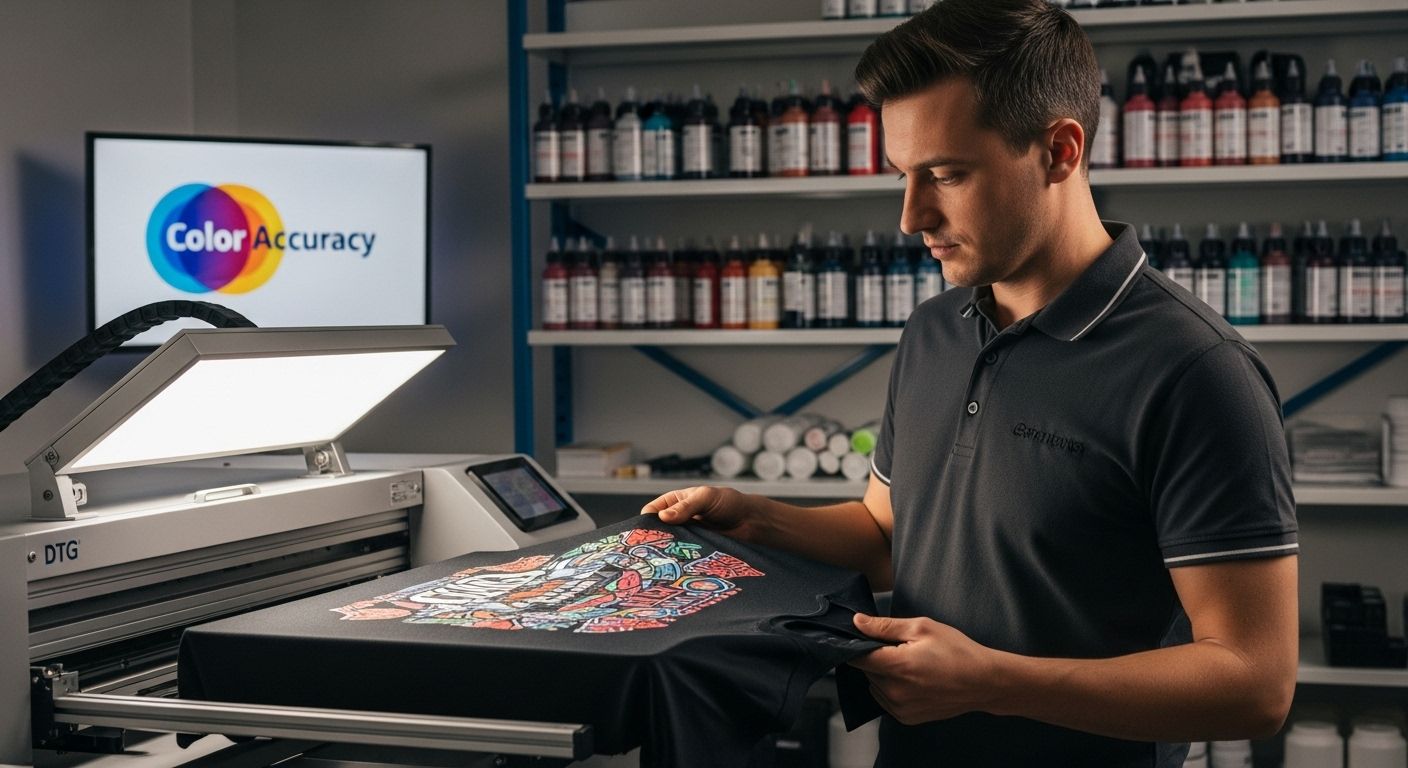
The need for precise color guides and up-to-date swatches has never been more urgent for success in modern textile production and advanced digital printing.
Take control of your color accuracy today. Trust Kolorguide.com to empower your DTG projects with high-quality color guides and swatches trusted by top industry professionals. Get expert-approved color management tools and fast USA delivery. Browse our catalog now and secure the confidence you need to deliver professional-grade results with every garment print. Visit Kolorguide.com and revolutionize your workflow before your next project goes to print.
Frequently Asked Questions
What is Direct to Garment (DTG) printing?
Direct to Garment (DTG) printing is a digital printing technique that transfers designs directly onto fabric using advanced inkjet technology, allowing for intricate designs and vibrant colors.
What are the main advantages of DTG printing over traditional printing methods?
DTG printing offers several advantages including low minimum order quantities, high color accuracy, reduced setup time, and the ability to produce complex designs without additional costs.
How does the DTG printing process work?
The DTG printing process involves fabric preparation, specialized ink formulation, and precise inkjet technology that deposits tiny droplets of ink onto fabric with high accuracy, similar to how an inkjet printer operates on paper.
Is DTG printing an environmentally friendly option?
Yes, DTG printing is considered more sustainable compared to traditional methods. It utilizes water-based inks, reduces material waste, and allows for on-demand production, minimizing overproduction and inventory waste.
Recommended


About author
Related posts

Discover why registration is important for businesses in the printing, packaging, plastics, and technology industries. Learn how it protects and boosts your company’s growth. Continue reading

Explore essential printing press terminology to enhance your knowledge as a graphic designer or industry professional. Comprehensive insights included. Continue reading