
No products in the cart.
Return To Shop
Understanding Finishing Techniques for Metals
Metal parts might look tough, but even the strongest alloys can fail when their surfaces get damaged or corroded. Here is a twist you might not expect. Some finishing techniques can actually cut industrial maintenance costs by up to 30 percent while making metal parts last significantly longer. This means the secrets hidden in these surface treatments can change the way entire industries think about reliability and performance.
Table of Contents
- What Are Finishing Techniques For Metals?
- The Importance Of Finishing Techniques In Various Industries
- Principles Behind Popular Metal Finishing Techniques
- Applications Of Finishing Techniques In Real-World Contexts
- Future Trends In Metal Finishing Technologies
Quick Summary
| Takeaway | Explanation |
|---|---|
| Metal finishing enhances performance and aesthetics. | These techniques not only improve the look of metal but also boost durability, corrosion resistance, and functional performance across applications. |
| Mechanical, chemical, and electrochemical methods exist. | Different processes like polishing, chemical etching, and electroplating serve specific purposes in altering metal surfaces for improved properties. |
| Metal finishing significantly reduces maintenance costs. | Strategic application of these techniques can lower industrial maintenance costs by up to 30% while increasing product reliability and lifespan. |
| Nanotechnology is reshaping metal finishing. | Emerging technologies such as nanostructured coatings provide revolutionary improvements in durability and functionality at the microscopic level. |
| AI optimizes finishing processes in real-time. | Integration of artificial intelligence allows for better control over finishing parameters, ensuring consistent and precise outcomes in manufacturing environments. |
What Are Finishing Techniques for Metals?
Finishing techniques for metals represent critical processes that transform raw metal surfaces into refined, functional, and aesthetically pleasing components. These techniques modify the surface properties of metals to enhance their performance, durability, and visual appearance across numerous industrial and manufacturing applications.
Understanding Metal Surface Modification
Metal finishing encompasses a wide range of strategic processes designed to alter the physical and chemical characteristics of metal surfaces. These techniques serve multiple crucial purposes:
- Improving corrosion resistance
- Enhancing mechanical properties
- Increasing aesthetic appeal
- Protecting against environmental degradation
- Preparing surfaces for subsequent manufacturing processes
According to Materials Research Society, metal finishing techniques are fundamental in engineering and manufacturing, enabling metals to meet precise technical specifications and performance requirements.
Core Categories of Metal Finishing
Metal finishing techniques generally fall into several primary categories, each addressing specific surface modification goals:
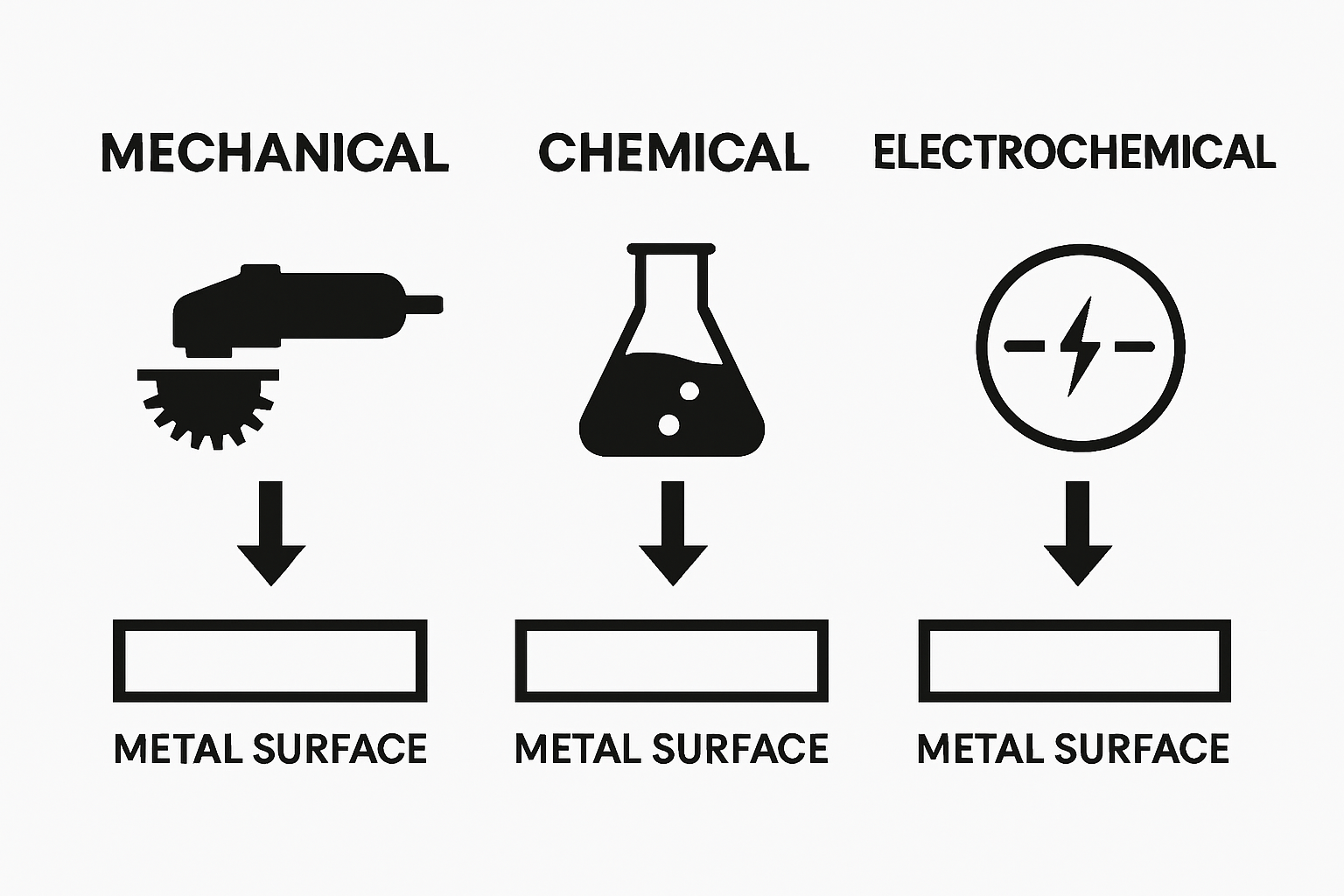
Mechanical Finishing: These methods involve physically altering metal surfaces through abrasion, polishing, or grinding. Techniques like sandblasting, buffing, and honing remove surface imperfections and create smoother, more uniform textures.
Chemical Finishing: Chemical processes chemically interact with metal surfaces to modify their properties. Techniques such as chemical etching, electroplating, and conversion coating create protective layers or change surface chemistry to improve performance characteristics.
Electrochemical Finishing: These advanced techniques use electrical currents to deposit materials, modify surface properties, or create protective coatings. Electropolishing and electroplating are prominent examples that provide enhanced surface quality and functional improvements.
While specific finishing requirements vary across industries, the fundamental goal remains consistent: transforming raw metal surfaces into precision-engineered components that meet exacting technical and aesthetic standards.
Here is a comparison table outlining the three primary categories of metal finishing techniques, their key methods, and main purposes.
| Category | Example Methods | Main Purpose |
|---|---|---|
| Mechanical Finishing | Sandblasting, Buffing, Honing | Remove imperfections, smooth surface |
| Chemical Finishing | Chemical Etching, Electroplating, Conversion Coating | Create protective layers, alter surface chemistry |
| Electrochemical Finishing | Electropolishing, Electroplating | Enhance surface quality, functional improvements |
The Importance of Finishing Techniques in Various Industries
Metal finishing techniques are far more than cosmetic enhancements. They represent critical transformative processes that fundamentally impact performance, reliability, and functionality across numerous industrial sectors. Understanding their strategic importance reveals how these techniques solve complex engineering challenges and enable advanced technological applications.
Economic and Performance Implications
The economic significance of metal finishing extends well beyond surface aesthetics. These techniques directly influence product lifecycle, maintenance costs, and overall industrial efficiency. By modifying metal surfaces, manufacturers can:
- Dramatically extend equipment longevity
- Reduce maintenance and replacement expenses
- Enhance material performance under extreme conditions
- Improve product reliability and consistency
According to National Association of Manufacturers, strategic metal finishing can reduce industrial maintenance costs by up to 30% while significantly improving component durability.
Critical Industry Applications
Metal finishing plays pivotal roles across diverse industrial domains. In aerospace engineering, precise surface treatments ensure components can withstand extreme temperature variations and mechanical stress. Automotive manufacturers rely on advanced finishing techniques to create corrosion-resistant parts that maintain structural integrity under challenging environmental conditions.
Precision Industries: Sectors like electronics, medical devices, and semiconductor manufacturing demand microscopic surface precision. Metal finishing techniques enable the creation of ultra-smooth, contamination-free surfaces essential for high-performance technological components.
Infrastructure and Construction: Metal finishing provides critical protective layers for structural elements exposed to environmental challenges. Bridges, architectural facades, and industrial equipment require specialized surface treatments to resist corrosion, weathering, and mechanical degradation.
The strategic application of metal finishing techniques represents a sophisticated intersection of materials science, engineering, and industrial innovation. By transforming raw metal surfaces, manufacturers unlock unprecedented performance potential across technological and industrial landscapes.
This table summarizes popular applications of advanced finishing techniques in different sectors and the resulting benefits.
| Industry/Sector | Finishing Technique Example | Resulting Benefit |
|---|---|---|
| Aerospace/Nuclear | Ultrasonic Nanocrystal Surface Modification | Improved residual stress, hardness, wear resistance |
| Medical Technology | Plasma Spray Coating | Enhanced biocompatibility, better tissue integration |
| Electronics/Semiconductor | Precision Metal Finishing | Ultra-smooth, contamination-free surfaces |
| Infrastructure/Construction | Specialized Protective Coatings | Resistance to corrosion, weathering, degradation |
Principles Behind Popular Metal Finishing Techniques
Metal finishing techniques operate on sophisticated scientific principles that manipulate surface interactions, material properties, and energy states. These principles transform ordinary metal surfaces into high-performance components with enhanced functional characteristics.
Surface Science and Energy Dynamics
At the core of metal finishing techniques lie fundamental principles of surface science. Every metal surface possesses unique molecular structures and energy states that can be strategically modified through precise interventions. Understanding these microscopic interactions allows manufacturers to engineer surfaces with specific performance attributes.
Key principles governing metal surface modifications include:
- Surface energy manipulation
- Molecular bonding enhancement
- Electron transfer mechanisms
- Interfacial chemical interactions
- Topographical restructuring
According to Materials Science and Engineering Society, surface engineering principles enable extraordinary transformations in material performance through controlled molecular interventions.
Fundamental Interaction Mechanisms
Metal finishing techniques leverage several core interaction mechanisms to achieve desired surface modifications. Electrochemical processes involve controlled electrical currents that deposit, remove, or restructure metal surface layers. Chemical interactions use specialized solutions to react with metal surfaces, creating protective or functional coatings.
These mechanisms operate through precise scientific protocols:
- Controlling electrical potential
- Managing chemical concentration gradients
- Regulating temperature and pressure conditions
- Monitoring reaction kinetics
- Ensuring uniform surface coverage
Understanding these intricate principles allows engineers to develop sophisticated metal finishing techniques that transcend traditional surface treatment approaches.
Advanced Surface Engineering Strategies
Modern metal finishing represents a sophisticated blend of materials science, chemistry, and engineering. By comprehending fundamental molecular interactions, manufacturers can design surface modifications that dramatically enhance material performance, durability, and functional capabilities across diverse industrial applications.
Applications of Finishing Techniques in Real-World Contexts
Metal finishing techniques transcend theoretical concepts, playing critical roles in solving complex engineering challenges across diverse industries. These advanced processes transform theoretical potential into practical solutions that drive technological innovation and industrial performance.
High-Performance Industrial Applications
In demanding industrial environments, metal finishing techniques provide strategic solutions for challenging engineering requirements. Manufacturers leverage these techniques to address complex performance challenges that traditional manufacturing methods cannot resolve.
Key industrial domains benefiting from advanced metal finishing include:
- Aerospace and defense engineering
- Medical device manufacturing
- Automotive and transportation systems
- Electronics and semiconductor production
- Renewable energy infrastructure
According to National Institute of Manufacturing Sciences, specialized metal finishing techniques enable breakthrough technological capabilities across critical industrial sectors.
Precision Engineering and Performance Enhancement
Ultrasonic nanocrystal surface modification represents a cutting-edge finishing technique with remarkable industrial applications. By manipulating metal surfaces at microscopic scales, engineers can dramatically enhance material properties such as:
- Compressive residual stress improvement
- Surface hardness enhancement
- Wear resistance optimization
- Structural integrity reinforcement
In aerospace and nuclear industries, these advanced techniques enable the creation of components capable of withstanding extreme operational conditions while maintaining exceptional performance characteristics.
Biomedical and Advanced Technology Applications
Metal finishing techniques have revolutionized medical technology, particularly in biomaterial engineering. Plasma spray coating enables precise surface modifications for medical implants, creating biocompatible interfaces that seamlessly integrate with human tissue. These sophisticated techniques transform medical device manufacturing by:
- Improving implant biocompatibility
- Enhancing mechanical durability
- Reducing potential rejection risks
- Facilitating better tissue integration
The strategic application of metal finishing represents a sophisticated intersection of materials science, engineering innovation, and practical problem-solving across technological frontiers.
Future Trends in Metal Finishing Technologies
Emerging metal finishing technologies represent a convergence of advanced materials science, artificial intelligence, and sustainable engineering practices. These innovative approaches promise to revolutionize manufacturing processes by introducing unprecedented levels of precision, efficiency, and environmental responsibility.
Nanotechnology and Advanced Coating Systems
The frontier of metal finishing is being reshaped by nanotechnology, which enables microscopic surface modifications with extraordinary precision. Nanostructured coatings are developing capabilities that extend far beyond traditional surface treatments, offering transformative potential across multiple industrial domains.
Key emerging nanotech developments include:
- Self-healing protective layers
- Adaptive surface properties
- Molecular-level surface engineering
- Programmable material interfaces
- Enhanced corrosion resistance mechanisms
According to National Institute of Standards and Technology, nanotechnology is poised to create revolutionary metal finishing techniques that redefine material performance standards.
Sustainable and Circular Manufacturing Approaches
The future of metal finishing is intrinsically linked to sustainable manufacturing principles. Electrodeposition techniques are evolving to enable more environmentally conscious metal recovery and processing strategies. These advanced methods focus on:
- Minimizing chemical waste generation
- Reducing energy consumption
- Enabling metal recycling from industrial waste streams
- Creating closed-loop manufacturing systems
- Implementing circular economy principles
Engineers are developing innovative metal finishing solutions that prioritize environmental sustainability without compromising technological performance.
Artificial Intelligence and Precision Engineering
Artificial intelligence is transforming metal finishing technologies by introducing unprecedented levels of process control and optimization. Machine learning algorithms can now predict and adjust surface modification parameters in real-time, enabling more consistent and precise finishing outcomes across complex manufacturing environments.
These technological convergences signal a profound transformation in how manufacturers conceptualize and implement metal surface engineering, promising more intelligent, sustainable, and high-performance industrial solutions.
Elevate Every Metal Finish With Unmatched Color Precision
Struggling to achieve exact results after meticulous metal finishing? The article highlighted how surface modification transforms durability and performance, but true excellence often depends on flawless color matching and consistent visual quality. For manufacturers, printers, and designers, a misstep in color communication can undermine even the most advanced finishing techniques. Small color discrepancies can lead to costly rework, project delays, or dissatisfied clients seeking reliable outcomes.

Join industry leaders who trust Kolorguide.com to eliminate color uncertainty. Our professional-grade Pantone color guides and swatch tools ensure your metal components look as precise as they perform. Shop now and experience color management solutions designed for surface finishing professionals who demand both technical accuracy and visual impact. Take control of your next project’s color results with trusted resources from our online catalog.
Frequently Asked Questions
What are the main categories of metal finishing techniques?
Metal finishing techniques generally fall into three primary categories: mechanical finishing, chemical finishing, and electrochemical finishing. Each category uses different methods to modify the surface properties of metals for improved performance and aesthetics.
Why is metal finishing important in industrial applications?
Metal finishing is crucial as it enhances corrosion resistance, improves mechanical properties, and prepares surfaces for further manufacturing. These processes are vital in ensuring durability and reliability in various industrial sectors, including aerospace, automotive, and electronics.
How do chemical finishing techniques work?
Chemical finishing techniques involve altering the metal’s surface through chemical reactions. This includes processes like chemical etching and electroplating, which create protective layers or change surface chemistry to enhance performance and longevity.
What future trends are emerging in metal finishing technologies?
Emerging trends in metal finishing include the use of nanotechnology for advanced coatings, sustainable manufacturing practices to reduce environmental impact, and the integration of artificial intelligence for optimized process control and precision in surface engineering.

