No products in the cart.
Return To Shop
Understanding UV Coating vs Lamination: Key Differences
Printers and designers have more ways than ever to make their work stand out, but two methods always come up in the debate: UV coating and lamination. Most people assume they do the same thing, just with a different look or feel. Yet UV coating can fully cure in just seconds under ultraviolet light, while lamination adds a plastic film that can double the durability of a printed piece. That big difference in process creates results no one expects.
Table of Contents
- What Is UV Coating And Lamination?
- The Importance Of UV Coating And Lamination In Printing
- How UV Coating And Lamination Work: Processes Explained
- Key Differences Between UV Coating And Lamination
- Real-World Applications Of UV Coating And Lamination
Quick Summary
| Takeaway | Explanation |
|---|---|
| UV coating offers rapid, high-gloss finishes | UV coating cures instantly under ultraviolet light, providing a visually appealing and protective layer for printed materials. |
| Lamination enhances durability and longevity | Lamination applies a transparent film, increasing tear resistance and protecting printed materials from moisture and wear. |
| Both techniques protect printed investments | Using UV coating and lamination safeguards time and resources spent on producing printed materials from environmental damage. |
| Choose based on application needs | Select UV coating for design flexibility and aesthetics; choose lamination for substantial physical protection and texture. |
| Broad applications across industries exist | UV coating and lamination are employed in commercial printing, packaging, and specialized fields to enhance product longevity and visual appeal. |
What is UV Coating and Lamination?
UV coating and lamination represent two distinct surface treatment techniques widely used in printing and packaging industries to enhance material appearance, durability, and protection. While they might seem similar at first glance, these processes offer unique characteristics and applications that set them apart.
Understanding UV Coating
UV coating is an advanced surface treatment process that involves applying a liquid coating to printed materials and then curing it instantly using ultraviolet light. According to the Printing Industries of America, this method creates a smooth, glossy finish that provides superior protection against moisture, scratches, and wear.
Key characteristics of UV coating include:
- Rapid curing process using ultraviolet radiation
- Enhanced visual appeal with high gloss or matte finishes
- Excellent protective layer against environmental damage
- Applicable on various substrates like paper, cardstock, and packaging materials
Exploring Lamination
Lamination is a process of bonding multiple layers of material together, typically using heat, pressure, or adhesive. Unlike UV coating, lamination involves applying a transparent plastic film over printed surfaces to create a protective and sometimes decorative layer. Research from the Print and Media Technologies Association indicates lamination can significantly extend the lifespan of printed materials.
Primary benefits of lamination include:
- Increased durability and tear resistance
- Protection against moisture and environmental factors
- Enhanced color vibrancy and visual depth
- Improved structural integrity of printed materials
Both UV coating and lamination serve critical roles in preserving and enhancing printed materials, offering professionals versatile solutions for protecting and presenting their work with exceptional quality.
The Importance of UV Coating and Lamination in Printing
In the competitive world of printing and graphic design, UV coating and lamination have emerged as critical techniques that transform ordinary printed materials into professional, high quality products. These surface treatment methods do more than just enhance visual appeal they provide substantial functional benefits that protect and elevate printed materials.
Protecting Print Investments
Printed materials represent significant investments of time, creativity, and resources. According to the Print Services and Distribution Association, UV coating and lamination serve as essential protective strategies that safeguard these investments from environmental degradation. By creating robust protective layers, these techniques ensure that printed materials maintain their original quality and appearance over extended periods.
Critical protective advantages include:
- Resistance against moisture and humidity
- Protection from UV light and potential color fading
- Prevention of scratches and physical wear
- Enhanced durability for frequently handled materials
Aesthetic and Functional Enhancements
Beyond protection, UV coating and lamination dramatically improve the sensory and visual experience of printed materials. Our comprehensive guide on controlling color on flexible film highlights how these techniques can significantly enhance color vibrancy, depth, and overall visual communication.
Strategic aesthetic improvements include:
- Creating professional, high end finishes
- Improving color saturation and contrast
- Adding tactile dimensions through different textures
- Enabling complex design implementations
Professionals across industries graphic design, packaging, marketing, and publishing recognize that UV coating and lamination are not mere embellishments but essential techniques that elevate print quality, durability, and overall communication effectiveness.
How UV Coating and Lamination Work: Processes Explained
Understanding the technical processes behind UV coating and lamination reveals the sophisticated science that transforms printed materials into durable, visually stunning products. Each technique employs unique mechanisms to enhance print quality and protection.
UV Coating Process
UV coating operates through a precise photochemical reaction that instantly transforms liquid coating into a solid protective layer. According to industrial printing research, the process involves several critical steps that ensure optimal results. Ultraviolet light triggers molecular cross linking in specialized liquid polymers, creating an instantaneous hardening effect.
Key stages of UV coating include:
- Application of liquid UV reactive coating onto printed surface
- Precise spreading using specialized coating equipment
- Exposure to high intensity ultraviolet radiation
- Instant molecular transformation and surface hardening
Lamination Methodology
Lamination differs fundamentally from UV coating by physically bonding transparent films to printed materials. The technique involves heat, pressure, and adhesive technologies to create a seamless protective layer. Check out our guide on managing UV printing odors for additional insights into related printing techniques.
Primary lamination techniques encompass:
- Thermal lamination using heat activated adhesive films
- Pressure sensitive lamination with adhesive backed materials
- Cold lamination for heat sensitive printed surfaces
- Liquid lamination for specialized substrate applications
Both UV coating and lamination represent advanced surface treatment technologies that go beyond simple aesthetic enhancement, providing critical protection and performance improvements for printed materials across various industries.
Key Differences Between UV Coating and Lamination
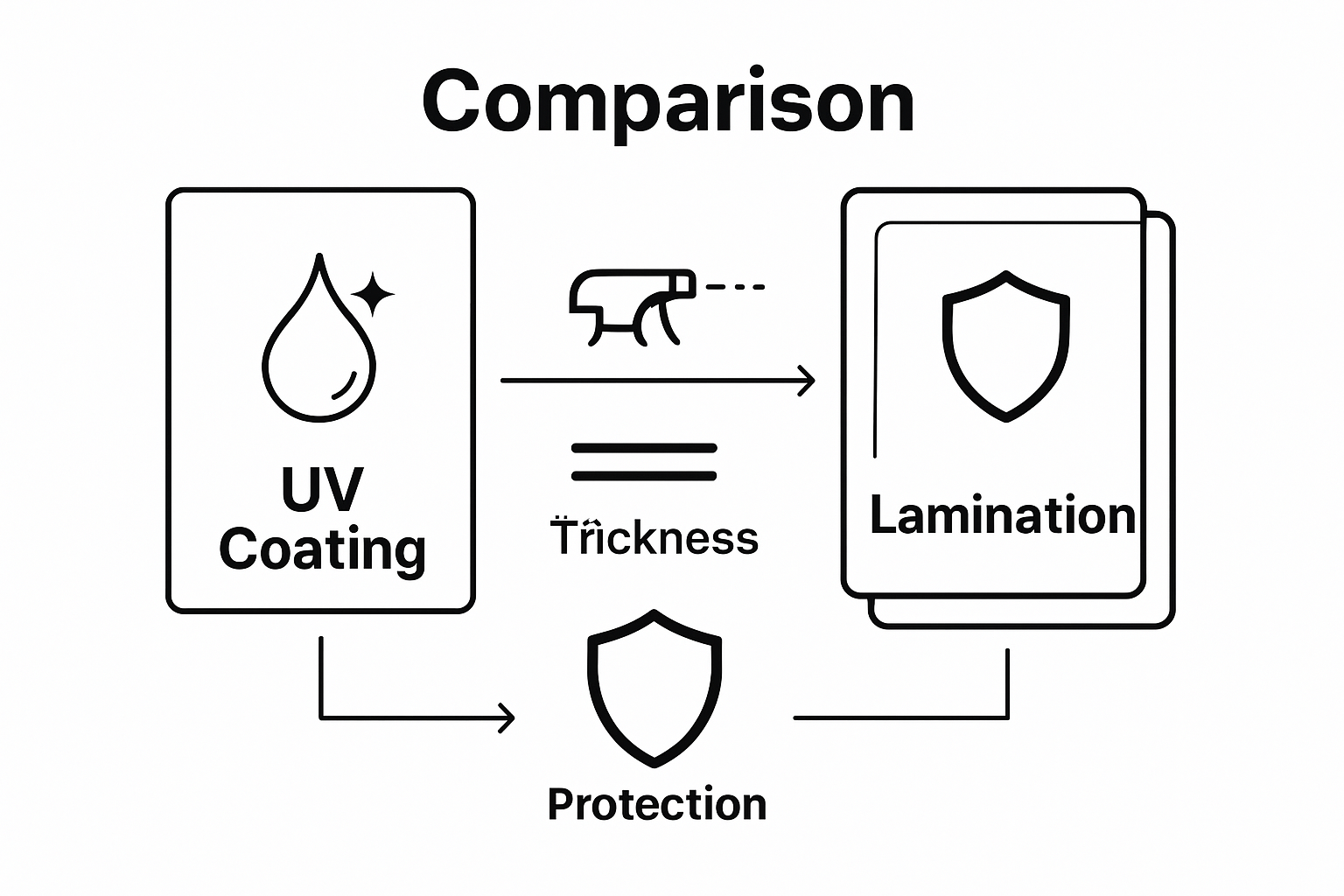
While UV coating and lamination both aim to protect and enhance printed materials, they differ significantly in application, appearance, and performance characteristics. Understanding these nuanced differences helps professionals select the most appropriate surface treatment technique for specific printing requirements.
Application and Surface Interaction
UV coating operates as a liquid-based surface treatment, creating a thin protective layer directly onto printed materials through photochemical processes. According to industrial coating research, this method allows for more flexible and precise application compared to lamination.
Key application differences include:
- UV coating applies directly to printed surface
- Lamination involves bonding an external film
- UV coating offers more design flexibility
- Lamination provides more substantial physical protection
Aesthetic and Performance Characteristics
The visual and functional outcomes of UV coating and lamination vary substantially. UV coating typically produces a smoother, more uniform finish with options for high gloss or matte appearances. Our comprehensive guide on color management highlights how each technique impacts visual perception differently.
Comparative aesthetic attributes:
- UV coating allows more intricate surface textures
- Lamination offers more substantial material thickness
- UV coating provides faster processing times
- Lamination enables complex multilayer configurations
Professionals must carefully evaluate project specific requirements to determine whether UV coating or lamination will deliver optimal results in terms of protection, appearance, and cost effectiveness.
Here is a comparison table that highlights the main differences between UV coating and lamination, making it easy to identify which method best fits various printing needs.
| Aspect | UV Coating | Lamination |
|---|---|---|
| Process | Liquid coating cured by ultraviolet light | Transparent plastic film bonded to surface |
| Protective Level | Moderate: resists scratches, moisture, and wear | High: enhances tear resistance, blocks moisture |
| Finish Options | High gloss, matte, or specialty finishes available | Gloss, matte, and satin; adds thickness |
| Application Speed | Instant curing, fast processing | Slightly longer due to bonding and cooling |
| Design Flexibility | Allows intricate textures and selective coating | Supports duplex (both sides), adds structure |
| Physical Thickness Added | Minimal | Noticeable |
| Ideal Uses | Visual marketing, covers, brochures | Menus, packaging, business cards, manuals |
Real-World Applications of UV Coating and Lamination
UV coating and lamination transcend theoretical techniques, finding critical applications across diverse industries where protection, aesthetics, and durability are paramount. These surface treatment methods solve complex functional challenges while enhancing visual communication.
Industrial and Commercial Printing
Printed materials require robust protection against environmental degradation, making UV coating and lamination essential in commercial printing. According to printing industry research, these techniques enable businesses to create long lasting, professional marketing collateral.
Key commercial applications include:
- Business cards with enhanced durability
- Marketing brochures resistant to moisture
- Product packaging with extended shelf life
- Instructional manuals for technical documentation
Specialized Industry Applications
Different sectors leverage UV coating and lamination uniquely to address specific technical requirements. Our comprehensive guide on color management reveals how these techniques solve complex visual communication challenges.
Industry specific uses encompass:
- Automotive manual protection
- Medical documentation preservation
- Educational material durability
- Food packaging safety enhancement
Professionals across graphic design, manufacturing, packaging, and publishing recognize UV coating and lamination as sophisticated tools that transform ordinary printed materials into resilient, visually compelling communication instruments.

Protect Your Print Projects With Professional Color Accuracy
You have just learned how UV coating and lamination can safeguard your creative investments and give your prints a professional look. But achieving reliable protection and flawless visuals also depends on accurate color management. Many print professionals deal with costly mistakes, inconsistent colors, and wasted materials because they lack dependable color reference tools. If you want your UV coated or laminated pieces to truly stand out, color precision is critical. Only then will your hard work survive handling, light exposure, and mechanical stress without losing its appeal.
Imagine your next print run with colors that are consistent, vibrant, and match your vision every time. Kolorguide.com is trusted by designers and printers who need top-tier color guides and swatches for exact matching under any finish or protective layer. Shop now to give your brand and clients the quality they deserve. Our fast USA delivery and multiple payment options help you stay ahead on tight deadlines. Explore our Pantone color references today and make color inaccuracy a thing of the past.
Frequently Asked Questions
What is the main difference between UV coating and lamination?
UV coating applies a liquid coating that is cured by ultraviolet light directly onto printed materials, creating a smooth protective layer. Lamination involves bonding a transparent plastic film onto the surface for added protection and durability.
How does UV coating enhance printed materials?
UV coating improves visual appeal by providing a high gloss or matte finish, increases durability against scratches and moisture, and protects against environmental damage, helping maintain the quality and appearance of printed items over time.
In what situations should I choose lamination over UV coating?
Lamination is preferred when stronger physical protection is needed, such as for frequently handled items or materials exposed to moisture. It also adds thickness and can enhance color vibrancy, making it suitable for items like business cards and packaging.
Can UV coating and lamination be used together in printing?
Yes, both UV coating and lamination can be used together. This combination can maximize protection and aesthetic appeal, providing a robust, durable finish while enhancing the visual quality of the printed materials.

