
No products in the cart.
Return To ShopWhat Happens When Corona Treatment Damages the Substrate?
Introduction
Corona treatment is widely used to improve adhesion on plastic films. When applied correctly, it modifies only the outer molecular layer of the substrate, increasing surface energy without affecting bulk properties.
However, when corona treatment is excessive or uncontrolled, it can damage the substrate itself.
This damage is often subtle at first, easily mistaken for ink, adhesive, or material quality issues. Over time, it leads to visual defects, mechanical failure, blocking, and costly rejects.
This article explains what actually happens when corona treatment damages the substrate, how to recognize the warning signs, and how to prevent irreversible material degradation.
How Corona Treatment Is Supposed to Work
Proper corona treatment:
- Modifies only the top molecular layer (nanometers deep)
- Introduces polar functional groups
- Leaves mechanical and optical properties intact
- Improves adhesion without weakening the film
When energy input exceeds the material’s tolerance, this balance is lost.
What “Substrate Damage” Really Means
Substrate damage occurs when corona treatment:
- Breaks polymer chains instead of modifying surface chemistry
- Alters bulk material properties
- Creates permanent defects that cannot be reversed
At this point, increasing or decreasing treatment no longer fixes the problem—the material itself has been compromised.
Common Forms of Corona-Induced Substrate Damage
1. Surface Degradation and Micro-Cracking
Excessive oxidation causes:
- Polymer chain scission
- Micro-cracks at the surface
- Loss of surface integrity
These defects may not be visible to the naked eye but lead to:
- Poor ink anchorage
- Reduced coating uniformity
- Accelerated aging
2. Optical Damage (Haze and Cloudiness)
Over-treatment roughens the surface at a microscopic level:
- Increased light scattering
- Loss of clarity and gloss
- Visible haze, especially in clear films
This is particularly problematic for:
- Food packaging
- Medical packaging
- Display films
Once haze appears, it cannot be removed.
3. Mechanical Property Loss
Corona damage can reduce:
- Tensile strength
- Elongation at break
- Flex resistance
Films may:
- Crack during folding
- Tear during converting
- Fail prematurely in end use
This damage often appears downstream, not at the treater.
4. Blocking and Surface Tackiness
Excessive oxidation creates too many polar groups:
- Film surfaces attract each other
- Rolls block during storage
- Unwinding becomes difficult or impossible
Blocked material is often unsalvageable inventory.
5. Increased Dust and Contamination Attraction
Damaged surfaces:
- Attract airborne particles
- Become electrostatically active
- Show visible contamination after storage
This further degrades print and coating quality.
How to Recognize Corona-Induced Substrate Damage
Visual Inspection
Compare treated vs untreated samples:
- Loss of gloss
- Surface dullness
- Haze under angled light
Use magnification (10×) to detect:
- Micro-cracking
- Pitting
- Texture changes
Simple Mechanical Checks
- Bend or flex the film: brittle behavior is a red flag
- Compare tensile properties before and after treatment
- Acceptable reduction: <5%
- Concerning: >10%
Blocking Test
- Place two treated surfaces face-to-face
- Apply moderate pressure
- Store 24 hours at elevated temperature
- Attempt separation
Resistance or tearing confirms surface damage.
Why This Damage Is Often Misdiagnosed
Corona-induced substrate damage is frequently blamed on:
- Ink formulation
- Adhesive chemistry
- Supplier material quality
- Operator handling
Because damage occurs at the molecular level, the root cause is often overlooked.
Common Situations That Lead to Substrate Damage
- Using maximum power “to be safe”
- Compensating for uneven treatment
- Treating difficult materials (PP, PET) like PE
- Ignoring upper surface energy limits
- Treating far above application requirements
Safe Operating Principles to Prevent Damage
Define Upper Surface Energy Limits
Treat to:
- Minimum required level
- Plus a 2–4 dyne buffer
- Not the maximum achievable value
Control, Don’t Maximize, Treatment
- Use surface energy testing to verify results
- Avoid “more is better” adjustments
- Fix root causes instead of adding power
Monitor Long-Term Effects
- Test surface energy over time
- Inspect treated material after storage
- Track recurring defects linked to treatment settings
Key Takeaway
Corona treatment is a precision process, not a brute-force operation.
When treatment energy exceeds what the substrate can tolerate, the material itself is damaged—leading to irreversible defects, mechanical failure, and costly waste.
Understanding how and why this damage occurs allows you to:
- Protect material performance
- Maintain adhesion reliability
- Prevent losses that surface testing alone cannot fix
Related Reading
- Can You Over-Treat Plastic with Corona? Signs, Risks, and Safe Limits
- 5 Signs Your Corona Treatment Isn’t Working (And How to Test It)
- Why Corona Treatment Works on PE but Fails on PP and PET
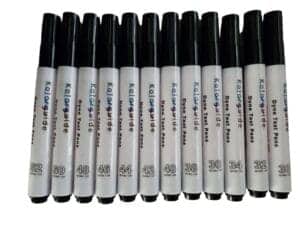
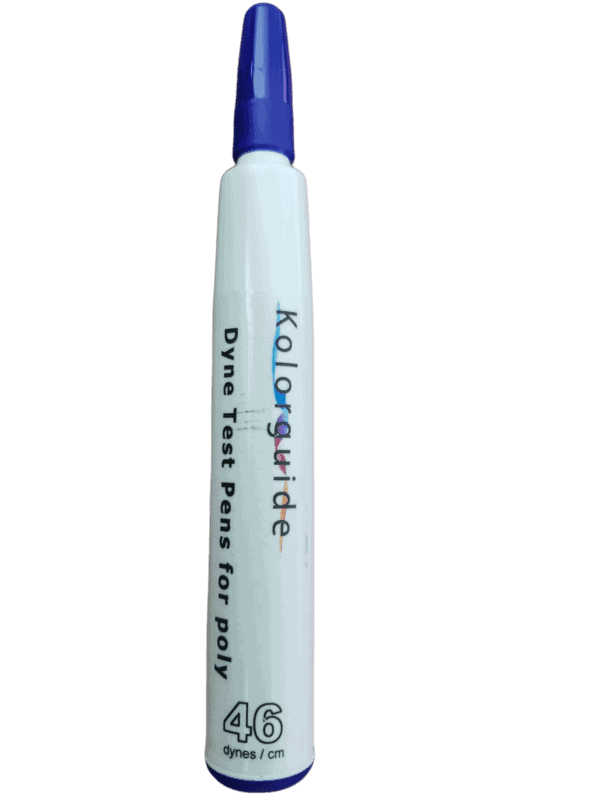
Dyne Test Pens Kit 30-52
Tags: adhesion failure causes, blocking after corona treatment, corona surface degradation, corona treatment brittleness, corona treatment damage plastic, corona treatment haze, corona treatment substrate damage, corona treatment troubleshooting, over corona treatment, plastic film degradation

About author
Related posts
Anilox Roll Maintenance: The Complete Guide to Cleaning, Control, and Performance In flexography, the anilox roll is often defined by its specifications. Line screen.Cell volume.Engraving.... Continue reading
Surface Energy Chart by Material (Dyne Levels for Plastics, Films, Metals and Packaging) This reference chart is used by engineers and technicians to evaluate adhesion,... Continue reading
Surface Energy and Dyne Testing Guide: 105 Technical Questions for Printing and Converting January 26, 2026Kolorguide Technical Division Introduction Surface energy is one of the... Continue reading
Surface energy testing is a critical control point in printing, coating, laminating, and converting operations. Dyne test pens are routinely used to verify surface treatment... Continue reading
Corona treatment is not eternal and Why Geography is Killing Your Surface Tension (and Your Profits)
At Kolorguide, we live by one technical truth: “Corona treatment is not eternal; it is an unstable physical state that tends to decay.”Have you ever... Continue reading