
No products in the cart.
Return To ShopWhy Corona Treatment Works on PE but Fails on PP and PET
Introduction
Many converting operations face the same frustrating situation:
corona treatment works perfectly on polyethylene (PE), but struggles—or completely fails—on polypropylene (PP) and polyethylene terephthalate (PET).
Operators increase power, slow the line, reduce the electrode gap, and still can’t achieve stable surface energy. The result is inconsistent adhesion, wasted time, and unnecessary stress on equipment.
This article explains why corona treatment behaves differently on PE, PP, and PET, how material properties affect treatment response, and how to adjust your process correctly for each substrate.
This article is part of our complete guide:
5 Signs Your Corona Treatment Isn’t Working (And How to Test It)
Why Corona Treatment Is Not “One-Size-Fits-All”
Corona treatment works by transferring electrical energy into the polymer surface. How efficiently that energy is absorbed depends heavily on the material’s physical and chemical properties.
Key variables include:
- Dielectric constant
- Chemical structure
- Film thickness
- Additives (slip, anti-block, processing aids)
PE, PP, and PET differ significantly in all of these areas.
Material Property Differences That Matter
Dielectric Constant (Energy Coupling Efficiency)
| Material | Dielectric Constant | Treatment Difficulty |
|---|---|---|
| LDPE | ~2.3 | Easy |
| HDPE | ~2.3 | Easy |
| PP (OPP) | ~2.2 | Moderate |
| PET | ~3.3 | Moderate–Difficult |
Materials with higher dielectric constants or more rigid molecular structures often require higher power density or longer exposure to achieve the same surface energy.
Chemical Structure
- Polyethylene (PE):
Simple hydrocarbon chains respond readily to oxidation. - Polypropylene (PP):
Methyl side groups interfere with surface oxidation, reducing treatment efficiency. - PET:
Aromatic rings and ester groups make the surface more resistant to modification.
Film Thickness
Thicker films:
- Absorb energy less efficiently at the surface
- Require higher power density or reduced line speed
- Increase the risk of over-treatment if adjustments are aggressive
Additives and Processing Aids
PP and PET films often contain:
- Slip agents
- Anti-block additives
- Residual processing lubricants
These materials migrate to the surface and actively oppose oxidation, especially after treatment.
How Material-Specific Problems Appear in Production
Typical symptoms include:
- PE reaches 44 dynes/cm easily
- PP struggles to exceed 38–40 dynes/cm
- PET requires extreme settings for marginal results
- Surface energy decays faster on PP and PET
- Operators compensate by over-treating
These symptoms are not equipment failures—they are process mismatches.
How to Test Material-Specific Corona Performance
Step 1: Establish a Baseline Material
Use a “friendly” material such as 1 mil LDPE:
- Document power setting
- Document line speed
- Document electrode gap
- Confirm target surface energy (e.g., 44 dynes/cm)
This establishes a reference point.
Step 2: Test the Problem Material
Run PP or PET using the same settings:
- Measure achieved surface energy
- Record dyne loss relative to PE
- Identify treatment deficiency
Step 3: Systematic Adjustment
Adjust one variable at a time:
- Increase power in 10% increments
- Reduce line speed by 10–20%
- Reduce electrode gap by 0.1–0.2 mm (within safe limits)
Document results after each change.
Example Material Treatment Matrix
| Material | Thickness | Speed | Power | Gap | Target SE | Actual SE |
|---|---|---|---|---|---|---|
| LDPE | 1 mil | 300 fpm | 4.5 kW | 1.8 mm | 44 | 44 ✓ |
| HDPE | 1.5 mil | 300 fpm | 4.5 kW | 1.8 mm | 44 | 43 ✓ |
| OPP | 1 mil | 300 fpm | 4.5 kW | 1.8 mm | 44 | 38 ✗ |
| OPP | 1 mil | 250 fpm | 5.2 kW | 1.6 mm | 44 | 44 ✓ |
| PET | 1 mil | 250 fpm | 5.8 kW | 1.6 mm | 44 | 43 ✓ |
Recommended Adjustments by Material
For Polypropylene (PP / OPP)
- Increase power density by 15–25%
- Reduce line speed by 15–20%
- Minimize electrode gap (within spec)
- Pre-dry film if moisture content >0.1%
- Avoid excessive slip additives when possible
For PET
- Use highest stable power density available
- Reduce speed or add a second treatment pass
- Slight pre-heating (30–40°C) can improve response
- Expect narrower processing windows than PE
When Corona Is Not Enough
Some materials may exceed practical corona limits:
- Heavy additive loading
- Highly oriented films
- Specialty coatings
In these cases, alternatives may be required:
- Double-side corona treatment
- Plasma treatment
- Flame treatment (application-dependent)
Corona remains the most cost-effective option—but not always sufficient.
Why Over-Treatment Is a Common Mistake
When PP or PET under-respond, operators often compensate by:
- Maximizing power
- Slowing the line excessively
This increases the risk of:
- Surface damage
- Blocking
- Brittleness
- Optical defects
Correct material-specific tuning prevents this cascade.
Prevention Checklist
- ☐ Maintain treatment “recipes” for each material
- ☐ Document optimal settings by thickness
- ☐ Train operators on material differences
- ☐ Avoid chasing PE performance on PP or PET
- ☐ Verify results with surface energy testing
Key Takeaway
Corona treatment does not fail on PP and PET because the equipment is broken—it fails because the process is not matched to the material.
Understanding material properties, documenting correct settings, and verifying surface energy consistently turns material-specific problems into controlled, repeatable processes.
Related Reading
- 5 Signs Your Corona Treatment Isn’t Working (And How to Test It)
- Uneven Corona Treatment Across Web Width: Causes, Testing & Fixes
- Why Corona Treatment Decays Over Time (And How to Measure It Correctly)
- Corona Treater Arcing: What It Means, Why It Happens, and How to Stop It
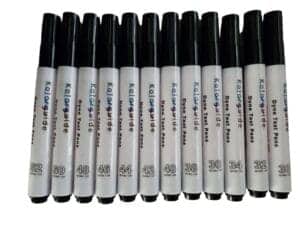
Dyne Test Pens Kit 30-52
Tags: adhesion problems plastic films, corona treatment additives, corona treatment PET, corona treatment polypropylene, dielectric constant plastic film, film thickness corona treatment, material specific corona treatment, PET surface energy, polyethylene corona treatment, polypropylene surface energy, Why Corona Treatment Works on PE but Fails on PP and PET

About author
Related posts
Anilox Roll Maintenance: The Complete Guide to Cleaning, Control, and Performance In flexography, the anilox roll is often defined by its specifications. Line screen.Cell volume.Engraving.... Continue reading
Surface Energy Chart by Material (Dyne Levels for Plastics, Films, Metals and Packaging) This reference chart is used by engineers and technicians to evaluate adhesion,... Continue reading
Surface Energy and Dyne Testing Guide: 105 Technical Questions for Printing and Converting January 26, 2026Kolorguide Technical Division Introduction Surface energy is one of the... Continue reading
Surface energy testing is a critical control point in printing, coating, laminating, and converting operations. Dyne test pens are routinely used to verify surface treatment... Continue reading
Corona treatment is not eternal and Why Geography is Killing Your Surface Tension (and Your Profits)
At Kolorguide, we live by one technical truth: “Corona treatment is not eternal; it is an unstable physical state that tends to decay.”Have you ever... Continue reading