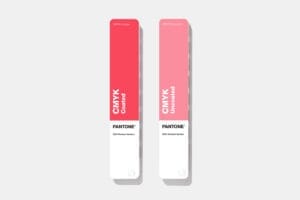
Process color printing, built on the CMYK system, powers more than 90 percent of all full-color print materials in the world. Most people think printers just squirt ink on paper and call it a day. But those vibrant magazine covers and sharp product labels rely on a science that is far more exact and complex than you might expect. The true secret lies in how subtle changes in calibration or file setup can make the difference between flawless results and costly mistakes you only spot when it is too late.

 Ready to take full control of color accuracy and workflow? Explore state-of-the-art solutions designed for the printing and graphic arts industry at Kolorguide. Discover advanced advice on how to talk about color with clients and suppliers or dive into essential methods for controlling color on flexible film. Do not let preventable mistakes impact your standards. Get the tools you need now and ensure every print matches your vision perfectly.
Table of Contents
- Understanding Process Color and Its Core Principles
- Process Color vs. Spot Color: Key Differences
- Applications of Process Color in Industry Sectors
- Tips for Accurate Process Color Printing and Production
Quick Summary
| Takeaway | Explanation |
|---|---|
| Understand CMYK Process Colors | Process color uses cyan, magenta, yellow, and black to reproduce a wide color spectrum in printing. |
| Differentiate Process from Spot Colors | Process colors are mixed for complex images, while spot colors are premixed for consistency. |
| Prioritize File Preparation | Save design files in CMYK mode to ensure accurate color reproduction in print. |
| Implement Calibration Techniques | Utilize methods like G7 for consistency in color output across different printing processes. |
| Focus on Quality Control Measures | Maintain brand identity and product standards by employing robust color measurement and quality checks. |
Understanding Process Color and Its Core Principles
Process color represents a fundamental printing technique that transforms visual communication across multiple industries. At its core, process color is a sophisticated method of reproducing full color images by utilizing four primary ink colors: cyan, magenta, yellow, and black (CMYK).The Science Behind Color Reproduction
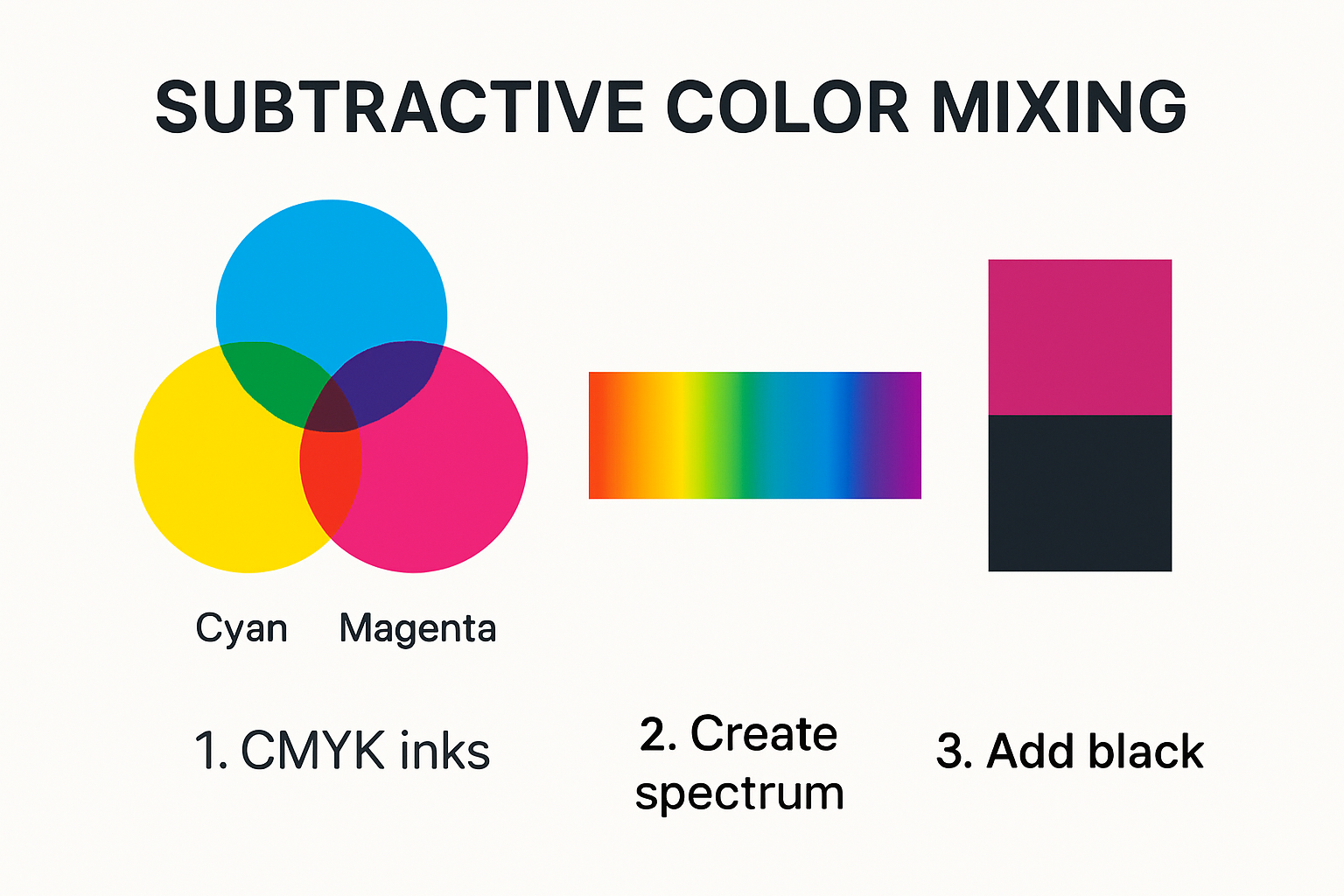
In the world of professional printing, process color operates on a precise scientific principle known as subtractive color mixing. Experts at the Imaging Society explain that this system works by selectively removing specific wavelengths of light through overlapping colored inks. When cyan, magenta, and yellow inks are combined in varying percentages, they can create an incredibly wide spectrum of colors.The black ink (K) serves a critical role beyond color generation. It provides depth, contrast, and helps define fine details in printed materials. Without black, images would appear muddy and lack definition. Professional printers carefully calibrate the percentage and placement of each ink to achieve precise color reproduction.Color Separation and Printing Mechanics
According to Encyclopedia Britannica, the process color method involves breaking down an original image into its component color channels. This technical procedure allows graphic designers and print professionals to recreate complex visual designs with remarkable accuracy.The separation process typically follows these key steps:- Color Channel Breakdown: Original images are digitally separated into cyan, magenta, yellow, and black components
- Plate Preparation: Each color channel is transferred onto a separate printing plate
- Precise Ink Application: Inks are applied in controlled percentages to recreate the original image’s color and detail
| Step | Description |
|---|---|
| Color Channel Breakdown | Image is separated into four color channels: cyan, magenta, yellow, and black |
| Plate Preparation | Each channel is transferred onto a dedicated printing plate |
| Precise Ink Application | Inks are applied in controlled amounts for color detail |
| Registration | Alignment of ink layers to avoid blurring or color shifts |
Process Color vs. Spot Color: Key Differences
In the complex world of professional printing, understanding the distinction between process color and spot color is crucial for achieving precise visual communication. While both methods serve the goal of color reproduction, they differ significantly in approach, application, and technical execution.Fundamental Color Generation Techniques
Adobe InDesign’s comprehensive guide explains that process colors are generated by combining four standard ink colors: cyan, magenta, yellow, and black (CMYK). This method creates a wide spectrum of colors by overlaying these four inks in varying percentages. In contrast, spot colors are premixed, specific ink colors created to match exact color requirements.Process color printing is ideal for complex images with numerous color variations, such as photographs or detailed graphics. The technique relies on a halftone dot pattern where tiny dots of the four primary colors are strategically placed to create the illusion of multiple hues. Spot colors, however, are pure, premixed inks that provide consistent and uniform color coverage without dot patterns.Practical Applications and Cost Considerations
According to Wikipedia’s printing color research, spot colors are specifically beneficial for scenarios demanding precise color matching. Brands often use spot colors to maintain consistent corporate identity across different print materials. For instance, a company’s trademark Pantone color can be exactly replicated using a spot color, ensuring brand recognition.The choice between process and spot colors significantly impacts printing costs and efficiency. Hopkins Printing highlights that spot colors require a separate printing plate for each color, which can increase production expenses. Process color printing, using the four-color CMYK system, typically requires fewer plates and is more cost-effective for multi-colored designs.Professional designers must carefully evaluate project requirements to determine the most appropriate color reproduction method. Explore advanced color management techniques to optimize your printing workflow and achieve superior visual results.Key considerations for selecting between process and spot colors include:- Color Complexity: Process colors for multi-toned images, spot colors for uniform, specific hues
- Budget Constraints: Process colors generally more economical for complex designs
- Brand Consistency: Spot colors preferred for maintaining exact brand color specifications
- Print Volume: Process colors more efficient for large print runs
| Feature/Aspect | Process Color (CMYK) | Spot Color |
|---|---|---|
| Color Creation | Mix of 4 inks (cyan, magenta, yellow, black) | Premixed, specific ink for each color |
| Best For | Complex images, photographs, graphics with many colors | Uniform, exact hues, brand colors |
| Plates Required | 4 plates (CMYK) | 1 plate per spot color (may require additional plates) |
| Cost/Efficiency | More economical for multi-color designs and large runs | Higher cost for multiple spot colors or short runs |
| Color Match Consistency | Good for broad range, but less precise for exact hues | Excellent for maintaining specific, exact colors |
| Brand Identity | Suitable for images/logos with gradients | Preferred for exact, consistent brand colors |
Applications of Process Color in Industry Sectors
Process color technology extends far beyond traditional printing, revolutionizing visual communication and quality control across diverse industrial sectors. Its precision and adaptability make it an indispensable tool for professionals seeking accurate color reproduction and advanced manufacturing techniques.Manufacturing and Product Development
Research from the International Color Consortium reveals that liquid color technologies utilizing process color methods are crucial in multiple manufacturing domains. These include film extrusion, injection molding, and blow molding processes across industries such as packaging, medical technology, automotive, furniture, electronics, and toy production.In the granite manufacturing industry, advanced computer vision systems now employ sophisticated color space transformations to improve product traceability. By detecting and decoding color bands representing numerical identifiers, manufacturers can enhance production efficiency and maintain stringent quality control standards.Quality Control and Product Standardization
The CIELAB color space, standardized by the Commission Internationale de l’Eclairage, has become a critical tool for precise color measurement. Researchers in food production utilize this system to analyze color changes qualitatively, ensuring consistent product appearance and consumer expectations.Professional industries leverage process color techniques to:- Ensure Consistent Brand Identity: Maintaining exact color specifications across product lines
- Enhance Quality Control: Detecting minute variations in color and texture
- Improve Manufacturing Precision: Creating standardized color references for complex production processes
Cross-Industry Color Communication
Process color serves as a universal language in visual communication, bridging gaps between design, manufacturing, and marketing teams. Learn more about effective color communication strategies to streamline interdepartmental collaboration.From packaging design to automotive paint matching, process color enables professionals to communicate color specifications with unprecedented accuracy. The technology transforms how industries approach color reproduction, moving beyond simple aesthetic considerations to become a critical component of quality assurance and brand representation.By understanding and implementing advanced process color techniques, industries can achieve remarkable precision in color management, driving innovation and maintaining competitive edge in increasingly visual and detail-oriented markets.Tips for Accurate Process Color Printing and Production
Achieving precise color reproduction requires more than technical knowledge—it demands a strategic approach to design, file preparation, and printing processes. Professional print production specialists understand that successful process color printing hinges on meticulous attention to detail and advanced technical expertise.File Preparation and Color Management
California State University’s printing guidelines emphasize the critical importance of creating design files in CMYK color mode rather than RGB. This fundamental step ensures color accuracy from initial design through final print production. Designers must carefully convert color modes, understanding that RGB colors cannot be directly translated to print without potential variations.Critical file preparation techniques include:- Color Mode Conversion: Always design and save files in CMYK
- Bleed Specifications: Extend design elements 1/8 inch beyond trim edges
- Safe Zone Management: Keep critical content 1/4 to 1/2 inch inside trim edges
Calibration and Color Consistency
The Society for Imaging Science and Technology highlights the G7 Method as a groundbreaking approach to print calibration. This advanced technique focuses on achieving consistent grayscale colorimetric measurements across different printing processes, ensuring visual consistency and color accuracy.New Mexico State University’s branding experts recommend specific strategies for optimal color reproduction:- Paper Selection: Use coated white matte or dull paper stocks
- Color Value Precision: Set exact CMYK values in design files
- Consistent Color Palette: Develop and maintain standardized color references
Professional Workflow Optimization
Professional print production requires a holistic approach to color management. Explore advanced color control techniques for specialized printing environments to elevate your production quality.Key considerations for professional print production include:- Regular Equipment Calibration: Maintain printing equipment for consistent output
- Comprehensive Color Proofing: Implement multiple verification stages
- Continuous Staff Training: Keep team updated on latest color management technologies
Frequently Asked Questions
What is process color printing?
Process color printing is a technique that uses four primary ink colors—cyan, magenta, yellow, and black (CMYK)—to reproduce a wide spectrum of colors in printed materials.How does process color differ from spot color?
Process color combines multiple inks to create various hues, while spot color involves premixed, specific inks designed for consistency and precise color matching.Why is file preparation important in process color printing?
File preparation ensures that design files are saved in CMYK mode, which helps maintain color accuracy from design to final print, reducing the risk of color discrepancies.What are some best practices for accurate process color printing?
Best practices include using calibrated printing equipment, managing color consistently across all stages, and ensuring comprehensive color proofing before final production.Bring Precision and Confidence to Your Process Color Printing
Are you tired of seeing costly color errors, print misalignments, or brand inconsistencies ruin your projects? The article highlights how even small mistakes in calibration, color separation, or file setup can turn a promising design into a costly setback. Professionals in printing, graphic arts, and manufacturing know the frustration of discovering these issues too late. You do not have to risk your reputation or your budget on guesswork. With expert color communication and quality control tools, your next project can achieve flawless, vibrant results every time.Ready to take full control of color accuracy and workflow? Explore state-of-the-art solutions designed for the printing and graphic arts industry at Kolorguide. Discover advanced advice on how to talk about color with clients and suppliers or dive into essential methods for controlling color on flexible film. Do not let preventable mistakes impact your standards. Get the tools you need now and ensure every print matches your vision perfectly.Recommended
- UPDATING YOUR PANTONE GUIDES CAN SAVE YOU VALUABLE PRODUCTION TIME AND MONEY! – kolorguide
- … so my correct Pantone color guide is … – kolorguide
- Cómo hablar de color con clientes y proveedores – kolorguide
- Cómo lograr el color PANTONE® del año 2020 en bienes duraderos y electrónica de consumo – kolorguide