
No products in the cart.
Return To Shop
Understanding the Pantone Color Guide: A Key for Designers
The Pantone Color Guide is the gold standard for anyone who cares about color accuracy in design or printing. Now here’s something that will raise your eyebrows. Brand recognition can jump by up to 80 percent just by keeping colors consistent across different products and locations. That’s not just a tiny edge, that’s the kind of power that can define whether a brand is forgettable or iconic.
Table of Contents
- What Is The Pantone Color Guide?
- Why The Pantone Color Guide Matters In Design
- How The Pantone Color Guide Works
- Key Concepts Of The Pantone Color System
Quick Summary
| Takeaway | Explanation |
|---|---|
| Standardize color communication | The Pantone Color Guide offers a universal method for identifying and reproducing colors, eliminating ambiguity in color descriptions. |
| Boost brand consistency | Accurate color matching can increase brand recognition by up to 80%, ensuring logos and products appear identical across different markets. |
| Utilize multiple color variants | Various Pantone guides cater to coated, uncoated, and metallic surfaces, ensuring precise reproduction across different materials. |
The table below compares the core features and practical importance of different Pantone color guide variants to help professionals choose the right guide for their specific application.
| Pantone Guide Variant | Description | Common Surfaces | Importance in Design |
|---|---|---|---|
| Pantone Coated © | Designed for glossy, coated paper | Magazines, packaging | Ensures vivid, sharp color matching |
| Pantone Uncoated (U) | Tailored for rough, uncoated paper | Stationery, letterhead | Maintains consistency on porous stock |
| Pantone Metallic | Offers metallic and specialty color options | Foils, specialty prints | Matches unique finishes precisely |
| Pantone Digital | Adapted for on-screen design and digital projects | Websites, digital images | Bridges print-to-digital accuracy |
| Pantone Pastels & Neons | Provides pastel and neon shades for creative work | Promotional materials | Enables specialty effects and trends |
| Reduce costly production errors | Regular updates to the Pantone guide help maintain design integrity, preventing expensive mistakes in color reproduction during production. | ||
| Enhance cross-industry application | The guide is crucial not only in graphic design but also in industries like automotive and fashion for maintaining consistent color standards. |
What is the Pantone Color Guide?
The Pantone Color Guide is a comprehensive color matching system that serves as the universal language of color in design and printing industries. Developed by Pantone LLC, this specialized reference tool provides designers, manufacturers, and print professionals with a standardized method for identifying, communicating, and reproducing precise color specifications.
The Science Behind Color Standardization
At its core, the Pantone Color Guide represents a meticulously curated collection of color swatches that transform subjective color perception into an objective, measurable standard. According to Pantone’s official research, each color in the guide is precisely defined with a unique identifying number and specific ink mixing formulation, enabling consistent color reproduction across different materials and printing technologies.
The system works through a sophisticated approach that breaks down color into fundamental components:
This table summarizes the essential components that make up the Pantone Color System, giving quick insight into how standardized color reference is achieved for professionals.
| Component | Explanation |
|---|---|
| Numeric Identification | Every color is assigned a unique alphanumeric code (e.g., 185 C) |
| Precise Mixing Formula | Specific pigment ratios provided for consistent reproduction |
| Color Swatch Books | Physical reference tools displaying exact shades side-by-side |
| Surface Variants | Separate formulas for coated, uncoated, and metallic materials |
| Spectral Precision | Colors defined with high accuracy for minimum perceptual error |
| Universal Nomenclature | Globally recognized naming system for clear communication |
- Numeric Identification: Each color receives a unique alphanumeric code (e.g., Pantone 185 C)
- Precise Mixing Instructions: Detailed formulas for recreating exact color shades
- Multiple Color Variants: Different color guides for various printing processes like coated, uncoated, and metallic surfaces
Professional Applications and Importance
Designers and brands rely on the Pantone Color Guide to ensure color accuracy and consistency. From packaging design to corporate branding, the guide eliminates communication barriers by providing a universal reference point.
VIDEO:video_content] [Research from the Color Marketing Group highlights that precise color matching can significantly impact brand recognition and consumer perception.
Professional designers can read more about maintaining accurate color standards through regular guide updates, which help prevent costly color reproduction errors and maintain design integrity across different print and digital platforms.
Why the Pantone Color Guide Matters in Design
The Pantone Color Guide transcends being a mere reference tool. It represents a critical communication framework that bridges the complex gap between creative vision and precise technical execution across multiple design and manufacturing disciplines.
Ensuring Brand Consistency and Identity
Brands invest substantial resources in developing unique color identities that instantly communicate their essence. According to brand identity research from Emerald Insights, color consistency can increase brand recognition by up to 80%.
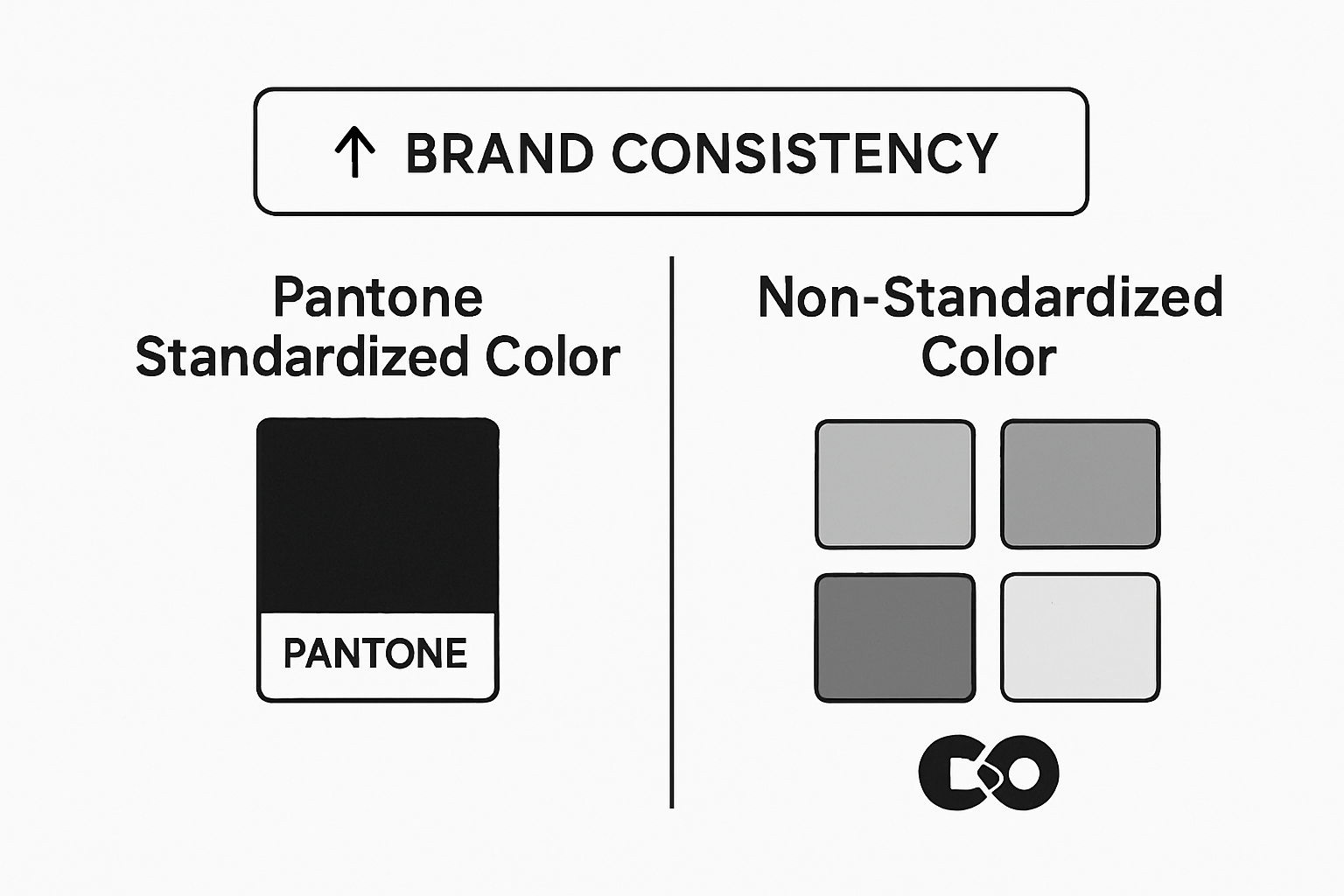 The Pantone Color Guide enables designers and manufacturers to reproduce exact color specifications with unprecedented accuracy, ensuring that a corporate logo or product packaging looks identical whether printed in New York or manufactured in Shanghai.
Key advantages of using the Pantone Color Guide include:
- Universal Communication: Eliminates ambiguity in color descriptions
- Global Standard: Recognized across different design and manufacturing sectors
- Precision Engineering: Provides exact color reproduction specifications
Cross Industry Design Impact
The guide’s significance extends far beyond graphic design. Industries ranging from automotive manufacturing to fashion and consumer electronics rely on Pantone’s standardized color systems. Our guide on maintaining accurate color standards demonstrates how precise color matching prevents costly production errors and maintains design integrity.
Professional designers appreciate the Pantone Color Guide not just as a tool, but as a strategic asset that transforms color from a subjective perception into a measurable, reproducible science. By providing a common language for color, the guide enables creative professionals to communicate their exact design intentions with unprecedented clarity and confidence.
How the Pantone Color Guide Works
The Pantone Color Guide operates through a sophisticated system of color identification, specification, and reproduction that transforms color from a subjective experience into a precise, measurable science. This innovative approach ensures consistent color communication across diverse design and manufacturing environments.
Color Formula and Specification
According to color science research from the International Color Consortium, each Pantone color is meticulously defined through a complex formula that specifies exact pigment combinations. The system uses a standardized numbering convention where each color receives a unique alphanumeric code that represents its specific characteristics, such as hue, saturation, and brightness.
The core components of Pantone’s color specification include:

- Base Pigments: Specific ink mixtures that create precise color formulations
- Numerical Coding: Unique identifiers that enable global color reproduction
- Surface Variants: Different specifications for coated, uncoated, and specialty printing surfaces
Reproduction and Color Matching Process
Professional designers and manufacturers use the Pantone Color Guide as a comprehensive reference for color reproduction. The guide provides detailed swatch books that display colors under standardized lighting conditions, allowing professionals to select and match colors with exceptional accuracy. Each swatch includes mixing instructions that enable print shops and manufacturers to recreate colors consistently across different materials and production platforms.
More details about Pantone color matching techniques reveal the intricate process of translating digital and conceptual color designs into physically reproducible pigments. By establishing a universal color language, Pantone eliminates communication barriers and reduces costly color reproduction errors in industries ranging from graphic design to automotive manufacturing.
Key Concepts of the Pantone Color System
The Pantone Color System represents a sophisticated approach to color management that goes beyond traditional color referencing. It encompasses a comprehensive framework designed to standardize and communicate color across diverse design and manufacturing disciplines.
Color Classification and Identification
According to color science research from the International Color Consortium, the Pantone system transforms color perception into a precise, measurable science. Each color is assigned a unique alphanumeric code that precisely defines its spectral characteristics, enabling accurate reproduction across different media and platforms.
Key components of the Pantone Color System include:
- Spectral Precision: Detailed color specification down to microscopic pigment variations
- Universal Nomenclature: Standardized naming conventions that eliminate ambiguity
- Cross Platform Compatibility: Consistent color representation across digital and physical mediums
Advanced Color Specification Techniques
Professional designers leverage the Pantone system’s advanced color specification techniques to ensure absolute color fidelity. The system provides multiple color guides tailored to different printing surfaces such as coated, uncoated, and metallic substrates. This nuanced approach recognizes that the same color can appear differently depending on the underlying surface texture and material.
Explore advanced color matching techniques that demonstrate how the Pantone system transcends traditional color referencing. By establishing a universal color language, the system bridges communication gaps between designers, manufacturers, and clients, ensuring that a specific shade looks identical whether printed on paper, plastic, metal, or digital screens.
Bring Precision to Your Projects with Kolorguide
Are you frustrated by color inconsistencies or worried about maintaining your brand’s color identity across different printers and platforms? The article explained how critical exact color matching—through tools like the Pantone Color Guide—is for designers, brands, and manufacturers. Small inaccuracies can undermine professionalism, delay production, and even weaken your visual brand, especially when color is central to how your work is recognized.
At Kolorguide.com, we provide professional-grade Pantone color guides, chips, and matching tools—designed to eliminate costly color errors and ensure flawless, repeatable results no matter your workflow. Professionals trust our constantly updated catalog, fast delivery, and expert resources. Ready to achieve uncompromising color accuracy on your next design or print project? Shop the complete Pantone guide selection now and experience why design leaders choose Kolorguide for consistent, reliable color management. Make every detail count—visit Kolorguide.com and take control of your color process today.
Frequently Asked Questions
What is the Pantone Color Guide?
The Pantone Color Guide is a standardized color matching system used by designers and print professionals to ensure precise color communication and reproduction across different materials and printing processes.
How does the Pantone Color Guide ensure color accuracy?
The Pantone Color Guide provides unique alphanumeric codes for each color along with mixing instructions, which helps maintain consistent color reproduction across diverse design and manufacturing environments.
Can the Pantone Color Guide be used for digital design?
Yes, while primarily used in print, the Pantone Color Guide can also be extremely beneficial for digital design, as it establishes a universal language for color that aids in accurately translating designs from screen to print.
Why is color consistency important for branding?
Color consistency is crucial for branding because it enhances brand recognition and helps communicate a brand’s identity effectively. Research indicates that consistent use of color can increase brand recognition by up to 80%.
Recommended
- … so my correct Pantone color guide is … – kolorguide
- UPDATING YOUR PANTONE GUIDES CAN SAVE YOU VALUABLE PRODUCTION TIME AND MONEY! – kolorguide
- Cómo lograr el color PANTONE® del año 2020 en bienes duraderos y electrónica de consumo – kolorguide
- pantone color of the day Archives – kolorguide
- Embracing The Pantone Color Of The Year 2024
- Choosing the Right Colour Palette: Web Agency Sussex|BM


About author
Related posts

Explore digital printing on glass, its significance, applications, and how it works for industries like marketing, architecture, and design. Continue reading

Discover the key differences in digital vs offset printing for designers, printers, and manufacturers. Learn which method best suits your industry needs. Continue reading